
Best Barcrest Online Casinos UK 2026 — How the Licensed Sites Stack Up
 Available in GB
A short answer for the reader who came in with a specific question: only Gambling Commission-licensed casinos may legally offer Barcrest slots to players in Great Britain, and the ten sites reviewed below all carry that licence. The wider point — what no-deposit bonus mechanics actually cost a player, where Barcrest’s catalogue sits inside the parent company’s broader portfolio, and which of these sites a particular reader should pick — is the substance of the page that follows. The comparison below is a working one, not a recommendation: each operator is described on its own terms, and the closing line of each write-up is the page’s own verdict on what it suits.
23 September 2026 — operator data current as of 18 September 2026, cross-checked against the Gambling Commission’s public register of gambling businesses.
Table of Contents
- Mobile and App Play — Barcrest Slots in a Phone Browser
- The Catalogue Itself — What Barcrest’s Slots Actually Are
- The Licensed UK Casino Set — Side by Side
- What the Landscape Looks Like — The Wider Licensed UK Set
- Legality and Regulation — What the Gambling Commission Actually Requires
- Responsible Gambling — GAMSTOP, Self-Exclusion and the Limits a Player Can Set
- Bonuses, Free Spins and the Wagering Cap in Force
- Reading the Licence Numbers — What the Register Actually Tells a Player
- What a Player Should Take From This
- Frequently Asked Questions
Mobile and App Play — Barcrest Slots in a Phone Browser
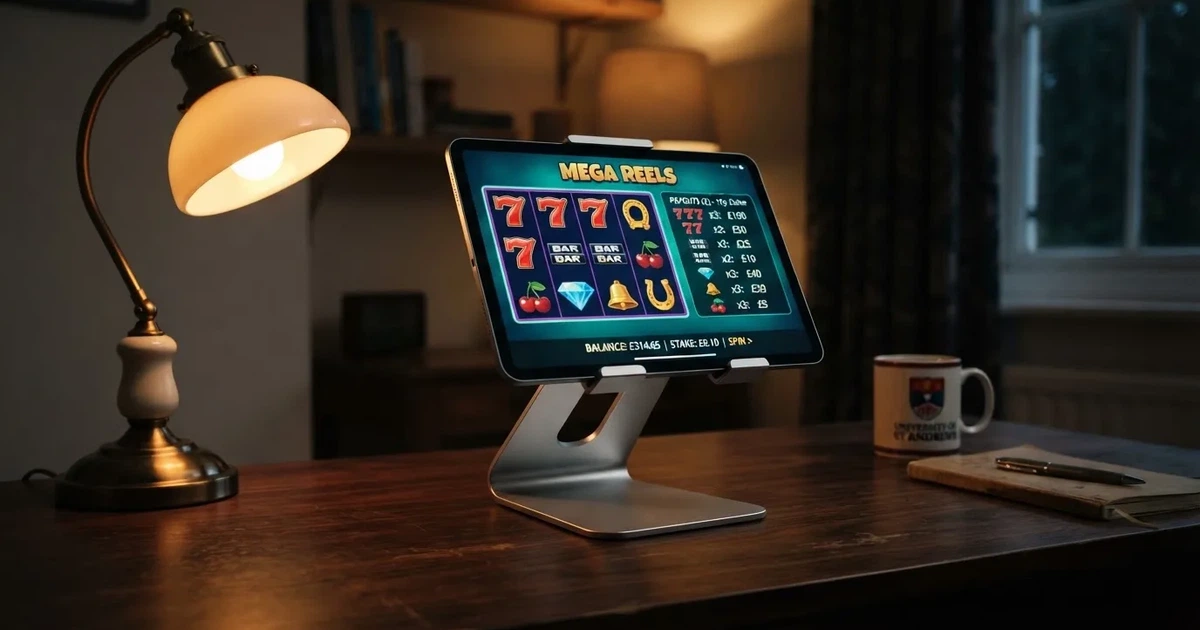
Barcrest’s slot catalogue was built long before the modern HTML5 mobile stack existed, and the studio’s move to mobile is a licensing matter as much as a design one. The titles are delivered through the casino operator’s own mobile product rather than a Barcrest app — there is no studio-branded client to download, and a player looking for “the Barcrest app” on an app store will not find one. What they will find is the operator’s site, in a phone or tablet browser, loading Barcrest games in the same vertical orientation as any other slot on the floor.

The practical effect is that Barcrest slots behave on mobile much as they do on a desktop browser, and the differences that matter are the ones the operator’s product decides: how the lobby loads, whether portrait mode crops the reels cleanly, how the spin button responds to a thumb rather than a cursor. None of those are Barcrest-side concerns once a game is delivered — they are the casino’s product choices, which is why a page on the “best Barcrest mobile casino” is really a page on which licensed UK operator’s mobile product most cleanly carries an older slots catalogue.
Two operational details do follow the catalogue, though. The first is the stake limit regime: a single spin on a Barcrest slot is capped at £5 for a player aged 25 or over and at £2 for an 18-24-year-old, in line with every other online slot under a UK licence. The second is autoplay: it has been banned under UK rules since 31 October 2021, with a minimum spin interval of 2.5 seconds — meaning a Barcrest slot on a phone behaves as a deliberate tap per round rather than a continuous scroll, regardless of how it was designed to be played.
For a player who wants to try a Barcrest title on a phone first, the realistic path is a mobile browser at any of the ten licensed casinos below, no separate download. For a player who specifically wants a casino-grade app, the choice narrows to the operators that publish one — and that is a product decision the operator, not the slot studio, makes.
The Catalogue Itself — What Barcrest’s Slots Actually Are
Barcest is the studio name that sits on a handful of recognisable UK slot titles. The corporate history is more interesting than the in-game paytables. The company was acquired from IGT in 2010, and it now sits inside Light & Wonder, the parent that rebranded from Scientific Games Corporation in March 2022 and that traces its own lineage back to Autotote, a 1917 Australian totalizator business. Light & Wonder’s gaming division also carries Bally, WMS and Shuffle Master — so a Barcrest slot on a UK site is, beneath the surface, a Light & Wonder title that happens to wear a Barcrest skin.

What that means for a player reading a paytable is mostly that the games are not independent releases from a small studio. They are part of a multi-brand portfolio at a publicly listed supplier, and they share the underlying mechanics and certification regime with that portfolio. Light & Wonder itself reported US$3.2 billion in revenue for 2024, and the gaming division’s reach extends from slot machines and casino cabinets to the table-game and casino-management systems used by the same venues. A Barcrest slot, in other words, is not a niche product from a small British supplier — it is a single brand on a large supplier’s roster, and it is licensed to UK operators through the parent company’s distribution deals.
On the Gambling Commission’s own register of gambling businesses, the trading name “Barcrest” is registered to Global Draw Limited, account 2875, which holds active non-remote and remote Gaming Machine Technical Full licences dated from 1 January 2009. That registration is at the supplier end of the chain — it is what allows Barcrest’s games to be distributed into the UK market at all. The casino-level licences reviewed below are a separate question: each casino needs its own operating licence to offer Barcrest slots to UK players, and the public register is the test of whether a casino has one.
What this means for the reader comparing sites is that the slot catalogue is roughly the same on every licensed UK casino that carries Barcrest — the titles, mechanics, RTP ranges and bonus features are studio-side decisions, not operator-side ones. The differences between casinos are around how the games are presented, what bonus terms the operator wraps around them, and how the operator’s mobile product handles an older set of titles. That is the spine of the comparison below: licences, domains, the kinds of bonus a Barcrest player can actually claim, and the casino-side features that change from site to site.
The Licensed UK Casino Set — Side by Side
Ten Gambling Commission-licensed operators carry Barcrest slots into the UK market. Each row below is a single operator, named on its public register entry, with the licence holder and the active remote casino operating licence number on file. Domain status reflects what the Commission register records for the domain on 18 September 2026 — Active means the casino itself is registered; White Label means the site trades under another operator’s licence rather than its own. The full landscape question — what the register holds, who sits inside it and what the licence numbers actually mean — is its own subject and is taken up in a later section.
| Brand | Licence holder and GB remote casino licence | Domain status on the register | Subject support |
|---|---|---|---|
| Betfred | Petfre (Gibraltar) Limited, 039544-R-319290-010 | Active | — |
| Jackpotjoy | Gamesys Operations Limited, 038905-R-319430-022 | Active | — |
| William Hill | WHG (International) Limited, 039225-R-319373-015 | Active | — |
| kwiff | Eaton Gate Gaming Limited, 044448-R-323408-017 | Active | — |
| PokerStars | Stars Interactive Limited, 039108-R-319334-026 | Active | — |
| Ladbrokes | LC International Limited, 054743-R-330863-014 | Active | — |
| Paddy Power | PPB Games Limited, 039411-R-319335-010 | Active | — |
| Unibet | Platinum Gaming Limited, 045322-R-324275-019 | Active | — |
| Virgin Games | Gamesys Operations Limited, 038905-R-319430-022 | White Label | — |
| Casumo | Recro Limited, 061549-R-336718-002 | Active | — |
What the table cannot show is what each operator does differently with the catalogue. That is the job of the write-ups below — and the place to start is not the operator with the biggest brand, but the one whose product decision most directly affects a Barcrest player.
Betfred
Betfred is one of the high-street bookmaker names that sits inside the licensed UK online set. The remote casino operating licence is held by Petfre (Gibraltar) Limited — a Gibraltar-incorporated company, which is the common corporate shape for an online bookmaker that serves the UK market under a Commission licence. Betfred’s product is wider than casino: the brand runs sports betting, lotto and games, and Barcrest slots sit inside that wider offering rather than as the headline product. For a player who already has a Betfred account from a sports bet, the casino is a tab away.
Jackpotjoy
Jackpotjoy runs on a Gamesys Operations Limited licence, and the same Gamesys licence also carries Virgin Games, in a white-label arrangement. What that means in practice is that Jackpotjoy and Virgin Games are the same legal entity on the Commission’s register, with two brand surfaces on top. For the Barcrest player, the catalogue is identical; for a player who has self-excluded on one brand, the GAMSTOP exclusion covers the other, as this exclusion is account-level rather than brand-level.
William Hill
William Hill is the other high-street bookmaker brand in the licensed set. The remote casino licence is held by WHG (International) Limited, and the brand carries a long-established UK reputation that transfers into the online product. William Hill’s casino product is one tab of a multi-vertical site, with Barcrest titles in the slots library alongside games from other studios. For a reader who already bets with William Hill on the high street, the casino is the obvious next step inside the same account.
kwiff
Kwiff is the newer brand in this set, and its product approach is the different one — a small operator that built its identity around a “surprise” stake-boost mechanic on sports rather than around casino. The casino tab carries Barcrest slots alongside other studios, and the operator’s overall feel is closer to a small specialist than a high-street bookmaker. For those interested in the Barcrest catalogue, the licence is the relevant fact: the operator is fully regulated, and the mobile product is a standard browser-based interface.
PokerStars
PokerStars is a poker-first operator that extended into casino. The licence holder, Stars Interactive Limited, sits inside a wider international group, and the casino tab is one part of a multi-product offering. The Barcrest slots library is smaller than at a casino-first operator, because poker brands historically carry a tighter catalogue. For a player who came for the poker, the casino is a side product; for a player who came for the casino, the catalogue is enough but not generous.
Ladbrokes
Ladbrokes sits alongside Paddy Power, Coral and Gala Bingo inside LC International Limited, all four running on the same Commission licence. That is the corporate shape of the modern UK online bookmaking sector — a single licensed entity running several brands, each with its own product surface. The catalogue remains consistent across all LC International brands, making the choice between them a matter of personal product preference rather than differing licence conditions.
Paddy Power
Paddy Power is the Irish-rooted brand in the licensed set, and the operator sits on a separate PPB Games Limited licence from the LC International brands above. The product is a multi-vertical bookmaker-and-casino, with Barcrest slots in the casino tab. For a player who already has a Paddy Power sports account, the casino is a tab inside the same login — and the GAMSTOP exclusion route, if it ever becomes relevant, runs at account level rather than brand level.
Unibet
Unibet is the international-brand entry in the UK set, sitting on a Platinum Gaming Limited licence. The brand carries European roots and a casino-heavy product on the UK side, which makes it the closest fit for a player who came specifically for the Barcrest slots rather than for a wider bookmaker offering. For a reader who treats casino as the headline product rather than a tab of something larger, Unibet is the most casino-shaped entry in the licensed UK set.
Virgin Games
Virgin Games runs as a white-label site on the Gamesys Operations Limited licence — the same licence that carries Jackpotjoy. A white-label site trades under another company’s licence, and the practical effect is that Virgin Games does not hold its own Commission licence; it operates inside Gamesys’s regulatory envelope. The Barcrest catalogue here mirrors that of Jackpotjoy, and the GAMSTOP self-exclusion mechanism functions across both platforms as one system.
Casumo
Casumo is the casino-only operator in the set, sitting on a Recro Limited licence. The brand has built its identity around casino and gamification rather than around sports betting, and the Barcrest slots library sits inside a wider catalogue of studio partnerships. For a reader who specifically wants a casino-first product rather than a bookmaker-with-a-casino-tab, Casumo is the most directly relevant entry in the set.
What the Landscape Looks Like — The Wider Licensed UK Set
Ten operators is not the licensed UK online casino market. It is a working set of ten. The wider picture is what the Gambling Commission’s public register actually holds, and it is much larger. On 18 September 2026, the Commission’s public register of gambling businesses listed 139 businesses holding an active remote casino operating licence. The register is searchable online and downloadable in full as a CSV or Excel file — a player can pull the file themselves and verify any brand, and that is the right way to use it rather than relying on a third party’s word.
The register does more than list businesses. It also lists domains — every website that a licence account runs, with a status of Active, Inactive or White Label attached to each. On the same date, the domain list held 1065 active entries and 361 white-label entries. A white-label site is a brand that does not hold its own Commission licence but trades under another operator’s licence, and the example inside the working set above is Virgin Games — which appears on the register as a white-label domain of Gamesys Operations Limited, the same account that carries Jackpotjoy as an active domain.
The licence numbers themselves follow a readable format.
| Component | Description |
|---|---|
| Account number | First six digits identify the licence holder |
| Licence type | The “R” indicates a remote (online) licence |
| Licence number | Next six digits specify the individual licence |
| Suffix | Final three digits distinguish between multiple licences |
So 039544-R-319290-010 reads as account 39544, a remote licence, with the suffix 010 marking this particular licence within the account’s portfolio. The shape matters because it lets a reader check any licence claim against the register themselves, without needing to take an operator’s word for it.
What a reader should take from the wider set is that the licensed UK market is large, and that not every brand a player might encounter online sits inside it. The Commission’s enforcement work targets brands that take UK customers without a licence, through cease-and-desist notices, search-engine delisting and payment and hosting referrals — but the Commission has no power to block sites at ISP level. The result is that unlicensed sites continue to appear in search results and to take deposits from UK players who do not check the register first. The risk in that path is not a penalty on the player — there is none — but the loss of every protection a UK licence brings: no GAMSTOP, no Commission complaints route, no approved ADR provider. A player who loses a dispute with an unlicensed operator has no UK regulator to take it to.
For the Barcrest-specific question, that risk is sharper still. The Barcrest catalogue is supplied into the UK through Light & Wonder’s distribution deals with licensed operators; an unlicensed site claiming to carry “Barcrest slots” is almost certainly carrying something else, or carrying a cloned version of a Barcrest title that has not been certified under the Commission’s Remote Technical Standards. The check is the register: a brand appears on it, or it does not.
Legality and Regulation — What the Gambling Commission Actually Requires
The Gambling Commission is the regulator of commercial gambling in Great Britain — England, Scotland and Wales — under the Gambling Act 2005, with sponsorship from the Department for Culture, Media and Sport. Northern Ireland runs a separate regime and is not covered by the Act. The Commission’s own role is operator-side: it licences operators, sets the technical standards those operators’ games must meet, and enforces the Licence Conditions and Codes of Practice (LCCP) and the social responsibility code that sits inside them.
The licensing basis for online casinos is the Gambling (Licensing and Advertising) Act 2014, which took effect in November 2014. Before that Act, an online operator based overseas could take UK customers under an offshore licence alone. After it, any operator taking customers in Great Britain needs a Commission licence regardless of where it is incorporated. A Malta Gaming Authority licence, a Curaçao licence or a Gibraltar licence is not a substitute; the test is the Commission’s public register, and the test is binary. Either a brand appears on it, or it does not.
For a Barcrest player that is the operative point. The Barcrest catalogue is delivered to UK players through licensed operators only, because the studio’s distribution is built on the same licences. A player looking for Barcrest slots outside that chain is, by definition, looking outside the licensed UK set — and the consequence is not a legal penalty on the player but a practical one: no GAMSTOP, no Commission complaints, no ADR.
The player-side rules are tighter than they were five years ago. The minimum age is 18 across online casino, and name, address and date of birth are verified before the first deposit or any play — that requirement has been in force since 7 May 2019. Anonymous play is not possible at a licensed UK site, and it is not possible to fund a licensed account with a credit card: the credit-card ban has been in force since 14 April 2020, and it covers credit cards routed through e-wallets as well as direct card payments.
The stake regime is the rule a player feels most directly. Every online slot under a UK licence carries a maximum stake per game cycle: £5 for a player aged 25 or over, in force from 9 April 2025, and £2 for an 18-24-year-old, in force from 21 May 2025. There is no Commission-set deposit ceiling and no Commission-set loss ceiling. What there is, since 31 October 2025, is a requirement that operators prompt a customer to set a financial limit before the first deposit — the limit itself is chosen by the customer, but the prompt is mandatory.
Autoplay has been banned since 31 October 2021, with a minimum spin interval of 2.5 seconds. Losses disguised as wins — features that play a fanfare and a sound effect on a net-loss spin — are also banned. The effect on the Barcrest catalogue is that older Barcrest designs, which historically carried autoplay as a default, are reconfigured under the licensed UK build: autoplay is removed, the spin interval is enforced, and any “losses disguised as wins” animation is stripped.
Financial vulnerability checks sit on top of the deposit prompt. Since 28 February 2025, operators run a light-touch vulnerability check at £150 in net deposits over a rolling 30-day window, using public data only. The wider financial risk assessments the Commission has announced are not yet in force, so the £150 trigger is the operative test today. None of this is a Barcrest-specific rule; it applies to every online casino under a Commission licence.
On the bonus side, the rule a reader will meet most directly is the wagering cap that came into force on 19 December 2025: wagering requirements on a casino bonus are capped at 10x, and mixed-product bonuses — a sports bet that unlocks casino spins, for example — are banned. The cap is examined in its own right in the bonus section below.
The Commission’s enforcement powers are operator-side, not player-side. The Commission can issue cease-and-desist notices, refer unlicensed sites to payment processors and hosting providers for disruption, and ask search engines to delist them. It does not have the power to block sites at ISP level — that requires secondary legislation and has not been enacted. There is no penalty aimed at a UK player who plays at an unlicensed site; what the player loses is the protection that comes with a licence, and that is the framing a player should hold in mind.
On the tax side, players pay no tax on gambling winnings in the UK. Operators pay Remote Gaming Duty, which was raised from 21% to 40% from 1 April 2026 — a fiscal change that affects operator margins rather than player returns. The 40% rate is a model only; the actual figure a reader should hold is the duty is on operator gross profit, and a player-side figure is not derived from it.
Responsible Gambling — GAMSTOP, Self-Exclusion and the Limits a Player Can Set
The responsible-gambling regime in the licensed UK set is layered. GAMSTOP is the national online self-exclusion scheme, and it is a mandatory condition of every online Commission licence since 31 March 2020 — meaning every operator in the working set above is enrolled, and a player who self-excludes through GAMSTOP is blocked at the operator level across the whole licensed UK online market at once. Self-exclusion periods run six months, one year or five years, and they cannot be cancelled early: a player who signs up for five years stays signed up for five years.
The point about GAMSTOP that matters most for the Barcrest question is that it covers every online operator under a Commission licence, regardless of which studio’s games are on the floor. A player who self-excludes through GAMSTOP is excluded from Betfred, Jackpotjoy, William Hill, kwiff, PokerStars, Ladbrokes, Paddy Power, Unibet, Virgin Games and Casumo — and from every other licensed UK online casino — at the same time. There is no per-brand opt-out, and there is no per-studio opt-out. Barcrest slots are not exempted from the GAMSTOP block because they are Barcrest slots.
The “Barcrest casinos not on GamStop” search a player might run has a clear answer, and it is not the answer the search results will tend to give. A site offering Barcrest slots but not enrolled in GAMSTOP is, by definition, not a Gambling Commission-licensed online casino — because GAMSTOP enrolment is mandatory for every such licence. The practical test is still the Commission’s public register: if a brand appears on the register, it is enrolled in GAMSTOP. If it does not appear on the register, it is not.
The other support routes sit alongside GAMSTOP. The National Gambling Helpline is run by GamCare; GambleAware funds treatment and education; and the Commission’s approved ADR provider route gives a player who has a dispute with a licensed operator a regulator-badged complaints path. None of these routes exist for a player at an unlicensed site, and that is the practical risk a player takes on by stepping outside the licensed set.
The deposit-side protections are operator-implemented rather than regulator-set, and they sit inside the wider responsible-gambling stack. The mandatory deposit-limit prompt is one of them — since 31 October 2025, an operator must prompt a customer to set a financial limit before the first deposit. Reality checks and time-outs are operator-side tools that the LCCP requires to be available; self-exclusion at the operator level runs in addition to GAMSTOP, not as a substitute for it.
What this means for a Barcrest player is that the responsible-gambling regime is the same on every licensed site, because the regime is regulator-set rather than operator-set. The differences between operators are around product surface and catalogue, not around the responsible-gambling stack. The reader who needs to use GAMSTOP should use it — there is no licensed Barcrest operator that is exempt from the block.
Bonuses, Free Spins and the Wagering Cap in Force
Barcrest slots are a common host for free spins promotions at UK-licensed casinos, because the catalogue includes recognisable titles that a casino can put on the front of a free-spins offer without the player needing to learn a new game. The mechanics of those offers are the same as the mechanics of any other UK-licensed casino bonus, and the rules that govern them are set by the Commission rather than by the operator.
The headline rule is the wagering cap that came into force on 19 December 2025. Under that rule, wagering requirements on a casino bonus are capped at 10x. A bonus of £10 carries a maximum turnover requirement of £100 before winnings become withdrawable; a bonus of £50 carries a maximum of £500. The cap applies to the bonus alone, not to the bonus-plus-deposit combined figure, and it applies to every UK-licensed casino. Mixed-product bonuses — an offer that bundles a sports bet with casino spins, for example — are banned under the same rule.
What that means for a player reading a Barcrest free-spins promotion is that the wagering figure on the offer cannot legally exceed 10x the bonus. Any offer advertising a higher multiple is not a UK-licensed offer, and the corollary is the same as the GAMSTOP corollary: the licensed UK market has a hard ceiling, and offers that exceed it are by definition outside it.
The “no-deposit” offer is the case where the wagering cap matters most, because the player is wagering bonus funds rather than their own deposit. The arithmetic for a £10 no-deposit bonus at the 10x cap is straightforward: required turnover is £100, and at a 20p spin that is 500 spins. At a 2.5-second spin interval — the UK minimum — 500 spins take 1,250 seconds, or roughly 21 minutes. That figure is the time the bonus needs to clear under the rules as they stand; it is not a guarantee of any payout, and it is not a promise of a return, because the bonus funds themselves carry the house edge rather than the player’s own money.
For a £50 no-deposit bonus at the same 10x cap, required turnover is £500 — five times the £10 case — and at a 20p spin that is 2,500 spins. At 2.5 seconds per spin, that is 6,250 seconds, or roughly 104 minutes. The figure scales linearly with the bonus amount, because the wagering multiplier is fixed at 10x and the spin stake and interval are the player’s own choice within the licensed stake cap.
The band a reader should hold is: a no-deposit bonus at the 10x cap and a typical 20p spin clears in somewhere between 20 minutes and a couple of hours, depending on the bonus amount and the spin stake the player chooses. The wagering requirement itself is one figure — turnover = bonus × 10 — and the time-to-clear is a function of the player’s own stake and the slot’s minimum interval, both of which are bounded by UK rules.
The expected-loss framing sits on top of the time figure. A bonus of £10 wagered at 10x is £100 of turnover, and at a typical 96% RTP that is an expected loss of £4 across the clearing period — that is the house’s mathematical edge on the bonus money, paid by the bonus rather than by the player. The figure is an average over many spins, not a guarantee; some sessions will return more, some less, and a player who clears the bonus ahead of the wagering requirement simply stops. The cost of clearing is the £4 expected loss; the time cost is the spins and the minutes above.
What the wagering cap does not address is the structure of an offer around the bonus. Maximum cashout caps, game-weighting rules, win-cap rules on free spins, and “free spins winnings paid as bonus funds” clauses are all operator-side decisions that sit within the 10x cap rather than being regulated by it. A player reading the small print on a Barcrest free-spins offer should look at those clauses rather than at the wagering multiple alone, because the multiple is now the regulated constant rather than the variable.
For the no-deposit case specifically, the offer is a way to play Barcrest slots without funding the account first, and the wagering requirement and the time-to-clear are the cost the player accepts in exchange. The marketing word on a no-deposit offer tends to be “free”; the arithmetic of clearing it is anything but.
Reading the Licence Numbers — What the Register Actually Tells a Player
The Commission’s public register is the test of whether a brand holds a UK online casino licence. The shape of a licence number, and what each part of it means, is worth understanding because a player can use the register themselves rather than relying on a third party.
A remote casino operating licence number on the register has the form account-R-number-suffix. The leading six digits are the licence holder’s account number, the “R” marks a remote (online) licence, the next six digits are the licence number itself, and the final three digits are a suffix that distinguishes this licence from others held by the same account. So 039544-R-319290-010 reads as account 39544, remote licence, with the suffix 010.
The licence holder behind that account is the company that is regulated — not the brand the player sees on the website. Betfred sits on the Petfre (Gibraltar) Limited licence (account 39544), but the player is dealing with the regulated entity, not the trading name. Jackpotjoy and Virgin Games both sit on the Gamesys Operations Limited licence (account 38905), with Virgin Games as a white-label domain rather than an active one. Ladbrokes sits on the LC International Limited licence (account 54743), and the same licence carries Coral and Gala Bingo as further trading surfaces.
The domain status is the part of the register that catches the white-label case. Active means the casino itself is the registered domain for the licence account; White Label means the site trades under another company’s licence. The distinction matters for the player because the regulated entity — the company the player would complain to through the Commission’s ADR route — is the licence holder, not the brand on the website. For Virgin Games the regulated entity is Gamesys Operations Limited; the player is in practice dealing with Gamesys’s compliance and complaints systems, even though the website says Virgin Games.
What the register does not do is rank operators. It is a directory, not a leaderboard, and the fact that a brand appears on it is a binary test of licensing rather than a quality score. The ten operators reviewed above all appear on it; the wider licensed UK online casino set of 139 businesses also appears on it; and the relative quality of their products is a matter the register does not adjudicate.
A player checking a brand they have not encountered in the working set above can pull the Commission’s register as a CSV or Excel download, search the licence number, and confirm the active or white-label status. The check takes a minute, and it is the only test that matters.
What a Player Should Take From This
The shortest version of the page’s conclusions is straightforward. Only Gambling Commission-licensed casinos may offer Barcrest slots to UK players, and the ten operators above all carry that licence. The Barcrest catalogue itself is roughly the same on each of them — the slots are studio-side product, not operator-side product — and the differences between the casinos are around bonus terms, mobile product and the wider offering each brand runs alongside the casino.
A no-deposit bonus on a Barcrest slot at a UK-licensed casino is governed by the 10x wagering cap that came into force on 19 December 2025; the arithmetic is a function of the bonus amount and the player’s chosen spin stake, and the band above is what the time-to-clear looks like under the rules as they stand. The cost is the expected loss across the wagering requirement, not the bonus amount itself.
GAMSTOP covers every licensed UK online casino regardless of which slot studio’s games are on the floor, and a brand offering Barcrest slots but not enrolled in GAMSTOP is, by definition, not licensed. The check is the Commission’s public register, and a player can run it themselves.
The choice between the ten operators is a product-surface choice rather than a licensing one. For a reader who treats casino as the headline product, Unibet and Casumo are the most casino-shaped entries in the set; for a reader who already has a sports-betting account, Betfred, William Hill, Ladbrokes and Paddy Power are the obvious next tab; for a reader who came specifically for the Barcrest slots, the catalogue is comparable across the set and the operator-side differences are the deciding factor.
Frequently Asked Questions
Which licensed UK casinos carry Barcrest slots?
The Commission’s public register on 18 September 2026 listed ten working operators in this comparison — Betfred, Jackpotjoy, William Hill, kwiff, PokerStars, Ladbrokes, Paddy Power, Unibet, Virgin Games and Casumo — and the wider licensed set runs to 139 businesses holding an active remote casino operating licence on the same date. Not every licensed casino carries the Barcrest catalogue; the ones that do distribute the studio’s titles through Light & Wonder’s UK distribution deals.
What does a Barcrest no-deposit bonus actually offer?
A no-deposit bonus is bonus funds credited without a player funding the account first, and at a UK-licensed casino it carries a wagering requirement capped at 10x under the rule in force from 19 December 2025. A £10 bonus requires £100 of turnover before winnings withdraw; the time to clear at a 20p spin and the 2.5-second minimum interval is roughly 20 minutes, and the expected loss across the wagering is a function of the slot’s RTP rather than the bonus amount.
Do Barcrest slots come with their own free spins promotions?
Yes — Barcrest titles are a common host for free-spins offers at UK-licensed casinos because the catalogue carries recognisable games that work as the face of a promotion. The free-spins offer sits inside the same 10x wagering cap as a cash bonus, and the small print on game weighting, maximum cashout and win caps is operator-set within that ceiling.
How do Barcrest slots perform on a mobile browser?
Barcest slots are delivered through the casino operator’s mobile browser product rather than a Barcrest-branded app, so the mobile experience is the operator’s product decision. The studio’s catalogue was built before the modern HTML5 mobile stack, and the games behave on a phone browser as they do on desktop. Stake limits (£5 over 25s, £2 for 18-24), the 2.5-second minimum spin interval and the autoplay ban apply on mobile as on desktop.
Can I try Barcrest slots in a demo mode before depositing?
Most UK-licensed casinos offer a demo or play-for-fun mode on slot titles, including Barcrest games, that does not require a deposit. Demo mode is a way to read the paytable and the mechanics before committing funds, and it sits inside the same licensed product. A player who wants to test a Barcrest title can do so without funding the account, subject to the operator’s own demo-mode availability.
Must a casino be Gambling Commission-licensed to offer Barcrest slots to UK players?
Yes. Any operator taking customers in Great Britain needs a Commission licence under the Gambling (Licensing and Advertising) Act 2014, regardless of where the operator is incorporated. The Barcrest catalogue is distributed into the UK through licensed operators, and a site offering Barcrest slots but not appearing on the Commission’s public register is by definition not licensed — and not enrolled in GAMSTOP.
Created by the ”quickpayoutcasinouk” editorial team.