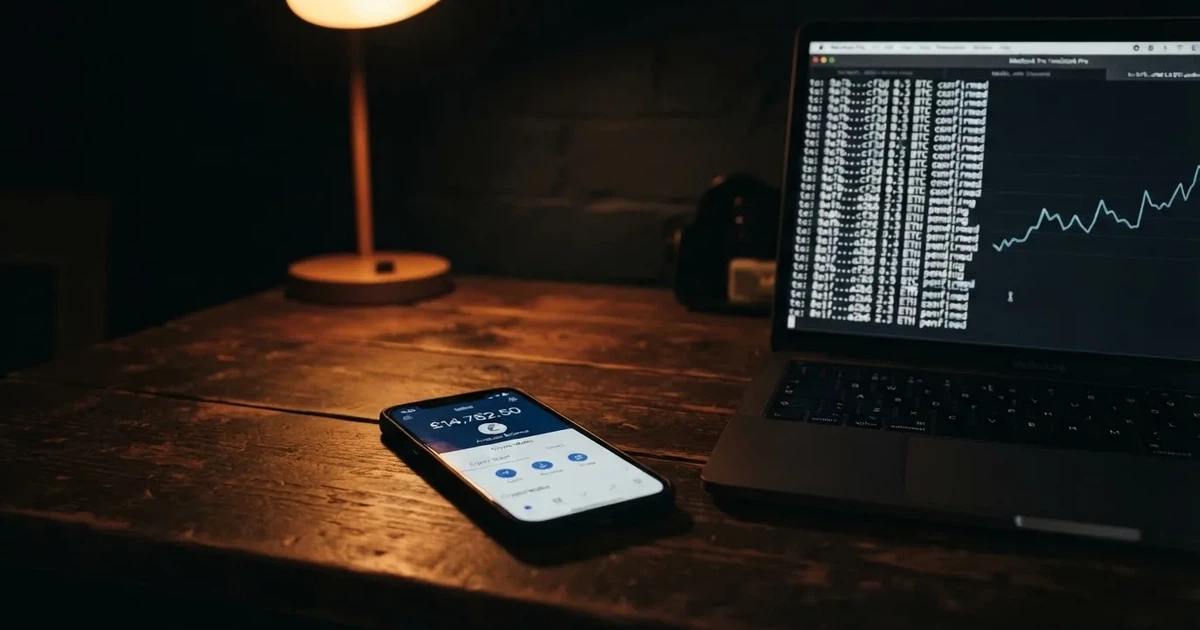
Bitcoin Cash casinos in the UK — where the licensed market ends and the offshore wallet begins
 Available in GB
Comparing casinos that take Bitcoin Cash in the United Kingdom is, in practice, comparing one thing against another. On one side stands the Gambling Commission’s licensed market — 139 active remote casino operating licences at the time of writing, every online operator joined to GAMSTOP, every new account verified before the first deposit. On the other stands the offshore world that advertises itself as a “Bitcoin Cash casino”, built around an unverified wallet, a name and an email, and a deposit that arrives without the safeguards a British player is otherwise used to. The page below closes that gap honestly. It reads the Commission register for what it actually says about Bitcoin Cash support, sets the limits that have come into force, and lays out the choice a player is making — knowingly or not — when they cross from one side to the other.

Current as of 23 September 2026 and verified against the Gambling Commission’s public register of gambling businesses.
Table of Contents
- What a Gambling Commission licence actually grants, and what it does not
- What Bitcoin Cash actually is, and why a casino accepting it is built differently
- Responsible gambling, and what the player leaves behind at an unlicensed casino
- Crypto, anonymity and the limits of the wallet
- The licensed comparison set, and what the register says about Bitcoin Cash on each one
- The wagering cap, and what 10x actually costs a player
- What the offshore Bitcoin Cash casino is, in practice
- The decision a British player is actually making
- Frequently asked questions
What a Gambling Commission licence actually grants, and what it does not
The Gambling Commission regulates commercial gambling in Great Britain — England, Scotland and Wales — under the Gambling Act 2005. Every operator taking customers in those three nations must hold a Commission operating licence, wherever the operator itself is incorporated. A Curaçao, Malta or Gibraltar licence is not a substitute: since the Gambling (Licensing and Advertising) Act 2014, taking British customers without the Commission licence is the offence, not the location of the office. The Commission publishes a public register that lists every active licence, every business holding one and every website domain that the licence covers. The register is the test. If the brand a player is looking at does not appear there, the brand is unlicensed for British play.

Three things follow from that, and each one shapes what a Bitcoin Cash casino comparison in the UK is actually about.
First, the register reads licence numbers in a precise shape: a six-digit account number, an “R” marking a remote (online) licence, then a sub-licence number and a suffix. So MrQ’s licence is 060629-R-337532-004 — the leading six digits (060629) are Tek Fox Ltd’s account number on the Commission register, the “R” marks it as remote, and the suffix (004) marks a particular version of that licence against a particular domain. Every line on the register follows that pattern, and any operator whose number does not parse to it is not on the register at all.
Second, the register also records the legal status of each domain a licence covers. A domain can be Active — the licence holder runs the site itself — or it can be a White Label, in which case one company holds the licence and trades under it for another. The distinction matters: a white-label domain is governed by the licence holder’s terms, not the brand on the front of the website. Reading the register properly means following the licence, not the logo.
Third, and most pointedly for the comparison this page is built around: the Commission’s published guidance treats cryptoassets, and Bitcoin Cash among them, as a high-risk payment method for anti-money-laundering purposes. Licence Condition 12.1.1 requires a Commission licensee to refresh its AML risk assessment before introducing a crypto-asset payment method, and the licensee has to notify the Commission of any change in payment methods it accepts. The effect, in plain English, is that a Commission licensee who wants to take BCH deposits from British players must build a compliance case for doing so. None of the licence holders covered by this page’s operator set has done so, and the register’s domain list reflects that — Bitcoin Cash support is not recorded against any of them.
The upshot is a market shaped like a corridor with two unequal halves. The licensed half is regulated, identifiable on a public register, and tied into the protections a British player expects. The crypto half is structured around the wallet itself and the speed at which a deposit arrives, and the protection that comes with a Commission licence does not follow the wallet across the boundary.
What Bitcoin Cash actually is, and why a casino accepting it is built differently
Bitcoin Cash is a cryptocurrency that forked from Bitcoin on 1 August 2017 at block height 478,559, with every Bitcoin holder receiving an equal amount of BCH at the moment of the split. The split was contentious from the start: the larger-block camp, including the mining hardware manufacturer Bitmain and the Bitcoin advocate Roger Ver, wanted Bitcoin to scale by raising its block size; the smaller-block camp preferred to push scaling off-chain. The mining pool ViaBTC proposed the name “Bitcoin Cash” shortly before the fork. BCH inherited Bitcoin’s SHA-256 proof-of-work mechanism, and its average block time sits around ten minutes. Its maximum supply is capped at 21 million coins, the same cap Bitcoin carries. In May 2018 the network’s block size limit was raised to 32 megabytes — far above Bitcoin’s one-megabyte ceiling — making BCH a noticeably cheaper coin to move on-chain, which is the practical reason a casino accepting it can advertise low-fee deposits. A further split in November 2018 produced the offshoot Bitcoin SV; the two chains have since moved on their own roadmaps.
The thing that makes Bitcoin Cash useful to an online casino is not the technology for its own sake — it is what the technology permits at the payments and onboarding stages. A BCH transfer settles in minutes rather than days, the on-chain fee is typically a fraction of a penny, and the transaction does not pass through a card network that has agreed to refuse gambling merchants. Credit cards have been banned for gambling in Great Britain since 14 April 2020, including e-wallet top-ups funded by a credit card. A casino that accepts a cryptocurrency sidesteps that restriction by design.
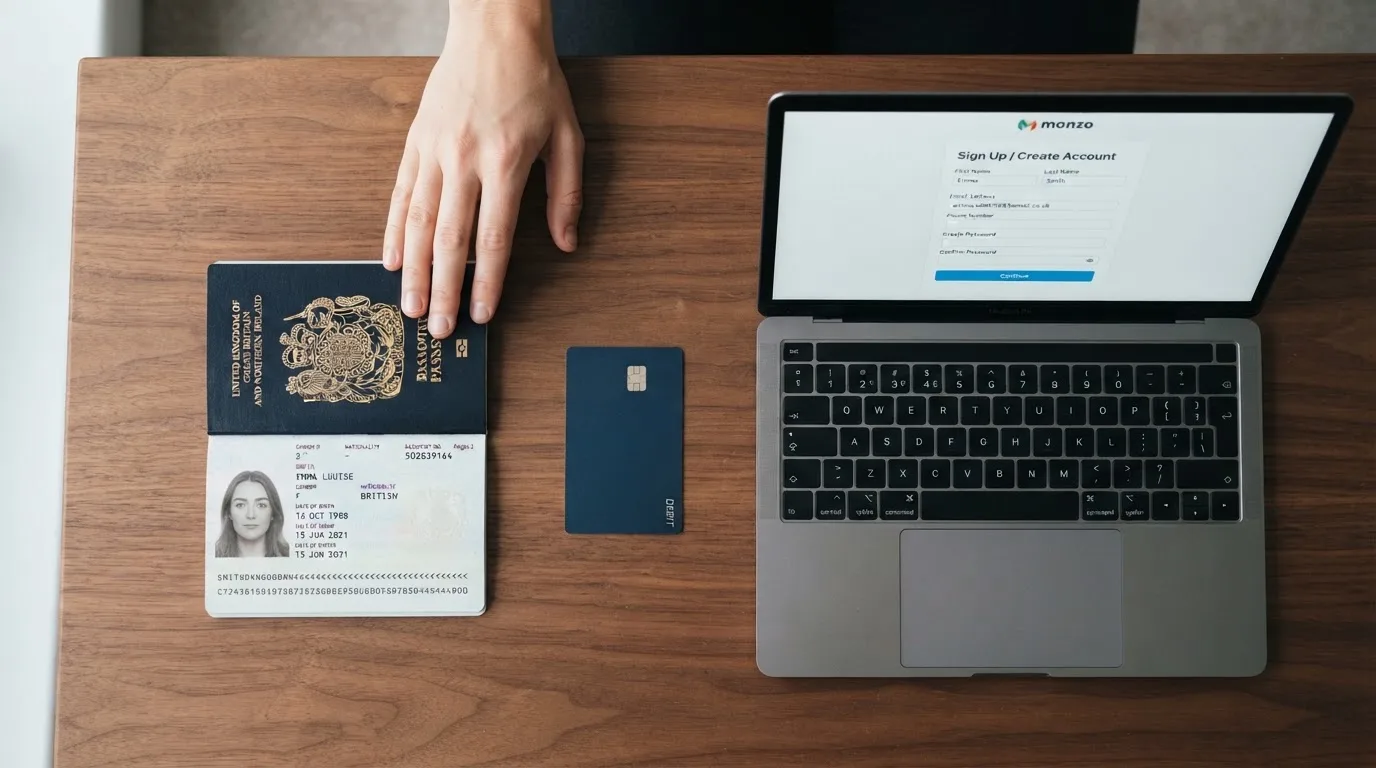
The same features also shape what an offshore Bitcoin Cash casino looks like to a player. Account opening at an unlicensed crypto casino is normally an email address and a wallet address — sometimes a username, sometimes nothing more. There is no name-and-address verification, no document upload, no soft credit search through an identity database. The casino’s compliance burden, in the absence of a regulator requiring one, is whatever the operator’s own terms set out. The wallet is the account; the wallet is the identity.
That is what makes the comparison sharp. The licensed British market has spent a decade tightening onboarding — name, address, date of birth verified before the first deposit since 7 May 2019, financial vulnerability checks at £150 of net deposits in any rolling 30-day window from 28 February 2025, GAMSTOP integration mandatory for every online licence since 31 March 2020. The offshore Bitcoin Cash market has spent the same decade moving in the other direction. The two are not different flavours of the same thing; they are different products, and a player crossing between them is making a deliberate choice about which protections they keep.
Responsible gambling, and what the player leaves behind at an unlicensed casino
Every Gambling Commission-licensed online casino must be a member of GAMSTOP, the national online self-exclusion scheme. A player who registers with GAMSTOP cannot open a new account with any Commission-licensed operator for the period they select — six months, one year or five years — and the exclusion cannot be cancelled early. GAMSTOP is the only nationwide mechanism a British player has for blocking their own access to online gambling across the licensed market in one step. It works because every online licence requires it as a condition, and because every Commission’s online operator runs the same check at sign-up.
A Bitcoin Cash casino operating outside Commission licensing is not bound by that condition. There is no Commission rule that an offshore operator must integrate with GAMSTOP, and the major offshore licence regimes that issue casino licences — Curaçao, Anjouan, certain Cyprus-registered operators — do not require their licensees to integrate with the British self-exclusion scheme either. A player who has registered with GAMSTOP and then opens an account with an offshore BCH casino has not, in any meaningful sense, excluded themselves from gambling. They have only excluded themselves from the part of gambling that chose to honour their request.
The same shape repeats for the other player-protection measures that have come into force. The Commission requires operators to prompt a customer to set a financial limit before the first deposit — in force since 31 October 2025 — and to run a financial vulnerability check at £150 net deposits in a rolling 30-day window, drawing on public data only. Auto-play is banned, a slot spin cannot run faster than 2.5 seconds, and losses disguised as wins are no longer permitted. None of these rules apply to an offshore Bitcoin Cash operator, because none of them are imposed by the regulator that granted the licence that operator actually holds. If a player at an unlicensed casino wants a deposit cap, they set one in their own account settings — if the operator offers the field. There is no second pair of eyes. The National Gambling Helpline (GamCare) and GambleAware are available to any player in Britain, regardless of where they gamble, and that is the support that follows the player across the boundary, not the platform-level protection.
The Commission also operates the only approved alternative dispute resolution (ADR) route for British players. A complaint that cannot be resolved with a Commission licensee can be escalated through an ADR provider approved by the Commission. An unlicensed operator does not sit on that route, and the Commission cannot adjudicate a complaint against a brand it does not regulate. What a player loses by going offshore is not just a deposit cap; it is the complaints path that exists if something goes wrong.
Crypto, anonymity and the limits of the wallet
The Commission’s published guidance on blockchain technology and cryptoassets is unambiguous: a crypto-asset such as Bitcoin Cash is rated high risk for anti-money-laundering purposes among Commission licensees, and any licensee wanting to introduce it as a payment method must refresh its AML risk assessment under Licence Condition 12.1.1 before doing so. That requirement, together with the credit-card ban and the verification rules, is the practical reason that no Commission-licensed casino on the register has announced BCH support — the compliance cost is real, and the work it imposes on the licensee is work the licensee has not been prepared to take on.
A separate layer sits outside the Commission’s scope. Cryptoasset businesses handling Bitcoin Cash that operate in the United Kingdom must register with the Financial Conduct Authority under the Money Laundering Regulations, and a new FCA authorisation regime under the Financial Services and Markets Act opens for applications on 30 September 2026. So the operator’s payment side — the exchange or custodian holding BCH on the casino’s behalf — has its own UK registration, and the casino side has its own Commission licence. An unlicensed crypto casino accepts BCH deposits without either layer touching it.
HMRC’s position is also worth knowing. Disposals of cryptoassets — selling, exchanging, spending on goods or services, or gifting them — are treated as potentially subject to UK Capital Gains Tax, and cryptoassets are not treated as currency for tax purposes; they are treated as property. A player who deposits BCH at a casino and later withdraws in another cryptocurrency or in pounds has, in HMRC’s view, disposed of an asset, and the gain or loss may be taxable. This is true whether the casino holds a Commission licence or not. The player carries the tax exposure; the casino does not collect it on the player’s behalf.
The anonymity question that the comparison is built around has a more layered answer than the marketing suggests. A Bitcoin Cash address is a string of letters and numbers; nothing in the address itself says who controls it. The Bitcoin Cash blockchain, however, is fully public, and every transaction ever made on it is permanently visible. Chain-analytics firms trace BCH flows routinely, and the practical anonymity of a BCH wallet depends on how it was funded and how it is cashed out — not on the wallet itself. The “anonymous casino” pitch is half-true at the casino end and largely false at the on-chain end, and a player who treats a BCH deposit as untraceable is treating it more loosely than the technology supports.
The licensed comparison set, and what the register says about Bitcoin Cash on each one
The brands ranked below all hold active Gambling Commission remote casino operating licences. Each is listed on the Commission’s public register, with its licence number, its licence holder and its domain status recorded. The order follows the register’s listing rather than a preference; this is what a player sees when they check, not what an affiliate site hands them. Bitcoin Cash support is not recorded against any of the licence holders below, because no GB licensee currently lists BCH as an accepted payment method on the Commission’s register — the comparison is, in that sense, a comparison of equals.
| Brand | Licence holder | GB remote casino licence | Domain status | Bitcoin Cash support |
|---|---|---|---|---|
| Casumo | Recro Limited (account 61549) | 061549-R-336718-002 | Active | — |
| Gala Bingo | LC International Limited (account 54743) | 054743-R-330863-014 | Active | — |
| MrQ | Tek Fox Ltd (account 60629) | 060629-R-337532-004 | Active | — |
| Virgin Games | Gamesys Operations Limited (account 38905) | 038905-R-319430-022 | White Label | — |
| bet365 | Hillside (UK Gaming) ENC (account 55149) | 055149-R-331499-004 | Active | — |
| Betway | Betway Limited (account 39372) | 039372-R-319367-029 | Active | — |
| Betfair | PPB Games Limited (account 39411) | 039411-R-319335-010 | Active | — |
| Ladbrokes | LC International Limited (account 54743) | 054743-R-330863-014 | Active | — |
| Midnite | Dribble Media Limited (account 42647) | 042647-R-321653-022 | Active | — |
| PokerStars | Stars Interactive Limited (account 39108) | 039108-R-319334-026 | Active | — |
Three structural points stand out from the register before any operator write-up begins. First, Gala Bingo and Ladbrokes share a single licence holder (LC International Limited, account 54743, licence 054743-R-330863-014). They are not independent operators; they are two brands on one licence, and the same responsible-gambling controls, payment-method list and onboarding flow apply to both. Second, Virgin Games trades as a white-label domain under Gamesys Operations Limited; the brand on the front of the website is not the entity that holds the licence, and the terms that bind the player are Gamesys’s, not Virgin’s. Third, every brand above must take part in GAMSTOP, and every brand above verifies the player before the first deposit — those conditions sit on the licence, not on the brand.
The empty Bitcoin Cash column is the comparison’s central finding. A British player looking for a BCH-accepting casino from the licensed half of the market will not find one. That is not because the brands have overlooked the option; it is because the Commission’s treatment of cryptoassets as high risk for AML purposes, the credit-card ban that pushed operators towards alternative rails, and the verification rules imposed on licensees have together made BCH acceptance a compliance choice no Commission licensee in the comparison set has yet taken.
Casumo — clean account opening, no crypto rail
Casumo sits on the Commission’s register as an active domain under Recro Limited, with the licence number 061549-R-336718-002 and account 61549. The brand has built its reputation on the gamified account-opening flow, the curated slot library and a relatively clean presentation of wagering terms. Bitcoin Cash is not an accepted deposit method at Casumo, and the brand has not announced any intention to add one. For a player who wants the licensed experience — GAMSTOP coverage, deposit prompts, the ADR route — Casumo is a standard Commission licensee; for a player who wants to deposit in BCH, it is not the destination.
Gala Bingo — bingo-led, no crypto rail
Gala Bingo is listed as an active domain under LC International Limited, alongside Ladbrokes, sharing the same licence (054743-R-330863-014). The brand leans heavily on bingo and on the wider Entain product stack behind it. Bitcoin Cash is not an accepted deposit method, and the bingo-led product mix makes the gap less surprising than it would be for a casino-first brand. The licensed status is what matters here: a Gala Bingo player sits inside the same protection envelope as a Ladbrokes player, because they are on the same licence.
MrQ — small catalogue, no crypto rail
MrQ is listed as an active domain under Tek Fox Ltd, on the licence 060629-R-337532-004 (account 60629). The brand’s pitch is the absence of wagering requirements on most of its promotions — a sharp contrast to the 10x wagering cap that has applied across Commission licensees since 19 December 2025. That positioning is itself an answer to the wagering-cost question a player would otherwise face. Bitcoin Cash is not an accepted deposit method, and MrQ’s product catalogue is narrower than the multi-vertical brands higher up the comparison.
Virgin Games — white-label structure worth knowing about
Virgin Games is listed as a white-label domain under Gamesys Operations Limited (account 38905), on the licence 038905-R-319430-022. The white-label status means Gamesys holds the licence and trades under it for Virgin’s brand; the player is bound by Gamesys’s terms, not by Virgin’s, and the responsible-gambling controls are Gamesys’s responsibility, not Virgin’s. That distinction is invisible on the front of the website and important on the back. Bitcoin Cash is not an accepted deposit method here either. The brand is, in effect, a Gamesys casino wearing a Virgin badge, and a player comparing it to the active-domain brands above should know that the licence holder is the constant.
bet365 — full-vertical, no crypto rail
bet365 is listed as an active domain under Hillside (UK Gaming) ENC, on the licence 055149-R-331499-004 (account 55149). The brand is the most recognised in British online gambling, with a full-vertical product stack and an in-house trading operation. Bitcoin Cash is not an accepted deposit method. For a player whose priorities are market depth and a regulated environment, bet365 is the standard-bearer; for a player whose priorities are BCH-native deposits, it is, like every other brand in the set, off the menu.
Betway — established brand, no crypto rail
Betway is listed as an active domain under Betway Limited, on the licence 039372-R-319367-029 (account 39372). The brand has been around long enough that the absence of Bitcoin Cash is a deliberate choice rather than an oversight — the compliance cost of adding a crypto rail is the cost the brand has decided not to pay. The same responsible-gambling controls apply as on every other Commission licence: GAMSTOP, deposit prompts, the £150 financial vulnerability check. The licensed status is the headline; the absence of BCH is the shape of the choice Betway has made.
Betfair — exchange pedigree, no crypto rail
Betfair is listed as an active domain under PPB Games Limited, on the licence 039411-R-319335-010 (account 39411). The brand carries the legacy of the betting exchange, and the casino product sits beside it rather than above it. Bitcoin Cash is not an accepted deposit method. The exchange pedigree means the brand is unusually comfortable with non-card payment rails in principle, which makes the BCH gap a particularly clear signal: the Commission’s AML treatment of cryptoassets, combined with the existing payment-method approval process, has been enough to keep Betfair off BCH for now.
Ladbrokes — LC International peer, no crypto rail
Ladbrokes is listed as an active domain under LC International Limited, on the same licence as Gala Bingo (054743-R-330863-014, account 54743). The two brands are siblings rather than competitors; the difference is the front of the website, not the back of the licence. Bitcoin Cash is not an accepted deposit method. A player weighing Ladbrokes against Gala Bingo is weighing presentation, product mix and welcome terms; the protection envelope is identical because the licence is identical.
Midnite — newer entry, no crypto rail
Midnite is listed as an active domain under Dribble Media Limited, on the licence 042647-R-321653-022 (account 42647). The brand is a newer entrant to the Commission register than most of the comparison set, with a product mix built around slots and esports. Bitcoin Cash is not an accepted deposit method. The newer licence date is a reminder that the register is live: brands enter and exit, and a comparison written off the register ages quickly.
PokerStars — poker-first, no crypto rail
PokerStars is listed as an active domain under Stars Interactive Limited, on the licence 039108-R-319334-026 (account 39108). The brand’s reputation is built on poker, and the casino product is the secondary vertical. Bitcoin Cash is not an accepted deposit method. The UK-facing domain (Pokerstars.uk) sits under the same Commission regime as every other brand above; the player experience is governed by the licence, not by the .uk suffix.
The wagering cap, and what 10x actually costs a player
Since 19 December 2025, wagering requirements on Commission-licensed casinos have been capped at 10x. The cap applies to the bonus amount: a £100 bonus cannot carry a turnover requirement above £1,000. Mixed-product bonuses — the “bet on sport, get casino spins” pattern — are banned. The 10x ceiling is a hard one, and it has narrowed the gap between the lightest and the heaviest offers on the licensed side of the market.
The arithmetic behind the cap is what a player should run before they accept any bonus. A £100 bonus with a 10x wagering requirement means £1,000 of qualifying turnover. At a slot stake of £1 per spin, that is 1,000 spins; at a stake of £0.10 per spin, 10,000 spins. The Commission’s slot-stake rules bound the top end of any stake-per-spin calculation: a player aged 25 or over can stake up to £5 per game cycle (since 9 April 2025); a player aged 18 to 24 can stake up to £2 per game cycle (since 21 May 2025). At the £5 ceiling and the 10x cap, a £100 bonus clears in a minimum of 200 spins. At £0.10 per spin, the same £100 bonus takes 10,000 spins to clear.
What the 10x cap has actually done is compress the spread. Before the cap, Commission licensees could attach wagering requirements of 30x, 40x or higher to a bonus — a £100 bonus could carry £3,000 or £4,000 of required turnover, and a player clearing it at £1 per spin would need 3,000 or 4,000 spins to do so. The cap has shortened the worst-case clearing time by roughly two-thirds. For a bonus of £50, the spread was wider still; for a bonus of £200, narrower. The point is that 10x is now the floor of the realistic worst case on the licensed side, and the floor has changed the shape of the comparison a player is making between a Commission bonus and an offshore Bitcoin Cash offer.
The second number worth knowing is what the bonus actually costs in expectation. A slot’s return-to-player percentage sits, on most slots on a Commission-licensed site, in the 94%–96% range; the house edge is the difference, and the player loses that fraction of their turnover on average across enough spins. A £1,000 turnover at a 95% RTP is a £50 expected loss; at a 96% RTP it is £40; at a 94% RTP it is £60. The bonus is “free” in marketing language and a known-expected-cost proposition in arithmetic, and the player who skips the bonus gives up the wagering burden and keeps the deposit intact. The 10x cap does not change that arithmetic; it just narrows the range of bonuses on which the arithmetic matters.
What the offshore Bitcoin Cash casino is, in practice
A Bitcoin Cash casino that is not on the Commission’s register is, in practice, a website operated from outside Great Britain by a company licensed in a different jurisdiction, advertising Bitcoin Cash as a deposit method, and accepting BCH deposits to a wallet it controls. The player’s experience runs as follows.
Account opening requires an email address and a password. There is no name-and-address verification, no document upload, no soft credit search. The player is anonymous to the casino in any meaningful sense; the casino is anonymous to the player in any meaningful sense; the wallet is the connection between them.
Funding an account means sending BCH from a wallet the player controls to a deposit address the casino provides. Confirmation time is governed by the Bitcoin Cash network — typically a few minutes for the first confirmation, longer for several. The fee is paid by the sender and is a fraction of a cent at current network conditions. The casino credits the player’s account in BCH (or in a unit such as mBCH), at an exchange rate set by the casino, sometimes with a margin on top of the prevailing rate.
Playing the games is the same as at any other casino, except the platform sits on the casino’s own infrastructure rather than on a Commission-licensed platform. The games are supplied by the same third-party studios in many cases — the studios are not licensed by the Commission and do not need to be — and the same slot mechanics apply.
Withdrawal reverses the flow. The player requests a payout to a BCH wallet they control, the casino approves and sends, and the funds arrive after the next confirmation block. There is no card-network intermediary and no bank intermediary, which is part of the appeal.
What is missing from that flow is the licensed-market scaffolding. There is no GAMSTOP check at sign-up, because the casino does not integrate with GAMSTOP. There is no £150 financial vulnerability check, because no regulator has imposed one. There is no Commission ADR route, because the Commission does not regulate the casino. The Commission’s disruption efforts — cease-and-desist notices, payment and hosting referrals, search-engine delisting referrals — operate against the brand rather than the player, and the player is not the target of any enforcement action. What the player loses is the protection, not the legal standing.
The decision a British player is actually making
The comparison this page runs is not between ten Bitcoin Cash casinos. It is between two markets that share almost nothing beyond the word “casino”. On one side is the licensed half of the British market — ten Commission licensees, every one of them GAMSTOP-joined, every one of them verifying the player before the first deposit, none of them accepting Bitcoin Cash. On the other is the offshore crypto half — anonymous onboarding, BCH deposits and withdrawals, none of the licensed-market scaffolding.
The player who wants to deposit in Bitcoin Cash is choosing, explicitly, the offshore half. They are giving up GAMSTOP coverage, the deposit prompt, the financial vulnerability check, the Commission ADR route and the credit-card-ban workaround. They are gaining faster settlement, lower on-chain fees, and an onboarding flow that does not require a utility bill. The trade is real, and it is the player’s trade to make — but the trade is only the player’s if they know they are making it. Many of the brands advertising “Bitcoin Cash casino UK” do not hold a Commission licence, and the page has been written to make that gap visible rather than smooth it over.
For a player whose priority is BCH-native deposits, the licensed half of this comparison is, by definition, the wrong place to look. The comparison’s value to that player is the licence column — the proof that none of the ten brands on the register accepts BCH, and the proof that the absence is structural rather than accidental. For a player whose priority is the licensed environment, the comparison’s value is the rest of the columns — the licence holders, the licence numbers, the domain statuses — that confirm every brand above is a Commission licensee, and that the absence of BCH is the only feature those brands share.
The cross-boundary case — a player who wants BCH deposits and licensed protection — does not currently exist in the Commission’s licensed set. The closest legitimate route runs through a licensed operator accepting a different deposit method (debit card, bank transfer, selected e-wallets) and the player converting BCH to a supported currency before depositing. That route forfeits the speed and the on-chain fees that drew the player to BCH in the first place, and it is the route the market offers today. If the Commission’s treatment of cryptoassets shifts, the comparison will shift with it; for now, it is the picture on the register.
Frequently asked questions
Does any Gambling Commission-licensed casino accept Bitcoin Cash deposits?
No. None of the ten brands in this comparison set accepts Bitcoin Cash, and the Commission’s published guidance treats cryptoassets as high risk for anti-money-laundering purposes. Any Commission licensee wanting to add BCH would have to refresh its AML risk assessment under Licence Condition 12.1.1 and notify the Commission of the change in payment methods. None of the brands above has done so, and the register’s domain list reflects that gap.
What happens to identity verification at a Bitcoin Cash casino outside UK licensing?
Account opening at an offshore BCH casino is normally an email address and a wallet address. There is no name-and-address verification, no document upload, and no soft credit search. The casino’s compliance burden is whatever its own terms set out. That is the practical difference between a Commission licensee, which has verified every customer since 7 May 2019, and an unlicensed crypto casino, which has not.
Is a casino accepting Bitcoin Cash automatically unlicensed for British players?
Not automatically — a casino can hold both a Commission licence and accept BCH if it has built the AML case to do so. In practice, no Commission licensee on the register currently lists BCH as an accepted payment method, so the casinos a British player meets advertising BCH acceptance are, almost without exception, unlicensed for British play. The Commission’s public register is the test of which is which.
What self-exclusion cover does a player lose at a Bitcoin Cash-only casino?
A player loses GAMSTOP coverage, because GAMSTOP is mandatory for every Commission online licence and offshore BCH casinos do not integrate with it. A player who has registered with GAMSTOP and then opens an account with an offshore BCH casino has not excluded themselves from gambling in any cross-platform sense; they have only excluded themselves from the licensed half. The same gap applies to deposit prompts, financial vulnerability checks and the Commission ADR route.
How does funding an account with Bitcoin Cash differ from a standard UK bank transfer?
A BCH transfer settles in minutes rather than days, the on-chain fee is paid by the sender and is typically a fraction of a cent, and the transaction does not pass through a card network. The trade is the verification flow: a bank transfer ties the deposit to a named account, and a BCH transfer ties the deposit to a wallet address. The first is auditable to the casino and to the regulator; the second is auditable on-chain but not to a Commission AML framework.
Why do most UK-licensed casinos avoid cryptocurrencies such as Bitcoin Cash?
Three reasons stack up. The Commission rates cryptoassets as high risk for AML purposes and requires a refreshed risk assessment under Licence Condition 12.1.1. Credit cards have been banned for gambling since 14 April 2020, including via e-wallets, which pushes operators towards debit and bank rails the Commission already knows. And the verification rules that have applied since 7 May 2019 push onboarding in the opposite direction from the wallet-first onboarding a crypto casino prefers. The licensed half of the market has not been built for BCH, and no licensee in this comparison has rebuilt for it.
Published by the quickpayoutcasinouk team.