
Paying by phone credit at a UK mobile casino: what the route really does, who is licensed to take it, and where the bill finds you
 Available in GB
A pay-by-phone-credit deposit at a UK online casino is, on the face of it, the simplest kind of money-in a phone can do: a deposit charged to the mobile account, the casino credited within seconds, no card typed and no bank app opened. What sits around that simple act is the heavier part of the story — a Gambling Commission licence that obliges the operator to check who you are before the first pound goes in, a £10 cap on most deposits of this kind, a 10x wagering ceiling in force across every bonus since 19 December 2025, and a self-exclusion register the operator is required to consult. This page works through each of those in turn, and ends with ten Gambling Commission-licensed brands ranked, the comparison table that sits beside them, and the questions readers most often bring to this corner of the market.
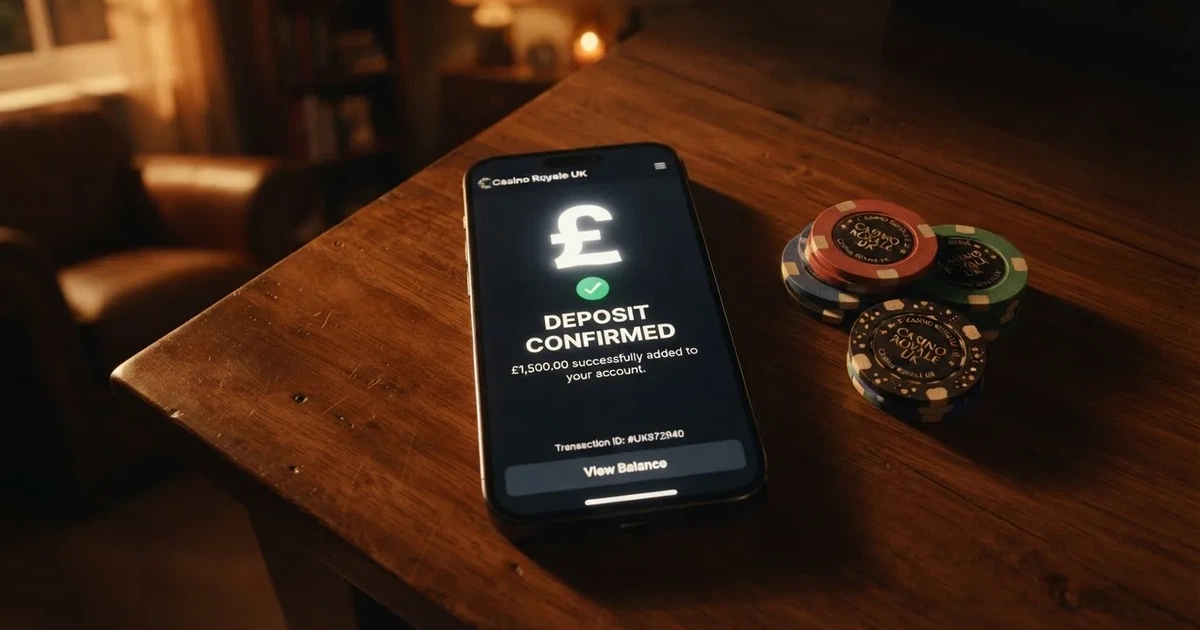
Data current as of 23 September 2026, against the Gambling Commission’s public register of gambling businesses (downloaded in full on 18 September 2026).
Table of Contents
- Why this corner of the market reads differently from “deposit by card”
- The licensing frame: what a Gambling Commission licence actually obliges
- Safer-gambling protections specific to this deposit route
- The 10x wagering ceiling: how a bonus looks once the rule is in force
- Comparing ten Gambling Commission-licensed brands on the same register check
- bet365 — the largest GB-licensed brand, by register footprint
- Betfred — a Gibraltar-held licence, registered in GB
- PokerStars — Stars Interactive, the .uk domain
- 32Red — Platinum Gaming, one of the longer-tenured GB licences
- Virgin Games — a white-label site under Gamesys
- William Hill — WHG (International), the historic British bookmaker
- Midnite — Dribble Media, a smaller active domain
- Grosvenor Casinos — Rank Interactive, the high-street name online
- 888casino — 888 UK Limited, the household-name brand
- kwiff — Eaton Gate Gaming, the most recent on the list
- What the comparison table is and is not telling the reader
- Offshore sites and the protection gap
- What the register does not show, and what that means for a comparison
- The current state of the phone-paid services regulator
- Putting the route into a player’s decision
- Frequently asked questions
Why this corner of the market reads differently from “deposit by card”
A deposit charged to a phone account is not a deposit paid through a phone. Apple Pay, Google Pay and the bank apps on a smartphone are card fronts — the money still leaves a current account, on a card token, through the usual rails. A pay-by-phone-credit deposit is older, smaller and more tightly capped than any of those routes, and it has been around in some form since the UK mobile-billing scheme Payforit launched in 2007, having grown out of the SimPay consortium work begun in 2005. The route it replaced — SimPay, founded in February 2003 by four major carriers and wound down in June 2005 — never reached a casino cashier; Payforit was the first scheme that did. Alongside it sits Boku, founded in 2009 and headquartered in London, which bills transactions directly to a mobile phone account and operates across more than 90 countries.

Two practical consequences follow. The first is the ceiling: a pay-by-phone-credit deposit at a UK-licensed casino is typically capped at £10 per transaction, with a daily ceiling in the same range — the method is built for small, frequent top-ups, not for funding a long session in one go. The second is the bill: a deposit charged to a monthly phone contract appears on the next bill; a deposit charged to a pay-as-you-go SIM comes off the credit already on the account. The casino never sees the card or the bank; the carrier sees the charge and the regulator sees the scheme. That is the trade — speed and anonymity from the card’s side, in exchange for a tight cap and the carrier sitting in the middle of every transaction.
The licensing frame: what a Gambling Commission licence actually obliges
Holding a remote casino operating licence from the Gambling Commission is not a marketing badge. It is a continuing set of obligations under the Gambling Act 2005, policed by the LCCP and the Remote Technical Standards, and enforced by a Commission that can suspend or revoke. As of 18 September 2026 the Commission’s public register listed 139 businesses holding an active remote casino operating licence — searchable online and downloadable in full as a CSV or Excel file. That register, not the operator’s own footer, is the test of whether a brand is licensed at all.

A remote licence number on the register has a fixed shape: account-R-number-suffix, where the first six digits repeat the licence holder’s account number and the R marks a remote (online) licence. The domain list on the same register runs each website against the licence account that operates it, with a status of Active, Inactive or White Label. On 18 September 2026 that list held 1,065 active and 361 white-label domain entries — a white-label site trades under another company’s licence, which is why two apparently different brands can share one licence number. Reading the register before reading the bonus page is the only check that distinguishes the two.
For a player, the obligations matter in three places. First, the operator must verify name, address and date of birth before the first deposit or any play — the rule has been in force since 7 May 2019, and anonymous play is not possible at a licensed site. Second, the operator must offer GAMSTOP, the national online self-exclusion scheme, which has been a mandatory condition of every online licence since 31 March 2020, with periods of six months, one year or five years and no early cancellation. Third, the operator must offer deposit-limit tooling and a reality-check prompt, and from 31 October 2025 must prompt the customer to set a financial limit before the first deposit.
Safer-gambling protections specific to this deposit route
Three protections deserve their own treatment because each one bites the moment a phone-credit deposit is made.
GAMSTOP registration covers every GB-licensed online operator. A player who has self-excluded cannot deposit by any route at any licensed brand — phone credit included — and the operator is required to check. The protection is total at licensed sites and absent at unlicensed ones, which is the single largest gap between the two markets.
Financial vulnerability checks fire at £150 net deposits in a rolling 30 days, using public data only, in force since 28 February 2025. A pay-by-phone-credit deposit counts in that total in the same way a card deposit does, and the trigger is on net deposits rather than on the route. The wider financial risk assessments have been announced but are not yet in force.
Deposit-limit tooling sits with the operator, not the regulator. The Commission does not set a default ceiling; it requires the operator to ask the customer to set one before the first deposit, and to honour the limit the customer picks. A pay-by-phone-credit route does not bypass that prompt — the operator’s cashier cannot proceed without it.
Two further points belong here. Auto-play on slots has been banned since 31 October 2021, a spin may not be faster than 2.5 seconds, and losses disguised as wins are banned. These are not payment-route rules; they are slot-design rules, and they apply to every slot played at every licensed operator regardless of how the deposit arrived.
The 10x wagering ceiling: how a bonus looks once the rule is in force
Since 19 December 2025, wagering requirements on every UK-licensed casino bonus are capped at 10x — the bonus amount, not the deposit-plus-bonus, must be turned over no more than ten times. Mixed-product bonuses (a sports bet bundled with casino spins, for example) are banned. The cap flattens the market: a bonus that once required 35x or 50x turnover now asks for a tenth of that work, and a bonus that asked for 10x before the cap is unchanged.
Read as a band, the effect runs like this. A £10 pay-by-phone-credit deposit that carries a 100% bonus and a 10x wagering requirement asks for £100 of qualifying turnover before withdrawal — ten times the bonus. A £10 deposit that carries no bonus asks for nothing. A £30 deposit on a different bonus, also at 10x, asks for £300 of turnover. The arithmetic is straightforward; the consequence is what a player feels. At £1 a spin on a slot returning 96% in the long run, £100 of turnover is 100 spins — about four minutes of play. At £5 a spin, the same £100 of turnover is twenty spins — well under a minute, and the spin ceiling in force from 9 April 2025 is £5 per game cycle for players aged 25 and over, £2 for those aged 18 to 24 from 21 May 2025. The ceiling on stake and the ceiling on wagering are different rules with the same effect on a small deposit: the bonus clears quickly or it was never there.
The point of writing the figure as a band rather than as one number is that the wagering multiple is fixed at 10x but the bonus attached to any given deposit is not — and a pay-by-phone-credit route at a licensed casino is most often a small, bonus-light deposit, where the 10x ceiling is more relevant as a guard rail than as a saving. A reader with a £10 phone-credit deposit is rarely clearing a five-figure bonus; the rule protects them from ever having to.
Comparing ten Gambling Commission-licensed brands on the same register check
The ten brands below are taken in order from the Gambling Commission’s public register, each cross-checked against the licence account and remote licence number on the same register. The order is the register’s, not a ranking: every brand here holds an active remote casino operating licence, every one must take part in GAMSTOP, and none of them is being recommended over another. The table that follows carries the licence holder, the GB remote casino licence number, the domain status on the register, and whether the operator publishes evidence of accepting phone-credit deposits — which, for the ten featured brands, is not a figure any of them carry.
| Brand | Licence holder | GB remote casino licence | Domain status | Phone-credit deposit |
|---|---|---|---|---|
| bet365 | Hillside (UK Gaming) ENC | 055149-R-331499-004 | Active | — |
| Betfred | Petfre (Gibraltar) Limited | 039544-R-319290-010 | Active | — |
| PokerStars | Stars Interactive Limited | 039108-R-319334-026 | Active | — |
| 32Red | Platinum Gaming Limited | 045322-R-324275-019 | Active | — |
| Virgin Games | Gamesys Operations Limited | 038905-R-319430-022 | White Label | — |
| William Hill | WHG (International) Limited | 039225-R-319373-015 | Active | — |
| Midnite | Dribble Media Limited | 042647-R-321653-022 | Active | — |
| Grosvenor Casinos | Rank Interactive (Gibraltar) Limited | 057924-R-334666-005 | Active | — |
| 888casino | 888 UK Limited | 039028-R-319297-014 | Active | — |
| kwiff | Eaton Gate Gaming Limited | 044448-R-323408-017 | Active | — |
The em-dash in the final column is doing real work. None of the ten featured brands carries a verified figure for phone-credit deposit support on the public record this page is built from, and a figure invented to fill the column would mis-state what the register does and does not show. The brand is licensed; the route is not a register fact. What the register does show, on every row, is that the operator has met the conditions of holding the licence at all — which is the question the route is being filtered through, not whether the brand prefers one payment method over another.
bet365 — the largest GB-licensed brand, by register footprint
bet365 sits in the register as an active domain of account 55149, Hillside (UK Gaming) ENC, under remote casino operating licence 055149-R-331499-004. That is the largest of the ten licences in terms of brand familiarity; the licence number is the smaller of the two facts. What the licence obliges is the same as it obliges any other holder: verify the customer before the first deposit, route through GAMSTOP, prompt for a deposit limit, cap wagering at 10x. The brand does not publish, on the record this page reads from, whether it accepts phone-credit deposits; the register check confirms only that it is licensed to take remote casino business in Great Britain, not which payment routes its cashier supports.
A reader comparing bet365 against the rest of this list is comparing one licensed brand against nine others, with the payment-route question genuinely open. The verdict on the block is that the licence is the strongest single credential on the page and that the route itself sits outside what the register can confirm.
Betfred — a Gibraltar-held licence, registered in GB
Betfred runs on Betfred.com, which is assigned to account 39544, Petfre (Gibraltar) Limited, under remote casino operating licence 039544-R-319290-010. The holding company is Gibraltar-incorporated, which is common across this set — it makes no difference to the player’s position because the Gambling (Licensing and Advertising) Act 2014 brought every operator taking customers in Great Britain inside the Commission’s remit, regardless of where the parent company sits. What matters is the GB licence number, the GAMSTOP registration that goes with it, and the obligations that follow from holding it.
Petfre (Gibraltar) Limited has held this particular licence across ten published iterations on the register; the suffix -010 is the current one. A reader using the register to verify a brand looks at the whole string, not just the leading six digits. The verdict on this block is that the licence is current and the brand is active on the register; the payment route is not a register fact and is not confirmed here.
PokerStars — Stars Interactive, the .uk domain
PokerStars runs on Pokerstars.uk — a .uk domain, not a .com — which is assigned to account 39108, Stars Interactive Limited, under remote casino operating licence 039108-R-319334-026. The .uk choice is not incidental; since 2014 the Commission has required operators targeting British customers to hold a GB licence, and a .uk domain signals compliance in a way a .com does not. The licence suffix -026 is the current one of twenty-six published iterations.
The brand is associated internationally with poker, and the casino vertical sits alongside it on the same licence. A reader approaching this brand for casino play rather than poker play is approaching it under the same licence conditions. The verdict: licensed, active, and the payment-route question is handled similarly across all listed brands.
32Red — Platinum Gaming, one of the longer-tenured GB licences
32Red runs on 32red, appearing on the register as an active domain of account 45322, Platinum Gaming Limited, under remote casino operating licence 045322-R-324275-019. The licence suffix -019 reflects a long history of renewals and variations under the same account — nineteen published iterations is a marker of how long the brand has sat under Commission oversight. A reader cross-checking the brand against the register will see the same account number regardless of how the licence has been varied over time.
The verdict on the block is that the licence is long-standing and the brand is active, and that the route question — phone-credit deposit specifically — is not answered by the register on any of the ten brands in this set. What 32Red does carry, on the same terms as the rest, is the obligations every GB licensee holds.
Virgin Games — a white-label site under Gamesys
Virgin Games sits in a different column of the table. The domain Virgin Games is listed on the register as a white-label domain of account 38905, Gamesys Operations Limited, under remote casino operating licence 038905-R-319430-022. White-label means the site trades under another company’s licence — Gamesys in this case — and a player dealing with Virgin Games is dealing, for regulatory purposes, with Gamesys Operations Limited. The brand is consumer-facing; the licence holder is the regulated entity.
This is the row where the licence holder and the brand name do not match, and the row where reading the register carefully is the difference between understanding who is on the hook for a complaint and not. A reader who needs to file a complaint routes it to Gamesys Operations Limited; a reader who self-excludes via GAMSTOP is excluded from both the Gamesys sites and the white-label brands running under the same account. The verdict: same regulatory protections as the rest, with the operator behind the brand being Gamesys rather than a Virgin-licensed entity.
William Hill — WHG (International), the historic British bookmaker
William Hill runs on William Hill, which is registered to account 39225, WHG (International) Limited, under remote casino operating licence 039225-R-319373-015. WHG (International) Limited is the Gibraltar-incorporated parent that has held the GB remote licence for the William Hill brand across this and prior iterations; the suffix -015 is the current one. The brand is one of the longest-standing British names in the trade, and the licence has been varied under the same account number across the period the Commission has published the register.
The verdict on the block is that the brand and the licence are both long-standing, that the payment-route question is handled similarly across the board, and that a reader approaching William Hill for a phone-credit deposit is approaching a brand where the regulatory frame is settled and the payment-route frame is not.
Midnite — Dribble Media, a smaller active domain
Midnite runs on Midnite.com, which is registered to account 42647, Dribble Media Limited, under remote casino operating licence 042647-R-321653-022. The account number 42647 is mid-range among the ten — not the smallest, not the largest — and the brand is one of the newer entries on the active list, with twenty-two published licence iterations reflecting a period of variation rather than the long history of some of the others.
A reader approaching Midnite for a phone-credit deposit is approaching a smaller brand where the licence check is the part that does the work, and the payment-route question is open on the same terms as the rest. The verdict is that the licence is current, the domain is active, and the register confirms only that the operator is licensed to take GB customers — not which deposit routes its cashier supports.
Grosvenor Casinos — Rank Interactive, the high-street name online
Grosvenor Casinos runs on Grosvenor Casinos, representing an active domain belonging to account 57924, Rank Interactive (Gibraltar) Limited, under remote casino operating licence 057924-R-334666-005. The Grosvenor brand is one of the better-known high-street casino names in the UK, and its online operation runs under a separate Gibraltar-incorporated parent — Rank Interactive — which is the licence holder rather than the brand owner. The licence suffix -005 is among the lower iteration counts on this list, consistent with the brand’s online arm being a more recent register entry than some of the others.
The verdict is that the brand and the licence are tied through Rank Interactive rather than through the high-street operator, and that the regulatory protections follow the licence holder rather than the brand name on the casino door.
888casino — 888 UK Limited, the household-name brand
888casino runs on 888casino, which is assigned to account 39028, 888 UK Limited, under remote casino operating licence 039028-R-319297-014. 888 UK Limited is the entity named on the licence — distinct from the international 888 Group — and the suffix -014 reflects the brand’s history under Commission oversight. The licence number is among the earlier ones on the register, in keeping with the brand’s long presence in the GB market.
The verdict is that the brand is one of the more established on this list, that the licence is current and the domain is active, and that the route question is open on the same terms as every other brand in the set.
kwiff — Eaton Gate Gaming, the most recent on the list
kwiff runs on Kwiff.com, which is registered to account 44448, Eaton Gate Gaming Limited, under remote casino operating licence 044448-R-323408-017. The account number 44448 is mid-range, the licence iteration count -017 is mid-range, and the brand is among the more recent entrants to the GB-licensed set. The suffix is current; the domain is active; the licence is held.
The verdict on the block is the same as the verdict on the rest of the set: the licence is the part the register confirms, and the payment-route question is open on the same terms. What kwiff offers on the route is not a figure any of these ten brands carry on the public record this page reads from.
What the comparison table is and is not telling the reader
The table earlier in this page is doing two things and refusing to do a third. It is confirming that every brand in the ranking holds an active remote casino licence from the Gambling Commission as of 18 September 2026, and it is naming the licence holder and the licence number a reader would need to verify the brand themselves. It is refusing to rank the brands — the order is the register’s, not a recommendation — and it is refusing to fill the phone-credit column with figures the public record does not carry.
The em-dashes in the final column are the page’s way of saying that the register is the wrong document for the question. The register confirms who is licensed; the operator’s own cashier page is where the payment-route question is answered, and that answer is outside the scope of a register check. A reader who needs a specific brand’s payment menu reads the brand’s own deposit page, not the Commission’s CSV download. The comparison on this page is a comparison of licences, not a comparison of cashiers.
Offshore sites and the protection gap
A site without a GB remote casino operating licence is not licensed to take customers in Great Britain. Providing gambling to people in Great Britain without a licence is an offence under section 33 of the Gambling Act 2005; the Commission disrupts illegal sites through cease-and-desist notices, search-engine delisting, and payment and hosting referrals, but it has no ISP-blocking power and no penalty aimed at the player. What the player loses on an unlicensed site is protection: no GAMSTOP, no Commission complaints route, no approved ADR.
For a phone-credit deposit specifically, the gap matters in one extra place. A pay-by-phone-credit deposit at an unlicensed site still goes through the carrier’s billing scheme, which means the charge still appears on the phone bill — but the regulatory backstop is absent. There is no deposit-limit prompt, no financial vulnerability check, no GAMSTOP check, and no 10x wagering cap. The deposit is fast; the recourse is not.
What the register does not show, and what that means for a comparison
Three things the register does not show are worth saying out loud. It does not show which deposit routes an operator supports, which is why the phone-credit column in this page’s table is em-dashes across the board. It does not show bonus terms, which is why this page does not compare welcome offers. It does not show withdrawal times, which is why the page does not rank brands by payout speed.
A register is a list of who is licensed to do what. It is not a list of who does what well, and treating it as the second is the mistake this page is built to avoid. The 10x wagering cap is a Commission rule and applies to every brand in the table. The phone-credit support is a brand-level choice and is not in scope of the register this page is built from.
The current state of the phone-paid services regulator
Day-to-day regulation of UK premium-rate phone-paid services transferred from the Phone-paid Services Authority back to Ofcom from 1 February 2025. That move does not change anything for a player at a GB-licensed casino, but it changes the body a complaint about a phone-billed charge would go to. Premium-rate SMS shortcodes beginning with 72 are reserved in the UK specifically for society lotteries, which limits the number ranges a casino deposit route would route through. UK premium-rate numbers carry a two-part charge — an access charge set by the caller’s phone company and a service charge set by the receiving organisation, with service charges capped between 7p per minute on 084x numbers and £3.60 per minute on 09xx numbers. A reader who finds an unexpected charge on a phone bill after a casino deposit has two regulators to consider, not one: the Gambling Commission for the casino side, and Ofcom for the phone-billing side.
Putting the route into a player’s decision
A pay-by-phone-credit deposit is a small, fast, carrier-billed top-up with a tight cap and a clear bill at the end of it. At a GB-licensed casino it sits inside a regulatory frame that obliges the operator to verify the customer, route through GAMSTOP, prompt for a deposit limit and cap any bonus wagering at 10x. The frame protects the player on the route, not from the route; the cap on the deposit and the speed of the credit are properties of the method, and the protection sits on top of them rather than replacing them.
For a reader comparing the ten licensed brands in this page’s table, the comparison that matters is the licence check — every brand holds an active GB remote casino licence on the register, which is the floor. What sits above the floor — payment-route support, bonus terms, withdrawal speed, game selection — is brand-level and outside the register’s scope. The ranking this page offers is a ranking of licences; the choice is the reader’s.
Frequently asked questions
How does paying by phone credit work at a mobile casino?
A deposit is requested at the casino cashier, the player confirms via SMS or a carrier-billing screen, and the amount is charged to the mobile account — a monthly contract bill or pay-as-you-go credit — and credited to the casino balance within seconds. The casino never sees the card or the bank; the carrier sits in the middle of every transaction. Payforit, the UK mobile-billing scheme, launched in 2007 after work begun in 2005.
Is a pay-by-phone-credit deposit added straight to a phone bill?
Yes, with a small qualification. A deposit charged to a monthly phone contract appears on the next bill; a deposit charged to a pay-as-you-go SIM comes off the credit already on the account. Either way, the carrier — not the casino — is the entity billing the player, and the charge is visible on the phone side rather than the casino side.
Do UK-licensed casinos still run ID checks before a phone-credit deposit?
Yes. Name, address and date of birth have been verified before the first deposit or any play at a GB-licensed casino since 7 May 2019, and the rule applies regardless of deposit route. Anonymous play is not possible at a licensed site, and a phone-credit deposit does not change that — the operator must verify the customer before any money is taken, by any method.
Is there usually a limit on how much can be deposited by phone credit?
Yes — typically £10 per transaction, with a daily ceiling in the same range. The cap is a property of the method rather than the operator, and is set by the carrier-billing scheme rather than by the casino. A reader who needs to fund a session with more than that will need a different deposit route; the phone-credit method is built for small, frequent top-ups.
How quickly does a phone-credit deposit reach a casino account?
Within seconds of confirmation. The deposit is charged to the mobile account and credited to the casino balance in the same flow, with no card processor or bank rail in between. Withdrawal is a separate question — it goes back to a bank account or e-wallet rather than to the phone, and the time depends on the operator’s payout cycle and the player’s verification status rather than on the deposit route.
Can phone-credit deposits be reversed if made by mistake?
No — not through the carrier or the casino. The deposit is a confirmed carrier-billed transaction, and once the casino has credited the balance the player has wagered on it. The recourse for an unauthorised charge is the carrier’s billing dispute route, not the casino’s cashier; the recourse for a regretted deposit is the operator’s safer-gambling tooling (deposit limits, time-out, self-exclusion) before the next one.
Published by the quickpayoutcasinouk team.