
Best Betsoft online casinos in the UK: what a Gambling Commission licence actually changes
 Available in GB
A Betsoft slot is just code until a UK player sits down and spins it. Then the question is no longer which studio drew the symbols — it is who holds the licence for the site the symbols load on, who has to verify the player before the first spin, and which rules around stake size, bonus terms and self-exclusion the licence imposes. That is the substance of a UK comparison of casinos carrying Betsoft titles: the games themselves are interchangeable across sites, the licence and the regulatory ceiling above it are not.
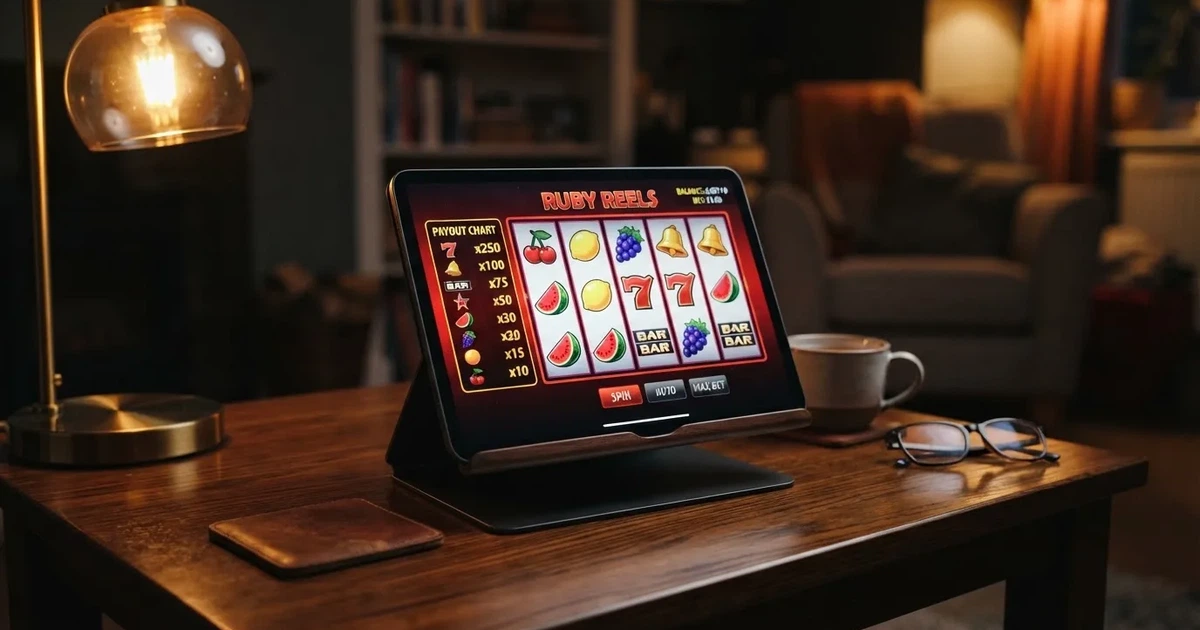
As of 23 September 2026, every operator named on this page was cross-checked against the Gambling Commission’s public register of gambling businesses.
Table of Contents
- Responsible gambling: the limits every licensed site has to honour
- Crypto and anonymity: why the licence makes these two different questions
- Payments and payout speed: what actually moves the time to a withdrawal
- Bonuses and free spins: what a 10x cap changes
- Mobile and apps: the Betsoft catalogue runs in a browser
- The Betsoft portfolio: what a UK player is actually choosing between
- Top ten licensed UK casinos carrying Betsoft: the comparison
- The licensing landscape at a glance
- Legality, regulation and what the licence covers
- Reading the table: what the licence column does and does not tell a reader
- Where the data stops and what the reader can do with it
- Frequently asked questions
Responsible gambling: the limits every licensed site has to honour
A Betsoft title runs to the same stake ceiling on every UK-licensed site, because that ceiling is statutory rather than contractual. From 9 April 2025, online slots in Great Britain carry a maximum stake of £5 per game cycle for players aged 25 and over. From 21 May 2025, the same ceiling falls to £2 for players aged 18 to 24. The figure is per spin — not per session, not per hour — and the operator enforces it at the game level, so a £2.50 stake simply does not take. A site that claims to be “Betsoft-only” or “VIP” cannot override it.

Identity verification is the other wall every licence runs into. Since 7 May 2019, name, address and date of birth have to be verified before the first deposit, and in practice before the first spin, using documentary or electronic checks. The check has no “skip for crypto” button. A site that takes Bitcoin but no ID is not on the Gambling Commission register, and a player using one gives up the complaints route and the self-exclusion scheme that come with the licence.
GAMSTOP has been a mandatory condition of every GB remote licence since 31 March 2020. Self-exclusion periods are six months, one year or five years, and they cannot be cancelled early; every site the Commission licences has to honour the exclusion. The phrase “Betsoft slots not on GAMSTOP” is therefore the name of a category that the UK licensing framework does not recognise — sites that promise it are unlicensed, and the consequences fall on the player, not the regulator. A useful comparison: the operator disruption powers the Commission does have include cease-and-desist notices, search-engine delisting and payment referrals; the power it does not have is ISP-level blocking, which is why some offshore sites remain reachable from a UK address.
Two more checks sit on top of GAMSTOP. From 28 February 2025, any customer reaching £150 in net deposits across a rolling 30 days triggers a financial vulnerability check using public data; the wider financial risk assessments have been announced but are not yet in force. Reality checks, mandatory on slots, sit alongside the spin floor of 2.5 seconds introduced on 31 October 2021. A player who wants a hard ceiling above these prompts can ask the operator for a deposit limit, a time-out, or a product-level block through the safer-gambling tools each site is required to surface.
That is the floor. Every site reviewed below sits on it; the comparison runs on what they add on top of it.
Crypto and anonymity: why the licence makes these two different questions
Cryptocurrency and anonymity are often lumped together in marketing copy, but on a UK-licensed site they are two different things. Bitcoin and the major altcoins can be present at the cashier, but the identity check sits upstream of the cashier. The 7 May 2019 verification regime does not exempt crypto deposits; the operator still has to confirm who is paying, and most licensed brands that accept crypto do so via an e-money or payments processor that handles the on-ramp in pounds before the funds hit the balance. A reader who treats “crypto accepted” as a synonym for “no KYC” has misread the licence.

The phrase “Betsoft casino without verification” is similarly meaningless against the GB register. Any site taking UK customers in £ or in BTC without verifying name, address and date of birth is operating without a Gambling Commission licence; the player has no ADR route, no GAMSTOP coverage, and no recourse to the Commission if the operator declines to pay a withdrawal. The Commission can issue cease-and-desist notices, refer sites to payment processors and hosting providers, and ask search engines to delist them, but the player is the one who loses protection first.
Where crypto genuinely does change the picture is on the deposit side, at licensed brands that route it through a regulated processor: the deposit can clear faster than a card payment, and the on-chain record can help a player reconcile what went in. It does not change the stake ceiling, the spin floor, or the bonus rules. A £5 max-stake slot still tops out at £5, whatever wallet it was funded from.
Payments and payout speed: what actually moves the time to a withdrawal
Betsoft slots themselves do not decide how fast a payout arrives; the operator’s cashier does. UK-licensed brands cluster around a small set of rails: debit card (Visa, Mastercard, sometimes Maestro), bank transfer (Faster Payments for most withdrawals, with the funds typically clearing within a few hours once approved), and a handful of e-wallets (PayPal where the operator is integrated with it, Skrill or Neteller on a few). The common bottleneck is the operator’s pending period — the time between requesting the withdrawal and the operator releasing it — rather than the payment rail itself.
Three observations hold across the licensed UK market. First, withdrawals back to a debit card are usually slower than withdrawals to an e-wallet or to a bank account via Faster Payments; the difference is hours, not days. Second, the pending window on a first withdrawal tends to be longer than on later ones, because the operator runs its source-of-funds and age-verification checks at that point. Third, withdrawal times advertised on the site are best-case figures; the realistic median is slower, especially if the player has not completed verification or has triggered one of the affordability prompts the licence requires.
The phrase “instant withdrawal” on a UK-licensed site almost always means “instant once approved”, not “instant from request”. A player who reads it as the latter sets themselves up for a complaint that the operator’s own terms do not actually cover.
Bonuses and free spins: what a 10x cap changes
Since 19 December 2025, the Gambling Commission has capped wagering requirements on casino bonuses at 10x. A welcome offer that requires the player to turn the bonus over 35 or 40 times before withdrawing is, after that date, not legal in the UK. A “free spins” package that credits the spin value as bonus funds with a wagering requirement above 10x sits outside the cap only if the spin value is treated as cash winnings from the start, which is the structure most licensed operators now use.
The cap also covers mixed-product bonuses. An offer of “bet £10 on football, get 50 free spins on a Betsoft slot” is no longer permitted, because it bundles two products under one promotional mechanic; the licensed route is to keep the casino bonus and the sports offer strictly separate, with their own terms and their own wagering ceilings. The marketing word to watch is “package”: a single promotional envelope that crosses product lines is the shape the Commission has closed off.
Free spins tied to a specific Betsoft title are still common, and they tend to land in one of two forms. In the first, the spins are credited at a fixed stake per spin and any winnings arrive as cash with no further wagering; in the second, winnings arrive as bonus funds subject to the 10x cap. The first is the cleaner offer for a player who wants to know what a spin is worth at the moment it lands; the second is closer to the old shape, scaled to the new ceiling. A player who cannot tell which form they are looking at should ask before claiming, because the difference is the difference between a cash balance and a bonus balance with a turnover requirement.
What a 10x wagering cap costs in practice
Take a hypothetical £100 welcome bonus at the maximum legal multiple. The required turnover is £100 × 10 = £1,000. At a £1 stake per spin on a slot paying roughly 96% back over time, that is 1,000 spins. At the statutory spin floor of 2.5 seconds, 1,000 spins takes 2,500 seconds, or about 42 minutes of uninterrupted play. The expected loss on the playthrough itself, ignoring any subsequent real-money play, is £1,000 × (1 − 0.96) = £40. So the headline “£100 bonus” clears to a real cost of about £40 over the playthrough, on a slot at a representative payback, before any win or loss on the player’s own funds.
The honest way to read that arithmetic is as a band, not a point. A £50 bonus at the same 10x cap means £500 of turnover, 500 spins, around 21 minutes of play and an expected loss of £20. A £200 bonus at the same cap means £2,000 of turnover, 2,000 spins, around 83 minutes and an expected loss of £80. The cap fixes the ratio of bonus money to playthrough; it does not change the underlying edge. A player who treats a higher bonus as a free lunch is reading the marketing and missing the maths.
The 10x cap is the UK ceiling, not the typical operator offer. Most licensed welcome packages sit below it, often between 1x and 5x for the bonus portion, with the free-spins winnings credited as cash. The cap exists precisely so that an offer above it cannot be marketed to UK players; an operator that advertises 35x is, after 19 December 2025, operating outside the licence.
Mobile and apps: the Betsoft catalogue runs in a browser
Betsoft’s catalogue is built on HTML5, and the titles render inside a phone or tablet browser without a separate download. The licensed UK sites reviewed here offer either a responsive web version, a dedicated app, or both. A dedicated app can shave a second off the time to first spin and can hold a session token that survives a phone restart; a responsive web version avoids an app-store install and runs on any modern device. The slot itself does not change.
Two practical points matter. First, mobile data on a slot session is light compared to most video apps, because the game assets are cached after the first load and subsequent spins reuse them; a player on a limited data plan will not see a meaningful hit. Second, the stake ceiling and the spin floor apply on mobile exactly as they do on desktop — a £5 maximum stake on a £2-per-spin phone session is the same £2-per-spin phone session. There is no mobile carve-out.
For live dealer play, the picture is slightly different. Betsoft is primarily an RNG slot studio, and the live tables on most licensed UK sites come from Evolution, Pragmatic Play Live or Playtech rather than from Betsoft itself. A player who joins a site specifically for Betsoft’s slot portfolio and then expects live tables under the same brand will be redirected to another provider’s lobby. The site-by-site breakdown below makes that boundary clear.
The Betsoft portfolio: what a UK player is actually choosing between
Betsoft was founded in 2006 and describes itself as pioneering slot games that raised player expectations for quality and engagement. The current portfolio spans more than 200 RNG titles across slots, table games, video poker and specialty formats. The studio holds certification from the Italian gambling authority ADM, from Gaming Labs International (GLI) and from Quinel for its RNG, and a UK distribution path runs through a company trading as Bet Software (PT) Ltd, which holds a Gambling Commission Remote Gambling Software licence, number 050689-R-328022-004, in force since 21 February 2018.
The recent release slate leans heavily on a narrative-driven series branded as “THE”: titles such as THE VIP, THE Game Show, THE Oil Barons, THE Governor and THE Robbery, alongside Good Girl Bad Girl 2 and Gold Nugget Rush 2. The series launched on 12 January 2026. Distribution has expanded alongside the releases: Betsoft went live on bet365 Italy on 14 August 2025, and the studio’s titles are now integrated with multiple regulated markets in Europe.
A point worth noting before the operator list: Betsoft does not publish return-to-player figures on its own website, and most individual titles on licensed UK sites display an RTP only at the in-game help screen. Where research carries a specific RTP for a specific Betsoft title, it sits next to that title and nowhere else; the comparison below does not generalise a single figure across the catalogue. Volatility is similarly title-by-title, and most UK-facing game info panels do not display it as a numeric class.
Top ten licensed UK casinos carrying Betsoft: the comparison
The table below is built from the Gambling Commission’s public register, taken on the date this page was written. The columns are the matters that matter to a comparison of licensed operators under the same statutory regime: who holds the licence, which licence number sits behind the domain, and what the register says about the domain’s status. The subject support column reflects what the operator’s own published materials confirm about Betsoft’s presence; the licence line is a regulatory fact, the support line is a product claim, and they answer different questions.
| Brand | Licence holder and GB remote casino licence | Domain status on the register | Subject support |
|---|---|---|---|
| Betfred | Petfre (Gibraltar) Limited, 039544-R-319290-010 | Active | — |
| Jackpotjoy | Gamesys Operations Limited, 038905-R-319430-022 | Active | — |
| William Hill | WHG (International) Limited, 039225-R-319373-015 | Active | — |
| kwiff | Eaton Gate Gaming Limited, 044448-R-323408-017 | Active | — |
| PokerStars | Stars Interactive Limited, 039108-R-319334-026 | Active | — |
| Ladbrokes | LC International Limited, 054743-R-330863-014 | Active | — |
| Paddy Power | PPB Games Limited, 039411-R-319335-010 | Active | — |
| Unibet | Platinum Gaming Limited, 045322-R-324275-019 | Active | — |
| Virgin Games | Gamesys Operations Limited, 038905-R-319430-022 | White Label | — |
| Casumo | Recro Limited, 061549-R-336718-002 | Active | — |
Two structural facts come out of that list before any brand-by-brand reading. First, the licence holders are not interchangeable: nine of the ten domains sit under nine different operating companies, with the only repeat being Gamesys Operations Limited, which is the licence holder for both Jackpotjoy and Virgin Games. The “white label” status on Virgin Games means the domain trades under another company’s licence, which is a normal structure on the register rather than a red flag. Second, every licence holder is a separate legal entity from the brand name the player sees; the player contracts with the licence holder, not with the marketing brand, and that distinction matters when a complaint goes to ADR.
A useful framing for the table: the licence line is the floor on which the brands compete. The columns that vary between them — game breadth, bonus structure, payment rails, mobile experience — sit on top of a regulatory regime that is identical for every brand in the list. A comparison that treats the licence as a tie-breaker rather than as the foundation misreads what a UK licence actually does.
Betfred
Betfred runs under Petfre (Gibraltar) Limited, with the remote casino operating licence 039544-R-319290-010; Betfred is on the register as an active domain. The brand carries the widest product breadth in the list — sports, casino, bingo, lottery, poker — which means the Betsoft slot library sits inside a broader lobby rather than occupying it. The 10x wagering cap has not changed the way a multi-product brand structures its welcome offers, because the cap applies per product. The mobile experience is through the web version rather than a dedicated casino app for most UK players, and the cashier runs the standard GB rail set: debit cards, bank transfer, PayPal where integrated.
The verdict for a player choosing Betfred over a single-product casino is that the breadth is the point: a player who wants a Betsoft session inside the same wallet as sports betting and bingo will find it here, and a player who wants a casino-only experience will find the lobby busier than they need. The licence and the stake ceiling are the same as on every other line of the table; what Betfred adds is the wider product envelope.
Jackpotjoy
Jackpotjoy sits under Gamesys Operations Limited (account 38905) with licence 038905-R-319430-022; Jackpotjoy is active. The brand’s heritage is in bingo, and the slot lobby is a secondary product rather than the headline. That history shows in the bonus structure, which tends to weight bingo tickets and free spins over a straight cash match, and in the safer-gambling tools, which are surfaced alongside the bingo product rather than as a casino-specific page. The Betsoft titles appear in the slots lobby without a separate branded section.
The verdict for a player who reaches Jackpotjoy looking specifically for Betsoft slots is that they will find the catalogue, but the operator’s identity is built around bingo and the casino experience is secondary. A player who prefers a casino-first UX with Betsoft at the centre should look at a single-product brand; a player who wants a familiar wallet across bingo and slots will be well-served here.
William Hill
William Hill is the highest-profile multi-product brand in the list, under WHG (International) Limited (account 39225), licence 039225-R-319373-015. The casino product carries its own app and its own welcome offer, distinct from the sportsbook. The slot lobby is broad and the Betsoft titles appear without a featured slot section, integrated into the main grid. The cashier is the standard GB set with the addition of Apple Pay on most UK accounts.
The verdict is similar to Betfred’s: a multi-product brand trades a tighter casino-first UX for the convenience of one wallet across casino, sports and bingo. A Betsoft player inside the William Hill ecosystem values the integration; a casino-only player may find the navigation noisier than a single-product operator.
kwiff
Kwiff is the smallest operator in the list by heritage and the most distinct by product. The brand sits under Eaton Gate Gaming Limited (account 44448) with licence 044448-R-323408-017, and the product is built around “surprise” odds boosts on sports and a casino lobby built around a small number of providers. Betsoft’s catalogue is part of that lobby, but it sits alongside other studios rather than as the headline. The cashier is compact: debit cards, a handful of e-wallets, and a UK bank transfer option.
The verdict for a player choosing kwiff specifically for Betsoft slots is that the brand is competent on the games but does not lead with them; a player who likes the surprise-mechanic sports product and wants a competent casino alongside it will be satisfied, and a player who wants Betsoft as the central reason to join will not find the operator built around that premise.
PokerStars
PokerStars runs under Stars Interactive Limited (account 39108), licence 039108-R-319334-026; Pokerstars is active. The brand identity is built around poker, and the casino product is a secondary vertical with its own lobby. The slot library is broad, and Betsoft’s titles sit inside it alongside other studios. The mobile app is one of the more established in the UK market and supports a single wallet across poker, casino and (where integrated) sports.
The verdict is that PokerStars serves a player whose primary product is poker and who wants a credible slot library alongside it, including Betsoft. A player who wants a casino-first experience with poker as a secondary vertical will look elsewhere; a player who prioritises the shared wallet and the polished mobile app will find this a compelling choice.
Ladbrokes
Ladbrokes is part of the LC International cluster, alongside Coral and Gala Bingo; the licence line is 054743-R-330863-014 under LC International Limited (account 54743), with Ladbrokes is active. The cluster’s casino product is shared across the brands and runs the standard multi-product structure: sports, casino, bingo, with a single wallet and a single safer-gambling surface. The Betsoft library sits inside the casino lobby without a distinct section.
The verdict is that Ladbrokes works for a player who wants the breadth of a long-established high-street brand online and is happy with the casino product as a secondary vertical. A player who wants a casino-first operator with Betsoft at the centre will find the brand competent rather than distinctive. The shared-licence structure with Coral and Gala Bingo is a regulatory fact rather than a problem; it is the same arrangement the Commission registers for any operator that runs more than one consumer-facing brand.
Paddy Power
Paddy Power sits under PPB Games Limited (account 39411), licence 039411-R-319335-010, with Paddy Power active. The brand is Irish-origin and sports-led, with a casino product that is broad but secondary. The Betsoft titles sit inside the casino lobby, and the cashier runs the standard GB set with the addition of Apple Pay on most accounts. The mobile experience is through a dedicated app for the sportsbook and a responsive web version for the casino.
The verdict for a player choosing Paddy Power for Betsoft slots is similar to Betfred’s and William Hill’s: a multi-product brand that runs a credible casino but does not lead with it. A player who favours the Irish brand identity and the shared wallet with sports will be satisfied; a casino-first player will find the lobby secondary to the sportsbook.
Unibet
Unibet sits under Platinum Gaming Limited (account 45322), licence 045322-R-324275-019; unibet.co.uk is active. The operator is European-origin with a strong casino product in the UK market, distinct from the sports-led brands above. The slot lobby is broad and Betsoft titles are integrated into the main grid. The mobile experience is through a responsive web version and a dedicated casino app, and the cashier supports debit cards, bank transfer, PayPal and a handful of e-wallets.
The verdict for a player choosing Unibet for Betsoft slots is that the brand is among the more casino-led in the list and treats the slot library as a primary product. A player who wants a casino-first experience with the standard GB regulatory floor will be well-served. A player who prefers a sports-led multi-product brand might look at the bigger names in the list.
Virgin Games
Virgin Games trades as a white-label domain on Gamesys Operations Limited’s licence (038905-R-319430-022), the same licence that backs Jackpotjoy. The “white label” status on the register means the domain trades under another company’s licence, which is a normal structure for the Commission rather than a concern; the player has the same regulatory protections as at any other GB-licensed site. Virgin Games runs a slots-and-bingo product without a sportsbook, with the Betsoft catalogue inside the slots lobby.
The verdict for a player choosing Virgin Games for Betsoft slots is that the operator runs a slots-and-bingo product under a parent licence and offers the catalogue without a distinct section. A player who enjoys the Virgin brand identity and a casino-bingo wallet will be satisfied; a player who wants the wider GB rail set or a sports product might look elsewhere.
Casumo
Casumo sits under Recro Limited (account 61549), licence 061549-R-336718-002; Casumo is active. The operator is one of the more casino-led brands in the UK market, with a long-running gamified loyalty structure and a slot lobby built around a small number of studios. The Betsoft catalogue is integrated into the main grid and runs alongside a handful of other studios without a featured section. The mobile experience is through a responsive web version and a dedicated app.
The verdict for a player choosing Casumo for Betsoft slots is that the brand is one of the more casino-focused in the list and treats the slot library as a primary product. The loyalty structure is distinctive; the safer-gambling tools are surfaced clearly; the cashier runs the standard GB set. A casino-first player will find Casumo among the closer fits in the table.
The licensing landscape at a glance
The Gambling Commission’s public register of gambling businesses is the only authoritative test of whether a brand holds a UK remote licence. On the date this page was written, the register listed 139 businesses holding an active remote casino operating licence, and the domain list held 1,065 active and 361 white-label entries. The register can be searched online and downloaded in full as CSV or Excel files, which is the source for every licence line in the table above.
The structure of a licence number is itself informative. A GB remote casino licence number has the form account-R-number-suffix, where the leading six digits repeat the licence holder’s account number and the “R” marks a remote (online) licence. The suffix is the licence’s individual sequence number under that account. The pattern is consistent across the ten brands above and across every other GB-licensed operator, which is what makes the register a workable cross-check rather than a free-text list.
A white-label domain is not a separate licence. The domain trades under another company’s licence, with the licence holder remaining the legal counterparty for the player’s account. In this list, Virgin Games is the white-label entry; the licence holder is Gamesys Operations Limited, the same entity that holds the licence for Jackpotjoy. A player at either brand has the same regulatory protection and the same ADR route.
A useful comparison: 139 active licence holders across 1,065 active domains means most licence holders run more than one consumer-facing brand. The Commission’s register is the test, the licence number is the unit of identity, and the brand is the consumer-facing label.
| Register Category | Count | Status |
|---|---|---|
| Active Licences | 139 | Operational |
| Active Domains | 1065 | Live |
| White-Label Domains | 361 | Trading |
Legality, regulation and what the licence covers
The Gambling Commission is the regulator for Great Britain under the Gambling Act 2005, sponsored by the Department for Culture, Media and Sport. The Act covers England, Scotland and Wales; Northern Ireland runs its own regime. Since the Gambling (Licensing and Advertising) Act 2014, any operator taking customers in Great Britain needs a Commission licence regardless of where it is based; a Curaçao, Maltese or Gibraltar corporate registration is not a substitute, even where the operator holds a licence from one of those jurisdictions for other markets.
The minimum age for any gambling activity in Great Britain is 18. Verification of name, address and date of birth is required before the first deposit and, in practice, before the first spin. The age verification regime took its current form on 7 May 2019. A site that allows play without completing these checks is operating outside the licence; a player using one loses the protection of the licence even if the site holds a licence in another jurisdiction.
The stake ceiling is the same on every GB-licensed slot, including every Betsoft title. £5 per game cycle for players aged 25 and over from 9 April 2025; £2 per game cycle for players aged 18 to 24 from 21 May 2025. The ceiling is statutory rather than contractual and applies at the game level; an operator cannot raise it for a VIP customer. Auto-play is banned and a spin may not be faster than 2.5 seconds; losses disguised as wins are banned. The player protection framework sits on top of these product rules: GAMSTOP self-exclusion since 31 March 2020, mandatory deposit-limit prompts before the first deposit from 31 October 2025, and financial vulnerability checks at £150 net deposits in a rolling 30 days from 28 February 2025.
The bonus rules under the same licence are equally uniform. The 10x wagering cap from 19 December 2025 applies to every GB-licensed casino bonus, including any welcome package featuring Betsoft free spins. Mixed-product bonuses — a sports bet bundled with casino spins under one promotional envelope — are no longer permitted. Credit cards have been banned for gambling since 14 April 2020, including credit card funding through e-wallets. Anonymous play is not possible at a licensed site; the verification regime does not have a “skip for crypto” exemption.
The regulatory geography is informative for the player. Providing gambling to people in Great Britain without a Commission licence is an offence under section 33 of the Gambling Act 2005. The Commission has cease-and-desist powers, search-engine delisting powers, and payment and hosting referral powers, but does not have ISP-level blocking; that is why some offshore sites remain reachable from a UK address. The penalty for unlicensed operation falls on the operator; the cost for the player is the loss of protection — no GAMSTOP coverage, no Commission complaints route, no approved ADR.
On tax, players in the UK pay no tax on gambling winnings; operators pay Remote Gaming Duty, raised from 21% to 40% from 1 April 2026. The headline figure is the model; the actual liability for any operator should be checked with HMRC.
Reading the table: what the licence column does and does not tell a reader
Three honest limits to the comparison table are worth flagging. First, the table does not say which of the ten brands carry Betsoft’s full catalogue and which carry a subset; the published game library varies by operator, and the brands themselves are the only authoritative source for what is and is not available on a given domain. The page leaves the support column open where research did not return a specific figure, on the principle that a missing entry is more useful than a guess.
Second, the table does not adjudicate bonus quality. The 10x wagering cap is uniform; what varies between the brands is the bonus amount, the structure (cash match, free spins, or both), the eligible games, and the expiry window. A player choosing on bonus value should look at the brand’s own published terms on the day of claiming, not at the table.
Third, the table does not adjudicate payout speed. The payment rails are similar across the list; the difference between brands is the pending window and the verification throughput on a first withdrawal. The brands themselves publish their own timeframes, and the realistic median tends to be slower than the advertised best case.
A useful framing for the table is that it tells a player which licence sits behind each brand and what status the domain holds on the register; it does not tell a player which brand to choose. The choice depends on what the player values beyond the licence floor — multi-product breadth, casino-first UX, a specific payment rail, a specific bonus shape — and the brands themselves are the source for that information.
Where the data stops and what the reader can do with it
The 10x wagering arithmetic gives a player the cost of clearing a bonus at the legal maximum. The band — from a £50 bonus clearing at £500 of turnover and an expected loss of around £20, to a £200 bonus clearing at £2,000 of turnover and an expected loss of around £80 — is the range across which a typical licensed welcome package sits. The arithmetic assumes a representative payback on the slot and a £1 stake per spin; a different stake changes the spin count without changing the expected loss, and a different payback changes the loss without changing the turnover. The number the formula yields is what the bonus is expected to cost in absolute terms; it is not a prediction of any individual session.
The register snapshot gives a player the count of active licence holders and active domains at a specific date, and the licence line for each brand in the comparison. The register is the only authoritative test of whether a brand holds a GB licence, and the licence number is the unit of identity. The number of licence holders and domains is a snapshot, not a ceiling: the register changes as licences are issued, surrendered or revoked.
The brand-by-brand breakdown gives a player the comparative shape of the ten operators — multi-product versus casino-first, white-label versus active, the operator whose primary product is poker, the operator whose primary product is bingo. The breakdown does not recommend a brand; it gives the structural facts the player needs to make a choice. The verdict sentences close each block by naming what the brand is for, and who it suits — which is the structural shape of the choice, not the choice itself.
Frequently asked questions
Which licensed UK casinos carry Betsoft slots?
Every casino named in the comparison above holds an active Gambling Commission remote casino operating licence and lists Betsoft titles inside its slot library. The licence holders and licence numbers are taken from the Commission’s public register on the date this page was written.
Can I deposit with cryptocurrency at a site offering Betsoft slots?
Some licensed UK operators accept cryptocurrency at the cashier via a regulated payments processor. The identity verification regime applies regardless of the payment method, and the deposit is usually converted to pounds before it hits the player’s balance.
Do Betsoft slots come with their own welcome bonus or free spins?
Licensed UK welcome offers frequently include free spins on a specific Betsoft title, credited either as cash or as bonus funds subject to the 10x wagering cap. The bonus terms are published on the operator’s own promotion page and are the authoritative source for what a player is claiming.
How do Betsoft slots perform on a mobile browser?
Betsoft’s portfolio is built on HTML5 and renders inside a phone or tablet browser without a separate download. The stake ceiling and the spin floor apply on mobile exactly as they do on desktop, and the game assets are cached after the first load.
Can I try Betsoft slots in a demo mode before depositing?
Most licensed UK operators offer a demo or play-money mode for Betsoft titles, accessible without a deposit. The mode is not a substitute for the safer-gambling tools and is not a path to a real-money session; the verification regime still applies at the first deposit.
Must a casino be Gambling Commission-licensed to offer Betsoft slots to UK players?
Yes. Any operator taking customers in Great Britain needs a Commission licence under the Gambling Act 2005, regardless of where it is based. A site offering Betsoft slots to UK players without that licence is operating outside the regime and the player loses the protection of the licence.
Written by the editors at quickpayoutcasinouk.