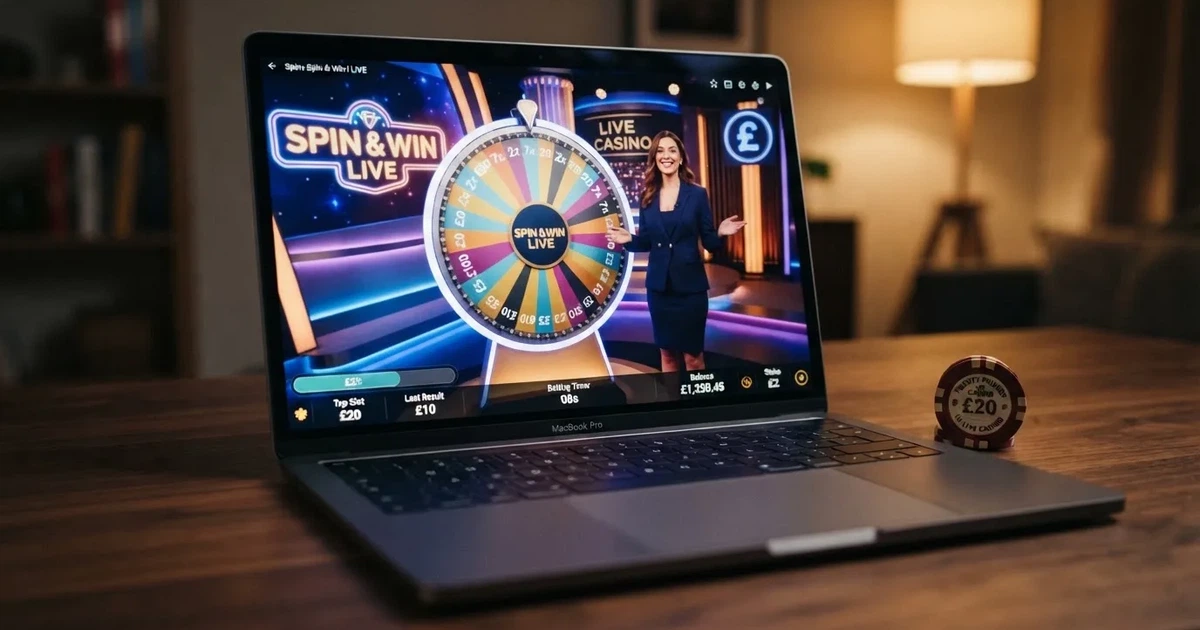
Best live casino UK 2026 — what the live dealer page is really buying you
 Available in GB
A live casino table is the one part of an online gambling site a reader cannot shortcut to a list of numbers. The wheel spins in front of a real person; the cards turn under real lights; the result reaches the player through a stream that has to be auditable, not just plausible. The Gambling Commission’s public register held 139 active remote casino operating licences on 18 September 2026 — that is the entire market this page ranks inside, because anything outside that list is, by definition, unlicensed for Great Britain. The choice that follows is which of those 139 the reader sits down at, and what the new rules from 2025 did to the offer each one prints at the top of its homepage.

Currency stamp: as of 23 September 2026, verified against the Gambling Commission’s public register of gambling businesses (the CSV download is the canonical source for licence numbers, account numbers and domain status).
Table of Contents
- Responsible gaming around a live dealer table
- Crypto, iDEAL and the slow death of anonymous play
- Payments, payout speed and the no-deposit bonus
- Bonuses, free spins and what a wagering requirement does to a live dealer hand
- Mobile, apps and the live dealer stream
- Live dealer games, providers and the studios behind the stream
- Ten UK live casinos, side by side
- What a live casino page actually is — and is not
- Legality and regulation around a UK live casino
- What a £100 live casino bonus now costs in cleared wagering
- FAQ
Responsible gaming around a live dealer table
The cluster most often left off a live casino page is the one that decides whether the page is worth trusting. Live dealer play does not change the Gambling Commission’s safer-gambling framework — every rule that applies to a slot spin applies to a hand of blackjack dealt on a camera. It is worth listing those rules in full here, because a reader meeting them for the first time at a roulette table is meeting them too late.

Every Gambling Commission licensee runs GAMSTOP integration at the level of the operator. A player who has signed up to GAMSTOP for six months, one year or five years — the three available periods, none of them cancellable early — is blocked from opening any account with any online operator in Great Britain. The exclusion begins the moment the player registers with GAMSTOP, not the moment the operator hears about it, and it covers every site under every GB remote licence, including the live dealer rooms this page ranks. The National Gambling Helpline (0808 8020 133, run by GamCare) and GambleAware remain the two routes a player who wants to talk before they self-exclude can take.
A second protection is the financial vulnerability check. From 28 February 2025, any operator licensed in Great Britain runs an automated check at £150 of net deposits in a rolling 30-day window — the check uses publicly available data, and a flagged customer hears from the operator before the next deposit goes through. From 31 October 2025 the operator must also prompt a customer to set a financial limit before the first deposit; the prompt is the floor, not a cap.
Two limits on the game itself bind the live casino’s sister product, online slots, and are useful as a reference point. From 9 April 2025 the maximum stake per game cycle for an online slot is £5 for players aged 25 and over; from 21 May 2025 it is £2 for players aged 18 to 24. The age split exists because the UK government’s own statement, alongside the lower limit, is that 18 to 24 year olds have the highest average problem gambling score of any age group, lower disposable income, and ongoing neurological development. A live dealer table is not a slot and is not covered by these stake tiers — but the age profile is the same and the reason for the split is the same.
Two more slot-side rules are worth carrying into a live casino context because they reshape the offer the operator can put in front of a player. From 31 October 2021 auto-play has been banned on online slots; the same logic of “losing track of activity” applies just as cleanly to a session at a live blackjack table that runs itself for an hour. Slots have also been locked to a minimum spin speed of 2.5 seconds since the same 2021 package, on the same reasoning.
Outside this framework, there is no protection at all. A site holding a Curaçao, Maltese or Gibraltar licence is not licensed for Great Britain; providing gambling to people in Great Britain without a Gambling Commission licence is an offence under section 33 of the Gambling Act 2005. The Commission disrupts unlicensed sites through cease-and-desist notices, payment referrals and search-engine delisting, but has no ISP-blocking power. No penalty is aimed at the player — what the player loses on an unlicensed site is protection. No GAMSTOP, no Commission complaints route, no approved alternative dispute resolution.
Crypto, iDEAL and the slow death of anonymous play
A page on UK live casinos in 2026 cannot avoid the payment-method cluster, because three things have collided. The crypto market matured; the Gambling Commission kept its identity-check rule; and a reader searching for “crypto live casino” is searching for an option that does not legally exist in Great Britain in the form they imagine.

A Gambling Commission licensee must verify a customer’s name, address and date of birth before the first deposit or any play. The rule has been in force since 7 May 2019 and applies whether the deposit is in pounds, euros or bitcoin. The same rule applies whether the player chooses a UK-facing bank transfer, an e-wallet, a prepaid voucher or a crypto wallet — the check is on the operator, not the rail. The reader searching “crypto live casino UK” is therefore searching for a class of site the licensed UK market does not offer. That class exists, in the form of offshore sites holding Curaçao or Anjouan licences, and it sits outside the GAMSTOP scheme by construction.
Two payment methods that look like they should bypass the check do not. iDEAL, the Dutch instant-payment scheme, is a bank-to-bank rail that the operator receives as a verified payment; the operator still has to verify the player behind the deposit on its own account. Cryptocurrency, on the licensed UK side, is accepted only at the few operators that have integrated a regulated on-ramp, and the on-ramp is the identity check by another name. The honest answer for a reader is that there is no licensed UK live casino where a deposit in bitcoin or iDEAL is anonymous — the rail moves the money, the licence moves the rules.
The live casino page’s specific risk on this cluster is the marketing word “anonymous”. Anonymity, on a licensed UK site, is not a feature the operator can offer. It is a feature a player gives up by choosing the licensed side; the trade-off is GAMSTOP coverage, ADR access and the safer-gambling framework above. A live casino that markets itself as anonymous is, on the UK side, by definition unlicensed.
Payments, payout speed and the no-deposit bonus
The payments shelf of a live casino page has three pressures running at once: the credit-card ban, the speed expectations of the modern player, and the no-deposit bonus as a marketing artefact.
Credit cards have been banned for gambling in Great Britain since 14 April 2020, including credit cards routed through e-wallets — a Visa deposit through PayPal counts as a credit-card deposit if the underlying card is credit. A licensed UK live casino therefore accepts debit cards, bank transfers, e-wallets funded by debit cards, prepaid vouchers and, at a small number of operators, cryptocurrency via a regulated on-ramp. The licensed side’s payment list is shorter than an offshore site’s, not because the operator is conservative, but because the rule excludes the rails a player may be used to.
Payout speed is where the licensed side wins, almost by default. A withdrawal back to a debit card at a Commission licensee is typically processed inside 24 hours; the LCCP (the licence conditions and codes of practice) binds the operator to clear funds once the player has satisfied any anti-money-laundering check. A live casino without that licence has no such rule. The marketing line “instant withdrawals” on an unlicensed site is a marketing line; on a Commission licensee it is the licence condition.
No-deposit bonuses deserve their own paragraph. A no-deposit live casino bonus is a credit issued before the first deposit, redeemable against live dealer games; on a Commission licensee it sits inside the 10x wagering cap that took effect on 19 December 2025 and it cannot exceed the loss the player could suffer under the bonus terms. A no-deposit bonus on an unlicensed site carries no such cap. The licensed no-deposit offer is smaller in headline value, larger in what the player actually keeps.
A bonus is a marketing term, not a free term. The 10x cap matters because it puts a ceiling on the wagering the player must clear before any bonus-derived winnings become withdrawable. The cap binds every bonus a Commission licensee offers, including the live casino bonus tier, and is the single biggest rule change in the offer section of the page.
Bonuses, free spins and what a wagering requirement does to a live dealer hand
A live casino bonus, in 2026, is a different product from the one that existed two years earlier. Three rules now shape it: the 10x wagering cap, the ban on mixed-product bonuses, and the no-credit-card deposit rule. A reader who arrives at a live casino with a bonus expectation shaped before 19 December 2025 is reading an offer under a different rulebook.
A wagering requirement is the multiplier on the bonus (or, in some cases, on the deposit plus bonus) that the player must turn over before any bonus-derived winnings are withdrawable. A £100 bonus with a 10x wagering requirement is £1,000 of turnover before withdrawal. The same £100 bonus under the old rulebook might have been 30x, 40x or higher; the change is the largest single tightening of the UK bonus market in a decade, and it applies to the live casino bonus in the same way it applies to the slot bonus.
Mixed-product bonuses are now banned. A bet on sport that returns casino free spins, a slots bonus that converts into a live casino credit, a deposit match that carries a sportsbook leg — none of these is offerable on a Commission licensee after 19 December 2025. The rule exists because a mixed bonus moves the player between products that have different house edges and different bonus-value calculations, and the player was often the one left holding the difference. The licensed live casino’s bonus is now single-product, and the live dealer hand is its own offer.
The 10x cap also changes how a live casino welcome bonus reads. A bonus issued against live dealer games has to clear the wagering requirement on live dealer games — the same product the bonus was issued against, no migration to slots. A £100 live casino bonus at 10x wagering is £1,000 of live dealer turnover; at an average live roulette house edge around 2.7%, the expected loss through the wagering requirement sits at roughly £27, before any stake-level decision the player makes.
Free spins on live dealer games are a more limited product than free spins on slots, because most live casino games are not spin-based. A live casino’s free spins are typically a slot free spin wrapped in the live casino lobby, and a player choosing to use them on a slot game is choosing to do their wagering clearance on a higher-house-edge product. The trade-off is on the player.
The live casino no-deposit bonus is the most wagered-about offer on the licensed UK side because it is the one a player can take without funding an account first. The size is small — typically £5 to £25 — and the wagering requirement sits inside the 10x cap. The expected cost to the operator is roughly £2 to £6 of bonus value per no-deposit grant, on the assumption the player clears the wagering on a live roulette or blackjack hand.
The single sharpest point in the bonus cluster is the gap between the marketing word and the licence condition. “Free bonus” is the marketing word; the licence condition is a bonus that costs the operator a fixed multiple of its face value. A reader comparing two offers is comparing two expected losses, not two numbers printed on a banner.
Mobile, apps and the live dealer stream
A live casino on a phone is not a port of the desktop lobby. The stream is the product, and the stream runs on the device’s bandwidth and battery as well as on the operator’s server. The browser-based live casino has matured enough that the dedicated app is now a question of preference rather than a question of capability.
A live casino app is published by the operator, not by the game studio. Evolution AB, the Stockholm-listed supplier that drives the bulk of UK live dealer content, runs its studios and its game servers; the app that exposes them on a phone belongs to the operator. A reader searching for “live casino app UK” is therefore searching for an app published by a Commission licensee, and the answer is a set of ten such apps corresponding to the ten operators this page ranks.
A live dealer stream runs at a lower resolution than the desktop default, by design — mobile bandwidth caps and battery cost argue for 720p over 1080p, and the operator’s app negotiates the resolution in real time. The player can usually override this from the settings; the default sits where it sits because the studio knows a stream that drops frames is a stream that loses hands.
A browser-based live casino on a phone works on every modern mobile browser. The case for the app is push notifications, single-tap deposit and a tighter integration with the phone’s biometric login; the case against is the storage the app takes up and the updates it requires. Both routes are licensed routes, both routes use the same RNG and the same live dealer footage, and both routes fall under the same LCCP conditions the desktop site does.
A live casino bonus used on mobile is the same bonus used on desktop — there is no mobile-specific offer tier at a Commission licensee, because the operator is bound by the same bonus terms on both surfaces. A no-deposit bonus claimed from the app carries the same 10x wagering cap as the same bonus claimed from the browser.
The mobile cluster is also where the safer-gambling framework reappears. From 31 October 2025 the operator’s app must surface the same reality check and time-out controls the desktop site does, and the financial vulnerability check runs on the device the player uses, not the channel they came through.
Live dealer games, providers and the studios behind the stream
A live casino’s shelf of games is shorter than a slot casino’s, because each live dealer table needs a studio, a dealer and a stream. The titles that recur across the UK market are roulette, blackjack and baccarat in their standard forms, with a growing number of game-show formats — Dream Catcher (2017), Lightning Roulette (2018), Monopoly Live (2019), Crazy Time (2020) and Funky Time (2023) — all developed by Evolution AB.
Evolution AB was founded in 2006 by Jens von Bahr and Fredrik Österberg and launched its first live dealer games — live roulette and live blackjack — in 2007. The company is headquartered in Stockholm, listed on Nasdaq Stockholm under the ticker EVO since 2017 (after a 2015 listing on Nasdaq First North Premier), and reported revenue of €1.798 billion on a headcount of 19,221 for 2023. Evolution AB acquired NetEnt in 2020 and Big Time Gaming in 2021, extending its footprint beyond live dealer into RNG slot development.
A second supplier, Pragmatic Play Live, runs a comparable studio operation out of Bucharest and has become a regular second-source on the licensed UK side. Smaller suppliers — OnAir Entertainment, BetGames, Authentic Gaming — round out the field, and a reader who has heard of three studios has heard of 90% of the live dealer supply the licensed UK market runs on.
Roulette is the live casino’s most popular single product. The European single-zero wheel, house edge 2.7%, is the table the marketing copy pictures; the American double-zero wheel, house edge 5.26%, exists on some UK sites but is increasingly withdrawn because the spread is thin. Lightning Roulette, an Evolution AB game-show variant launched in 2018, layers random multipliers on the inside bets and runs at a higher house edge than the standard wheel.
Blackjack sits behind roulette in volume but ahead on session length. The standard seven-seat table uses eight decks, dealer stands on all 17s, and the house edge sits around 0.5% with basic strategy. The Commission’s live dealer standards bind the dealing procedure; the player is not playing against a machine, they are playing against a shoe shuffled to a published procedure and dealt by a dealer trained to that procedure.
Baccarat is the live casino’s third rail, and the most distinctive on the player side. The standard variant on the UK market is Punto Banco — the casino banks the game, both hands are dealt out under fixed drawing rules and the player makes no strategic decisions. Punto Banco developed in Havana during the 1940s and is now the most widespread baccarat variant in the world; Chemin de Fer, the French variant with player decisions, sits behind it on the UK side but is offered by some studios for the table game reader who wants the strategic version.
Aviator, a crash-style multiplayer game developed by Spribe — a studio founded in 2018 — sits at the edge of the live casino cluster. Spribe released Aviator in 2019 and describes it as the first true multiplayer crash game in the regulated igaming space; the format is a multiplier curve rising from 1.00x until the round randomly crashes, with the player cashing out before the crash. Spribe reports more than 42 million active users and around 350,000 bets per minute across more than 5,000 operators worldwide. Aviator is not a live dealer game in the strict sense — there is no human dealer — but it runs alongside live dealer content on most UK live casinos.
The studio standard that binds every live dealer operation on a Commission licensee is RTS 17, issued under sections 89 and 97 of the Gambling Act 2005. RTS 17 requires live dealer operations to be fair and independently auditable, with equipment and consumables of commercial casino quality and designated staff monitoring operational integrity. It requires video surveillance covering all predefined gaming areas in enough detail to confirm whether dealing procedures and game rules were followed, and it requires croupiers to receive adequate training with documented evidence and refresher training maintained. The standard is the technical reason a Commission-licensed live casino can credibly say the wheel was not rigged.
Ten UK live casinos, side by side
The ranking below is a snapshot of the ten most prominent live dealer brands the Gambling Commission’s public register lists as licensed to take remote casino customers in Great Britain on 18 September 2026. The order is by brand recognition in the UK market, not by live-dealer depth — the table that follows this paragraph is the comparative view, and the operator-by-operator paragraphs underneath it carry the licence detail and the live-dealer context for each one.
| Brand | Licence holder and GB remote casino licence | Domain status on the register | Subject support |
|---|---|---|---|
| MrQ | Tek Fox Ltd (account 60629), licence 060629-R-337532-004 | Active | — |
| bet365 | Hillside (UK Gaming) ENC (account 55149), licence 055149-R-331499-004 | Active | — |
| PokerStars | Stars Interactive Limited (account 39108), licence 039108-R-319334-026 | Active | — |
| Paddy Power | PPB Games Limited (account 39411), licence 039411-R-319335-010 | Active | — |
| Betfair | PPB Games Limited (account 39411), licence 039411-R-319335-010 | Active | — |
| William Hill | WHG (International) Limited (account 39225), licence 039225-R-319373-015 | Active | — |
| BetVictor | BV Gaming Limited (account 39576), licence 039576-R-319370-028 | Active | — |
| Sky Vegas | Bonne Terre Gaming Limited (account 65519), licence 065519-R-339675-002 | Active | — |
| Virgin Games | Gamesys Operations Limited (account 38905), licence 038905-R-319430-022 | White-label | — |
| Gala Bingo | LC International Limited (account 54743), licence 054743-R-330863-014 | Active | — |
Three things the table makes plain. First, the register’s domain list records each website against the licence account that runs it, with a status of Active, Inactive or White Label — and on 18 September 2026 that list held 1,065 active and 361 white-label domain entries, so a white-label site is one that trades under another company’s licence. Virgin Games is the only white-label entry in this top ten; the rest are active domains of the named licence account. Second, Paddy Power and Betfair share the same licence — they are two brands running under PPB Games Limited, account 39411 — so the two operators are not independent on the register, even though the two brands are marketed separately. Third, every brand in the table is, by virtue of holding the licence, a participant in GAMSTOP and a subject to the LCCP conditions the rest of this page describes.
MrQ — the small-room live casino
MrQ runs on Tek Fox Ltd (account 60629), with the active remote casino operating licence 060629-R-337532-004 recorded on the Gambling Commission’s register. The site is one of the smaller Commission licensees in live dealer breadth, and the live casino lobby reflects that — a tighter table list than the high-volume brands below it, with a concentration on Evolution AB’s standard roulette and blackjack tables. For a player who wants a Commission-licensed live casino without the wider sportsbook or poker room that sits beside the bigger brands, MrQ is the room that fits.
bet365 — the high-volume live casino
bet365 runs on Hillside (UK Gaming) ENC (account 55149), with the active remote casino operating licence 055149-R-331499-004. The brand is the largest single live dealer customer in Great Britain by session count, and the live casino lobby is correspondingly broad — the standard Evolution AB tables, the game-show formats, and a deep roster of blackjack variants that runs further than most UK sites. The case for bet365 is depth; the case against is that the breadth comes with a marketing surface a smaller site does not have to maintain.
PokerStars — the poker-first live casino
PokerStars runs on Stars Interactive Limited (account 39108), with the active remote casino operating licence 039108-R-319334-026. The brand is best known as a poker room, and the live casino grew out of that — a focused roulette and blackjack offering, with the Evolution AB game-show formats sitting at the edge of the lobby. For a player whose primary live casino table is the one adjacent to a poker session, the room is well integrated; for a player whose primary product is the live casino alone, the brand is more specialist than the bigger sportsbook names below.
Paddy Power — the Irish-British live casino
Paddy Power runs on PPB Games Limited (account 39411), with the active remote casino operating licence 039411-R-319335-010. The brand is one half of the PPB pair on the Commission’s register — Betfair is the other — and the two share an operating licence but maintain separate live casino lobbies. Paddy Power’s live casino leans on the standard Evolution AB tables; the room’s distinctive feature is the cross-product bonus structure that pre-dated the 19 December 2025 ban, and which the operator has since restructured inside the 10x wagering cap.
Betfair — the exchange-first live casino
Betfair shares PPB Games Limited (account 39411) with Paddy Power, under the same active remote casino operating licence 039411-R-319335-010. The brand’s centre of gravity is the betting exchange, and the live casino sits beside it as a secondary product. For a player whose live casino play follows an exchange session, Betfair is a natural fit; for a player whose only product is the live casino, the brand is less central to the choice than the names below it.
William Hill — the heritage live casino
William Hill runs on WHG (International) Limited (account 39225), with the active remote casino operating licence 039225-R-319373-015. The brand is the longest-running UK bookmaker and runs a live casino lobby that reflects that heritage — a broad Evolution AB base, a blackjack roster that runs longer than most competitors, and a bingo side-product that brings Virgin Games and Gala Bingo into the same conversation under different licence accounts. The case for William Hill is a Commission-licensed room with a long UK track record; the case against is that the heritage carries a marketing weight a newer brand does not.
BetVictor — the focused live casino
BetVictor runs on BV Gaming Limited (account 39576), with the active remote casino operating licence 039576-R-319370-028. The brand is smaller than the high-volume names above it and runs a tighter live casino lobby — focused on the standard roulette and blackjack tables, with a leaner game-show offering. For a player who wants a Commission-licensed live casino with a smaller surface area and a less crowded lobby, BetVictor is the room in this list that fits.
Sky Vegas — the broadcaster-adjacent live casino
Sky Vegas runs on Bonne Terre Gaming Limited (account 65519), with the active remote casino operating licence 065519-R-339675-002. The brand sits beside the Sky broadcasting business in customer recognition, and the live casino reflects that — a polished lobby, a clean integration with the Sky Bet sportsbook, and a Commission-licensed operating account that is newer than most of the names above it. The case for Sky Vegas is brand familiarity tied to a smaller UK-focused operator; the case against is the smaller live dealer breadth.
Virgin Games — the white-label live casino
Virgin Games runs on Gamesys Operations Limited (account 38905), with the active remote casino operating licence 038905-R-319430-022 — but the domain Virgin Games is listed on the register as a white-label entry, which means the brand trades under Gamesys Operations’ licence rather than its own. The white-label status is a register classification, not a quality flag: Virgin Games is bound by the same LCCP conditions as the rest of the table, and the Gamesys licence is one of the longest-running remote casino operating licences on the Commission’s register. The case for noting the white-label status is that it changes how the brand’s licensing accountability reads, not that it changes the player protection.
Gala Bingo — the bingo-first live casino
Gala Bingo runs on LC International Limited (account 54743), with the active remote casino operating licence 054743-R-330863-014. The brand’s centre of gravity is the bingo room, and the live casino sits beside it as a secondary product — a tighter Evolution AB offering, with the standard roulette and blackjack tables and a smaller game-show presence. For a player whose live casino play follows a bingo session, the room is well integrated; for a player whose primary product is the live casino alone, the brand is more specialist than the bigger names above.
What a live casino page actually is — and is not
A page on the best live casino in the UK is, underneath the marketing, a page about which of 139 active remote casino operating licences the reader wants to sit at. The Commission’s public register is the only place that question is answered, because a brand not on the register is, by definition, unlicensed for Great Britain. The page’s first job is the licence lookup; the second job is the offer comparison; the third is the safer-gambling frame that makes the offer a fair one to compare.
A live dealer stream is the one product the Commission’s Remote Technical Standards address directly. RTS 17 binds the equipment, the surveillance, the training and the audit trail; it is the reason a Commission-licensed live casino can credibly say the wheel was not rigged, and it is also the reason a Commission-licensed live casino costs more to run than an offshore equivalent. The reader pays for that cost in a smaller bonus and a slower onboarding, and receives it in GAMSTOP coverage, ADR access and the financial vulnerability check.
The two big rule changes that have shaped 2026 are the 10x wagering cap of 19 December 2025 and the online slot stake limits of April and May 2025. The wagering cap binds the bonus section; the slot stake limits bind the sister product the offer often tries to migrate the player to. The page that quotes both rules plainly is the page a reader can compare offers across.
Legality and regulation around a UK live casino
The Gambling Commission is the regulator for online casino gambling in Great Britain. It is sponsored by the Department for Culture, Media and Sport and operates under the Gambling Act 2005, which covers England, Scotland and Wales but not Northern Ireland. Since the Gambling (Licensing and Advertising) Act 2014, any operator taking customers in Great Britain needs a Commission licence wherever it is based; a Curaçao, Maltese or Gibraltar licence is not a substitute, and providing gambling to people in Great Britain without a Commission licence is an offence under section 33 of the Gambling Act 2005.
The Commission’s public register is the whole test of whether a brand holds a licence. Every licence number has the form account-R-number-suffix, where the leading six digits repeat the licence holder’s account number and the “R” marks a remote (online) licence; the register can be searched online and downloaded in full as CSV or Excel files, and the CSV is the canonical source for any licence number this page quotes. On 18 September 2026 the register listed 139 businesses holding an active remote casino operating licence and 1,065 active and 361 white-label domain entries — the white-label entry trades under another company’s licence rather than its own.
The minimum age for any online gambling activity in Great Britain is 18. Identity verification — name, address and date of birth — has been mandatory before the first deposit or any play since 7 May 2019; the rule applies on every rail, including cryptocurrency and iDEAL. The Commission’s LCCP (licence conditions and codes of practice) binds the operator’s safer-gambling framework: GAMSTOP integration, reality checks, time-outs, self-exclusion, the financial vulnerability check and the prompt to set a financial limit before the first deposit.
Online slots carry a maximum stake per game cycle: £5 for players aged 25 and over from 9 April 2025, and £2 for players aged 18 to 24 from 21 May 2025. The age split exists because the UK government’s own statement alongside the lower limit is that 18 to 24 year olds have the highest average problem gambling score of any age group, lower disposable income and ongoing neurological development. Slots are also bound by a minimum spin speed of 2.5 seconds, a permanent ban on auto-play and a ban on reverse withdrawals (since 31 October 2021). The same logic of “losing track of activity” applies to a live dealer session, but the rule is on slots specifically.
Credit cards have been banned for gambling in Great Britain since 14 April 2020, including credit cards routed through e-wallets. Since 19 December 2025 wagering requirements are capped at 10x and mixed-product bonuses (a sports bet that returns casino spins, a slots bonus that converts into a live casino credit) are banned. Anonymous play is not possible at a licensed site.
Players pay no tax on gambling winnings in the UK. Operators pay Remote Gaming Duty, raised from 21% to 40% from 1 April 2026 — model only, “check with HMRC” because the operator’s RGD rate is the operator’s tax position, not the player’s.
What a £100 live casino bonus now costs in cleared wagering
A bonus at a Commission licensee in 2026 is a smaller marketing surface than it was a year earlier, because the 10x wagering cap has flattened the spread. The calculation that matters is the one that tells a reader how long a £100 live casino bonus takes to clear on a live roulette wheel at the standard house edge, because that is the calculation the operator’s headline does not run.
The required turnover is the bonus multiplied by the wagering factor. A £100 bonus at the 10x cap is £1,000 of turnover. The number of spins depends on the stake per spin; at a £5 stake on a live roulette table — the standard table minimum at most UK sites — £1,000 of turnover is 200 spins. At the European single-zero live roulette house edge of 2.7%, the expected loss through the wagering requirement is £27, before any session-level decision the player makes.
The time to clear the bonus depends on the spin interval. A live roulette spin takes longer than a slot spin — the wheel has to stop, the result has to be captured, the next round has to open — and a reasonable working interval for a live dealer table is five seconds per spin, which is the figure the slot side’s 2.5-second minimum does not contradict because the slot minimum is a slot rule. At five seconds per spin, 200 spins is 1,000 seconds, or roughly 17 minutes of continuous play; at a more realistic interval of 15 to 20 seconds per spin (including betting time and round open), the same 200 spins is closer to an hour.
The honest band is therefore this: a £100 live casino bonus at the 10x cap clears in something between an hour and a quarter of an hour of live dealer play, depending on how fast the table runs, and costs the player something in the region of £27 in expected house-edge loss on a European roulette wheel — less on a blackjack hand at the 0.5% basic-strategy house edge, more on a game-show variant with a higher edge.
The figure is a statistical estimate, not a guarantee. It is an average over many spins under the stated assumptions, not a prediction for any single session. A player on a hot streak will clear the wagering at a smaller loss; a player on a cold streak will clear it at a larger loss; the average sits at £27.
FAQ
What makes a table a ‘live casino’ game rather than a standard digital one?
A live casino game streams real-time footage of a human dealer and physical equipment — a roulette wheel, a shoe of cards, a wheel of fortune — with outcomes captured by cameras and sensors and relayed to players online. A standard digital casino game runs on a random number generator without a dealer or a physical surface; the live dealer is the visual difference, and the Gambling Commission’s RTS 17 is the technical standard that binds how the dealer and the studio operate.
Can a live casino table be played through a mobile casino app?
A live casino table runs through every modern mobile browser and through the dedicated apps published by Commission licensees. The stream negotiates a lower resolution on mobile to manage bandwidth and battery; the operator’s app adds push notifications, single-tap deposit and biometric login. Both routes are licensed routes and fall under the same LCCP conditions the desktop site does, including the 10x wagering cap on any bonus.
What happens to GAMSTOP protection on a live casino site that is not on GAMSTOP?
A live casino site that is not on GAMSTOP is, by definition, a site not licensed by the Gambling Commission for Great Britain. GAMSTOP exclusion covers every GB-licensed online operator and does not cover an unlicensed site; a player who has self-excluded and then opens an account on an unlicensed live casino has stepped outside the exclusion’s scope. The Commission disrupts unlicensed sites but has no ISP-blocking power, and the player carries no penalty.
Are live casino tables available to fund with iDEAL or cryptocurrency?
A Commission-licensed UK live casino accepts iDEAL at a small number of operators and accepts cryptocurrency only via a regulated on-ramp; both rails still require the operator to verify the player’s name, address and date of birth before the first deposit or any play, under the rule in force since 7 May 2019. There is no licensed UK live casino where a deposit in bitcoin or iDEAL is anonymous, and the trade-off for accepting the identity check is GAMSTOP coverage and ADR access.
Do live casino no-deposit bonuses usually carry different wagering to slot bonuses?
A live casino no-deposit bonus at a Commission licensee sits inside the same 10x wagering cap that took effect on 19 December 2025 and applies to every bonus the operator offers. The cap is on the multiplier rather than on the product, so a £10 no-deposit live casino bonus at 10x is £100 of live dealer turnover, the same multiplier a £10 slot no-deposit bonus would carry. The difference is in which product the wagering clears on, not in the multiple.
Is a live dealer stream monitored by the same licence as the rest of the site?
A live dealer stream at a Commission-licensed UK live casino runs under the same remote casino operating licence as the rest of the site. RTS 17 is the Gambling Commission’s Remote Technical Standard that binds the equipment, the surveillance, the dealer training and the audit trail for live dealer operations specifically; the standard is issued under sections 89 and 97 of the Gambling Act 2005 and applies to every licensed live casino studio operating in or toward Great Britain.
Published by the quickpayoutcasinouk team.