
No Wagering Casino UK 2026 — What the 10x Cap Means for Players
No wagering casinos in the UK: paths through the £-and-stake landscape in 2026
A wagering requirement used to be the standard tax a player paid for taking a bonus. Spin it through thirty, forty, sometimes sixty-five times the bonus value, and what was left became withdrawable. That model is gone. From 19 December 2025 the Gambling Commission capped any wagering requirement at 10x the bonus amount, and any offer that bundles slots with sports, bingo or lottery play was withdrawn from the licensed market. For a reader comparing UK casino sites today, that single statutory line redraws the choice. A “no wagering casino” is no longer a fringe offer — it sits on one end of a much narrower band.

This page maps what remains. It is built for a player who wants to know which sites actually carry a wagering-free bonus, how long a 10x turnover realistically takes, and what the licensed ceiling leaves untouched: identity checks, GAMSTOP self-exclusion, £5 slot stake limits, and the £150 net-deposit vulnerability check that has run since 28 February 2025. The data was checked against the Gambling Commission public register on 7 November 2026.
Table of Contents
- Bonus structures at UK-licensed sites after the 10x cap
- Payment paths and payout speed at UK-licensed no-wagering casinos
- The top 10 UK-licensed operators in this comparison
- The licensed-casino landscape in 2026
- Legality: what the Gambling Act 2005 and its amendments demand
- Responsible gambling tools at a no-wagering casino
- Crypto, anonymity and the limits of a UK no-wagering casino
- How long the 10x bonus actually takes to clear
- The licence and the offer, side by side
- Verdict by brand: where each licence holder sits
- A reader’s checklist for choosing
- Where this leaves the question of “no wagering”
- Frequently asked questions about UK no-wagering casinos
Bonus structures at UK-licensed sites after the 10x cap
The bonuses a UK casino can advertise now live in a much smaller corridor than the one players met five years ago. A site can still credit a welcome package, free spins, or a reload — but the turnover attached to those funds cannot exceed 10x the bonus, and a free-spin win cannot be tied to a fresh wagering requirement on top of the original. The rule does not invent the no-wagering category; it brings the worst offenders inside ten.

A wager-free bonus, the kind this page is built around, sits at the cleanest point in that corridor. Anything won from a wager-free spin is paid as cash, withdrawable on the same terms as a normal win. The trade is on the other side: the bonus amount is smaller, the spin value is lower, or the offer applies to a narrow slice of the catalogue. A site giving away £200 wager-free on every deposit would not survive the math, because the house edge already in the games is the only thing between the offer and the operator’s ruin. Players reading the small print will recognise the same pattern as before — only the numbers have changed.
The 10x cap does the rest. Where a casino does keep a turnover requirement, the arithmetic is now visible: a £100 bonus asks for £1,000 in qualifying stakes before withdrawal. The maths behind that figure, and how it translates into hours of play, sits in a later section. For now, the comparison to make is between a true no-wagering offer — usually 10 to 50 free spins at low stake value, no playthrough — and a standard 10x offer with a larger headline. The first pays less; the second costs the player’s time.
How a no-wagering offer pays the operator
A wagering requirement was, among other things, a way for the house to recover the cost of the bonus from the player’s session. Take it away and the operator must find the recovery somewhere else: in the size of the bonus itself, in the games the bonus will play on, or in the volume of returning customers it expects. Free spins on a single low-RTP slot are the cheapest unit a casino can hand out, and most wager-free offers concentrate on exactly that pattern. Players who value catalogue choice pay for it in playthrough; players who value instant cash pay for it in scope.
There is also a marketing logic. A “wager-free” badge carries weight in a saturated market, and a casino that adopts it broadly is making a statement about the kind of player it wants — one who deposits, plays briefly, withdraws, and returns because the offer was clear rather than because the headline was loud. The shape of the offer therefore tells a reader something about the brand behind it.
Where the 10x cap meets the rest of the licence
The cap sits inside a wider rulebook. Every licensed site already runs GAMSTOP, holds a deposit-prompt requirement, enforces a £5 maximum slot stake for adults aged 25 and over, and verifies a player’s name, address and date of birth before the first deposit. A no-wagering offer does not relax any of these. A reader comparing sites on the basis of “fewer restrictions” should know that the licence itself is the floor; the wagering cap is the ceiling a casino is now allowed to set, not the floor below which it can drop.
Payment paths and payout speed at UK-licensed no-wagering casinos
The fastest path from a win to a bank account is no longer the marketing line a casino writes about itself. The Banking Commission does not regulate payout speed; the payment rail does, and at a UK-licensed casino most withdrawals now go through the same set of instruments: debit cards, the Faster Payments Service for direct bank transfers, e-wallets, and a handful of mobile-first options. The deposit and withdrawal set is narrower than the international market suggests, because credit cards have been banned for gambling since 14 April 2020. That ban extends to credit-card-funded e-wallets, so a deposit paid from a credit card through PayPal is treated as a credit-card deposit and will be refused.
For a reader choosing between routes, the practical difference is in minutes, not days. A debit-card withdrawal to a UK-issued Visa or Mastercard typically arrives within one to three working days once the casino has approved it; e-wallet withdrawals are usually approved faster and the funds arrive within hours; a Faster Payments bank transfer can be instant. None of this changes the underlying game: the casino still has to verify identity and source of funds before its first withdrawal, and that step is what produces the delay on a first payout. Subsequent withdrawals on a verified account move at the speed of the rail itself.
Apple Pay as a deposit instrument
Apple Pay, launched by Apple Inc. on 20 October 2014 and supporting UK-issued cards from 14 July 2015, is a common deposit option at UK-licensed casinos on iOS devices and on Safari. It works by replacing the actual card number with a tokenised Device Primary Account Number and generating a dynamic security code per transaction. The user authenticates in-store by double-clicking the side button on a Face ID iPhone or the Home button on Touch ID models.
Apple Pay deposits at a casino are treated as debit-card deposits, because the underlying instrument is the user’s bank-issued card — not a separate balance. The credit-card ban therefore still applies: a card funded from a credit line cannot be used to top up an Apple Pay wallet for gambling. The same tokenisation that protects the card data in a shop protects it at a cashier screen, which is part of why Apple Pay has settled into the UK deposit list without becoming a withdrawal rail. Withdrawals, where supported, route back to the same card via a separate process and usually take longer than the deposit did.
AstroPay and the e-wallet route
AstroPay, founded in 2009 and headquartered in Uruguay, runs a global digital wallet with virtual and physical debit cards and peer-to-peer transfers. Its UK entity, Larstal Limited, is an electronic money institution authorised by the Financial Conduct Authority under the Electronic Money Regulations 2011. The wallet serves users across Argentina, Australia, Brazil, Canada, Colombia, Denmark, Spain, the United Kingdom, the United States and Uruguay, with separate regulated entities in the Isle of Man, Brazil and Denmark.
For a UK player, the FCA-authorised status matters because it places AstroPay under the same prudential regime as a UK e-money institution — segregated client funds, capital requirements, dispute resolution. The wallet is therefore usable for deposits at UK-licensed casinos in the same way PayPal or Skrill is, with the same credit-card caveat: a wallet topped up from a credit card cannot be used to fund a gambling deposit.
Bank transfers and the Faster Payments Service
A bank transfer within the UK usually rides the Faster Payments Service, launched in 2008 and operated by Pay.UK. The service runs around the clock and most payments arrive instantly or within a couple of minutes; transfers can occasionally take up to two hours. The scheme sets a £1,000,000 per-transaction limit, but individual banks commonly impose lower customer limits. The Bank of England is not a direct participant; it oversees the system and provides final settlement.
At a casino cashier, the Faster Payments Service is what allows a withdrawal to appear in the player’s current account within minutes of approval — often faster than the casino’s own internal queue can release the funds. The catch sits on the casino side: a first withdrawal triggers the source-of-funds check, and that step is what makes a first payout feel slow even when the rail itself is instant. A repeat customer on a verified account sees the rail’s actual speed.
What the payment set looks like at a no-wagering site
No-wagering casinos do not advertise a different payment list from their standard-bonus counterparts. The licensed deposit set is the same: debit cards, e-wallets where supported, Apple Pay on iOS, and bank transfer. The withdrawal set is often narrower than the deposit set, and a no-wagering casino that pays out within hours via Faster Payments is not the rule — that pattern is rarer than its marketing suggests. The honest comparison between sites is whether the same payment instrument is accepted for both directions, and how many of those instruments are open to UK-issued cards without an e-wallet intermediary.
The top 10 UK-licensed operators in this comparison
The ten brands below are taken from the Gambling Commission’s public register. They are not a ranking and they are not a recommendation. They are ten names a player comparing UK-licensed casinos will meet, organised here so the licence picture and the corporate structure sit side by side. Several brands share one licence account, which means they are not independent operators in the legal sense even when their front doors look different. That detail matters when something goes wrong: a complaint routes to the licence holder, not the brand.
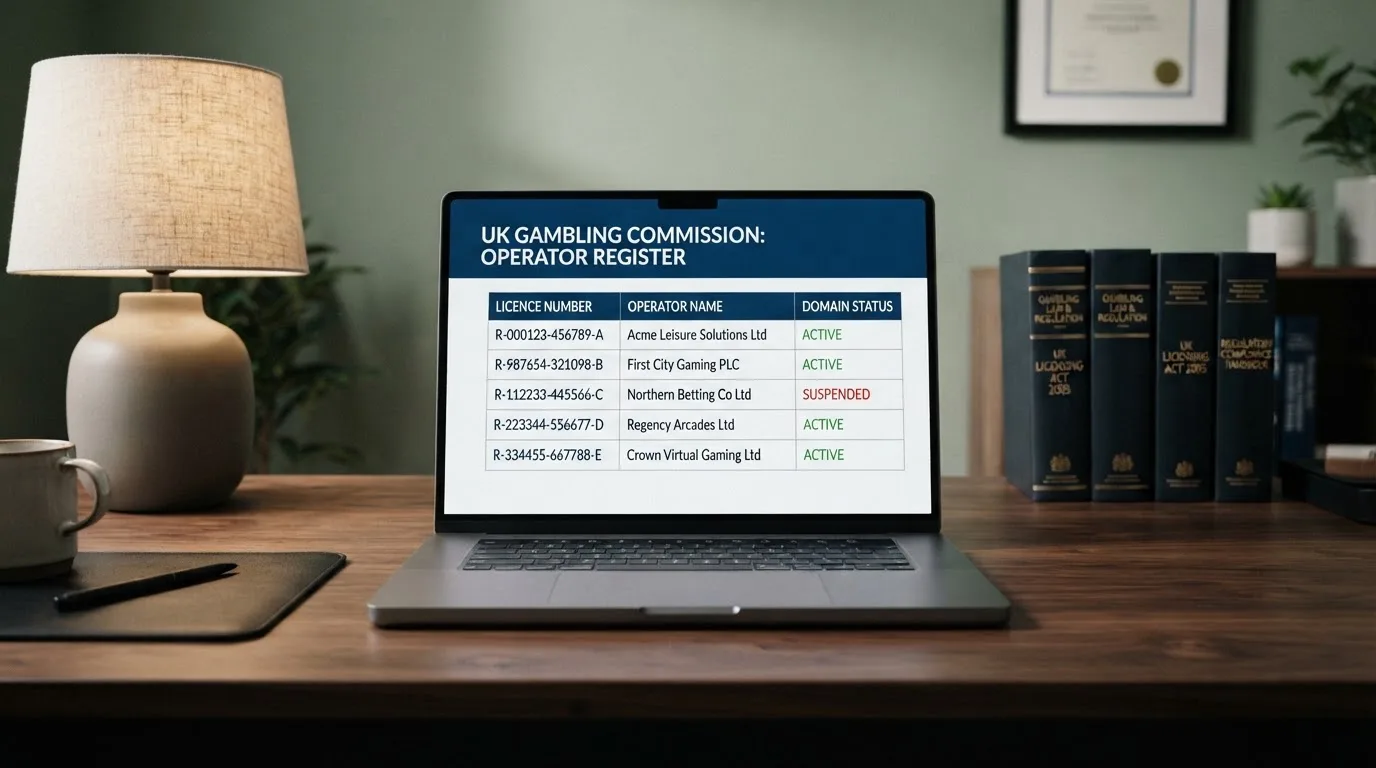
The columns below cover what a reader can verify without opening an account: the operating company that holds the licence, the Gambling Commission remote casino licence number, and the status of the brand’s primary domain on the register. A status of Active means the domain is operated under that licence today; White Label means the brand trades under another company’s licence. No row carries a wager-free bonus figure — the comparison page does not carry that detail, and where it does not, the cell is left blank.
| Brand | Licence holder and GB remote casino licence | Domain status on the register |
|---|---|---|
| Virgin Games | Gamesys Operations Limited · 038905-R-319430-022 | White Label |
| Casumo | Recro Limited · 061549-R-336718-002 | Active |
| Ladbrokes | LC International Limited · 054743-R-330863-014 | Active |
| Betfair | PPB Games Limited · 039411-R-319335-010 | Active |
| PokerStars | Stars Interactive Limited · 039108-R-319334-026 | Active |
| Gala Bingo | LC International Limited · 054743-R-330863-014 | Active |
| 32Red | Platinum Gaming Limited · 045322-R-324275-019 | Active |
| Coral | LC International Limited · 054743-R-330863-014 | Active |
| Sky Vegas | Bonne Terre Gaming Limited · 065519-R-339675-002 | Active |
| Paddy Power | PPB Games Limited · 039411-R-319335-010 | Active |
Three names — Ladbrokes, Gala Bingo and Coral — sit under one licence held by LC International Limited. A second pair, Betfair and Paddy Power, sits under PPB Games Limited. The point is not that the brands are identical to play on; their game catalogues, sign-up offers and loyalty terms differ. The point is that a complaint, a self-exclusion request or a regulatory action against one of the pair reaches the same operating company.
What the register does not show
The register confirms a licence exists. It does not confirm that a particular brand is running a no-wagering offer this week. Promotional terms change more often than the licence behind them. A reader comparing sites should treat the licence status as a permanent floor — a brand without an active licence cannot lawfully serve GB customers — and the bonus terms as a moving top. The two questions are answered at different speeds, on different pages.
The licensed-casino landscape in 2026
| Feature | Description |
|---|---|
| Licensing | Gambling Commission remote casino licence |
| Self-Exclusion | Mandatory GAMSTOP integration |
| Stake Limits | £5 for 25+, £2 for 18-24 |
| Deposit Limits | Prompted at first deposit |
| Financial Vulnerability | £150 net-deposit check |
A licensed UK casino in 2026 sits inside a market the Gambling Commission has been tightening for half a decade. The remote casino operating licence is the entry ticket; everything else is a layer of consumer protection added on top. The Commission’s public register is the test of whether a brand holds that ticket: the register can be searched online and downloaded as a full CSV or Excel file, and it lists each domain against the licence account that runs it, with a status of Active, Inactive or White Label.
On the day the data was pulled, 139 businesses held an active remote casino operating licence, and the register carried 1065 active and 361 white-label domain entries. A white-label site trades under another company’s licence: Virgin Games, for example, is listed on the register as a white-label domain of account 38905, Gamesys Operations Limited, which holds the active remote casino operating licence 038905-R-319430-022. The leading six digits of any remote licence on the register repeat the licence holder’s account number; the “R” marks the licence as remote.
That figure — 139 licence holders, 1065 active domains, 361 white labels — is the population this page draws from. It is not a list of every site a player can reach on a search engine; many of those domains sit outside the GB licence regime and are not visible to the Commission. It is a list of every site that has passed the Commission’s checks and continues to hold the right to take UK customers.
What being licensed actually means for a player
A licensed site has agreed to the Commission’s Licence Conditions and Codes of Practice, which carry the LCCP. It must verify a player’s name, address and date of birth before the first deposit. It must offer GAMSTOP self-exclusion. It must apply the £5 slot stake ceiling to adults aged 25 and over, and £2 to 18-24-year-olds. It must prompt the player to set a financial limit before the first deposit. It must run a financial vulnerability check at £150 net deposits over a rolling 30 days. It must not accept credit cards. None of these is optional. None of them is waived for a no-wagering offer.
The practical consequence is that a “no wagering casino UK” is not a different kind of casino; it is a licensed casino running a particular bonus structure. The site still verifies identity. The site still runs GAMSTOP. The site still pays Remote Gaming Duty — raised from 21% to 40% from 1 April 2026 — and still answers to the Commission if it breaks the rules. The player still pays no tax on winnings; the operator carries the duty.
Legality: what the Gambling Act 2005 and its amendments demand
UK online gambling sits under the Gambling Act 2005, sponsored by DCMS, covering Great Britain — England, Scotland and Wales. Northern Ireland runs its own regime. Since the Gambling (Licensing and Advertising) Act 2014, any operator taking customers in Great Britain needs a Gambling Commission licence, no matter where the operator itself is based; a Curaçao, Maltese or Gibraltar licence does not substitute. Providing gambling to people in Great Britain without a Commission licence is an offence under section 33 of the Act.
The Commission enforces that offence by disrupting illegal sites — cease-and-desist notices, search-engine delisting, payment and hosting referrals — but has no ISP-blocking power. The penalty is not aimed at the player; what the player loses on an unlicensed site is protection. There is no GAMSTOP, no Commission complaints route, no approved alternative dispute resolution. A reader tempted by an offshore “no wagering” offer that asks for less identity information is being asked to give up exactly the recourse the UK regime was built around.
The minimum age and identity check
The minimum age to gamble online in Great Britain is 18. The licensed site must verify a customer’s name, address and date of birth before the first deposit or any play, and that verification has been mandatory since 7 May 2019. The check is usually automated against public data and a credit-reference file; in a minority of cases the site asks for a photo of a document. The check is what makes anonymous play impossible at a licensed site, and it is also what makes the licensed site’s complaint route work — the operator knows who the customer is.
The stake, deposit and product rules
Online slots at a licensed site carry a maximum stake per game cycle: £5 for players aged 25 and over, in force from 9 April 2025, and £2 for 18-24-year-olds, from 21 May 2025. A “game cycle” is the technical unit the Commission uses to define a spin: each spin is a cycle, and the ceiling applies to the amount staked on that cycle. Since 31 October 2021 auto-play is banned, a slot spin may not be faster than 2.5 seconds, and losses disguised as wins — slot animations that play a win-style fanfare on a net-loss spin — are banned.
There is no state-set deposit or loss ceiling. The Commission’s position since 31 October 2025 is that the operator must prompt a customer to set a financial limit before the first deposit, but the customer sets the limit and may set it at zero. That prompt is a protection layer, not a ceiling: a player who chooses a high limit is choosing it with the operator’s visibility, but the operator does not overrule the choice. The financial vulnerability check that runs at £150 net deposits in a rolling 30 days, in force from 28 February 2025, uses public data only; the wider financial risk assessments the Commission has announced are not yet in force.
The bonus rules
From 19 December 2025 the Commission capped any wagering requirement at 10x the bonus amount and banned mixed-product bonuses — offers that bundle, for example, a sports bet with casino spins or bingo play. Credit cards have been banned for gambling since 14 April 2020, and that ban extends to credit cards routed through e-wallets. None of these rules makes a bonus impossible; they make the bad ones impossible.
Responsible gambling tools at a no-wagering casino
The safer-gambling set at a UK-licensed site is built into the licence, not into the bonus structure. A no-wagering casino offers GAMSTOP self-exclusion, deposit limits, time-outs, reality checks, and access to the National Gambling Helpline run by GamCare and to GambleAware support. None of those tools is waived because the bonus is wager-free. None of them is new.
GAMSTOP is the most consequential. Since 31 March 2020 it has been a mandatory condition of every online licence in Great Britain; a customer who registers with GAMSTOP for six months, one year or five years is barred from opening or using an account at any GB-licensed operator for the full period, and that period cannot be cancelled early. A player who has self-excluded cannot “try a different casino” within the licensed market; the entire licensed market is closed to them for the duration. GAMSTOP is the reason an unlicensed offshore site, without GAMSTOP coverage, is also without a key protection the rest of the market takes for granted.
Deposit limits sit with the customer, not the site. The site prompts before the first deposit; the customer sets the limit; the operator does not lower it without the customer’s consent. A no-wagering casino does not change that. A player who has set a £100 weekly deposit limit at one licensed site will not see that limit change at another licensed site, and it is the customer’s responsibility to set limits at each account they hold.
Time-outs, reality checks and the £150 vulnerability trigger
Time-outs are short self-exclusions — 24 hours, one week, one month, six weeks — that a player can apply to their own account without registering with GAMSTOP. Reality checks are pop-up reminders that interrupt play at intervals the operator sets, often 30 or 60 minutes, and show the player how long they have been in the session and what their net position is. The £150 net-deposit vulnerability check, in force since 28 February 2025, runs automatically once a player’s net deposits over a rolling 30 days reach £150. The check uses public data — electoral roll, credit reference — and may trigger a more detailed financial risk assessment where the public data flags a concern. The check is automatic; the player does not apply for it.
For a reader comparing no-wagering offers, the practical question is not which site has the most responsible-gambling tools — every licensed site has the same set — but which site surfaces them at the moments a player is most likely to use them. A reality check that pops every 30 minutes on the cashier page is more useful than one buried in the responsible-gambling menu; a deposit-limit prompt that fires before the first deposit is more useful than one that arrives only after the third. The licence forces the existence; the design determines the use.
Help outside the site
The National Gambling Helpline, run by GamCare, is available 24 hours a day, free of charge, and offers confidential advice. GambleAware funds treatment and education services across Great Britain. Both are reachable from any licensed site’s responsible-gambling page. A player who is self-excluded through GAMSTOP and is finding the exclusion hard to maintain should contact the Helpline rather than attempting to register a new account at a different licensed site; the licence makes the new account impossible, and the Helpline is the route that remains.
Crypto, anonymity and the limits of a UK no-wagering casino
A reader who arrived at this page from a “crypto casino no wagering” search has come to a market that no longer exists in the form the search suggested. A UK-licensed casino cannot offer anonymous play. The 7 May 2019 identity check is mandatory; the AML obligations the Commission enforces sit on top of that check; a cryptocurrency deposit does not exempt a customer from either. The licensed site will still ask for name, address and date of birth; will still verify those against public data; and will still treat a Bitcoin deposit as a regulated transaction that must be reconciled to a known customer.
A “wager-free Bitcoin casino” is therefore not a category the Commission recognises. A licensed site may accept Bitcoin as a deposit and may run a wager-free bonus on that deposit; what it cannot do is waive the identity check, the GAMSTOP registration, or the £5 slot stake ceiling. The crypto angle in this market is the payment rail, not the regulatory status. The bonus structure is the same; the verification regime is the same; the protection set is the same.
What the credit-card ban means for crypto deposits
A cryptocurrency deposit at a licensed site does not run into the credit-card ban, because no credit card is involved in the chain. It does run into the source-of-funds check on the first withdrawal, and the casino will ask how the Bitcoin was acquired — a registered exchange, a peer-to-peer transfer, mining — and may ask for evidence of that source. A player who cannot demonstrate the source will not be paid out, however large the win. That is the licensed-market norm; an offshore “no KYC” crypto casino sits outside it, and the absence of KYC is exactly what makes the offshore site unlicensed.
Where the search actually lands
A reader searching for crypto casino no wagering, no wagering crypto casino, crypto casino with no wagering, or a wager-free Bitcoin casino in Great Britain will not find a regulated product distinct from the licensed no-wagering market. They will find licensed sites that happen to accept Bitcoin and happen to run wager-free offers, and they will find unlicensed sites that advertise both, where “wager-free” is a marketing line and the protection set is empty. The licensed route is the route a reader with a UK bank account and a UK address can rely on; the unlicensed route is the route that pays out only because there is no Commission behind it to complain to.
How long the 10x bonus actually takes to clear
A bonus with a 10x wagering requirement asks for a specific volume of qualifying stake before withdrawal. The exact volume depends on the bonus amount, and the time it takes depends on the stake the player chooses per spin. The figures below are estimates, not guarantees: an average over many spins under the stated assumptions, not a forecast for any individual session.
Take a £100 bonus at a licensed site. The required turnover is £100 × 10 = £1,000 in qualifying stakes. At a £1 stake per spin — a common stake at a wager-friendly slot — that is 1,000 spins. At the licensed minimum interval of 2.5 seconds per spin and a realistic 5-second interval between spins including decision time, 1,000 spins take roughly 5,000 seconds, or close to 1.4 hours. At a £0.50 stake the same turnover needs 2,000 spins and around 2.8 hours; at a £2 stake it needs 500 spins and around 42 minutes. The arithmetic assumes only the bonus amount is wagered — once real-money funds are added, the picture changes — and it assumes the player does not change stake mid-session.
The band matters more than any single figure. A player who enjoys £1 spins and is happy with a £100 bonus has set themselves a roughly 80-minute session, which is shorter than the kind of session a £100 bonus at a 35x wagering multiple would have demanded under the pre-2026 regime. A player who likes £0.20 spins at the same bonus has set themselves a seven-hour session, which is not a casual play. The 10x cap is not a softening; it is a recalibration. The bonus still costs the player’s time; it just costs less of it than it did.
What the £5 stake ceiling does to the arithmetic
For a player aged 25 and over, the maximum stake per spin on a slot is £5, which is the ceiling of the band above. At £5 a spin, a £100 bonus clears in 200 spins, or roughly 17 minutes at a 5-second interval — fast enough that the player would notice the spin volume but not slow enough to be a deterrent. A 10x bonus is therefore deliberately easy to clear for a high-stake player; the protection that costs time is gone, because the protection was always on the bonus value and not on the stake.
For a player aged 18 to 24, the ceiling is £2 a spin. The same £100 bonus at £2 takes 500 spins, or about 42 minutes. Still a short session, still well within a single sitting, still without the multi-day grind the old 35x regime demanded. The Commission has deliberately closed the loophole that would have allowed a young player to clear a bonus in minutes; the slower path is the rule, not the exception. For an older player the same arithmetic applies at a faster pace.
Where the calculation ends and the marketing begins
The band above is the honest version of the 10x cap. The marketing version — “clear your bonus in minutes” — is true at the upper stake ceiling and false at the lower one. A reader comparing offers should look at the stake range the casino supports for bonus play and the game weighting — not every slot contributes 100% to the turnover — before trusting a “fast clear” headline. The arithmetic belongs to the player; the headline belongs to the operator.
The licence and the offer, side by side
A “no wagering casino UK” is, in 2026, a licensed casino that happens to run a particular bonus structure. The licence is the floor — without it, no site is on this page; with it, every site on this page accepts the same set of obligations. The bonus structure is the ceiling the Commission now allows — capped at 10x turnover, with mixed-product offers withdrawn. The two halves of that comparison are answered at different speeds, on different pages, and on different parts of the same site. The licence is permanent; the offer is not.
The brands above were chosen because they sit on the Commission’s public register and the licence they hold is current. Several of them — Ladbrokes, Gala Bingo and Coral — share one licence, which means they share one route for complaints, one GAMSTOP integration, and one regulatory address. A reader who picks one of the three on the basis of headline and finds the bonus wanting has the same recourse as a reader who picked any of the other two: the licence holder, the Commission, an approved ADR. The choice is real. The protection under it is the same.
What changes if the licence is missing
A casino without a Gambling Commission licence cannot lawfully serve customers in Great Britain, and a customer at such a casino has none of the protections this page has described: no GAMSTOP, no ADR, no Commission complaint route, no enforced identity check on the operator’s side. The “no wagering” pitch at an unlicensed site is a marketing line without a regulator behind it. A reader who values the wagering cap, the stake ceiling and the self-exclusion scheme is a reader who values the licence. The two choices sit together, and a site that asks a player to give up one to get the other is asking for something the licensed market was built to prevent.
Verdict by brand: where each licence holder sits
The ten licences above are not interchangeable. Three pairs share an operating company: LC International Limited runs Ladbrokes, Gala Bingo and Coral; PPB Games Limited runs Betfair and Paddy Power. The remaining four operators each sit under their own licence: Virgin Games as a white-label of Gamesys Operations Limited; Casumo under Recro Limited; PokerStars under Stars Interactive Limited; 32Red under Platinum Gaming Limited; Sky Vegas under Bonne Terre Gaming Limited.
The shared-licence picture changes what a complaint looks like. A player at Ladbrokes and a player at Coral are, from the Commission’s point of view, customers of the same operating company. The brand each player sees is different; the address they write to is the same. A player holding both accounts and finding the bonus terms identical at each is not looking at a coincidence; they are looking at the same promotional team running the same offer under two front doors. Where the two front doors differ, the difference is in the catalogue, the loyalty scheme and the marketing — not in the licence.
Where the choice actually sits
For a player deciding between the ten, the comparison is not over the licence, which is identical in status across the ten. It is over the catalogue, the sign-up offer, the loyalty scheme and the design of the responsible-gambling tools. A reader who wants a focused catalogue of 600 slots and a clean wager-free welcome is making a different choice from a reader who wants sports-betting and casino under one login; both are licensed; neither is “better” than the other in any sense this page is qualified to answer. The honest answer is that the choice is real and the licence is the same.
A reader’s checklist for choosing
A player comparing UK-licensed no-wagering casinos in 2026 has a narrower decision than the same player faced in 2023. The licence is mandatory; the 10x cap is mandatory; the credit-card ban is mandatory; GAMSTOP is mandatory. What remains is the bonus itself, the catalogue, the payment set, the withdrawal speed on a verified account, and the way the safer-gambling tools are surfaced.
Start with the licence. Confirm the brand sits on the Commission’s public register as an Active or White Label domain under an active remote casino operating licence. The register can be searched online and downloaded as CSV or Excel, and it is the single source that confirms the status. A site that cannot be found on the register is not licensed for Great Britain, and the rest of the comparison does not apply.
Then read the offer. A wager-free bonus usually means free spins with no playthrough, paid as cash. A 10x bonus means a cash amount with turnover attached. The arithmetic in the section above turns the turnover into hours; a player who values a short session takes the wager-free offer, accepts the smaller win, and walks; a player who values a larger headline takes the 10x bonus, accepts the longer session, and clears it. The two are different products; neither is wrong.
Then check the payment set. A site that takes debit cards, Apple Pay and Faster Payments bank transfers for both deposit and withdrawal is easier to use than a site that takes the same three for deposit but only one for withdrawal. The Faster Payments Service is the fastest withdrawal rail at most licensed sites; a withdrawal to a debit card usually arrives within one to three working days after the casino approves it. The first withdrawal is always slower than the rail, because identity and source-of-funds checks run on the first payout. Subsequent withdrawals on a verified account move at the speed of the rail.
Then look at the safer-gambling tools. Every licensed site has them; not every site surfaces them at the right moments. A deposit-limit prompt before the first deposit is more useful than one buried in the responsible-gambling menu. A reality check at 30 minutes is more useful than one at 90. GAMSTOP runs across the whole licensed market, so it does not vary by brand; the player-side tools do.
What the comparison cannot tell a reader
The comparison cannot tell a player which casino they will enjoy. It cannot tell them which catalogue fits their taste, which loyalty scheme will hold their interest past the welcome offer, or which site’s design they will keep returning to. It can confirm that the licence is real, the offer is what it claims to be, the payment set works in the direction the player needs, and the safer-gambling tools are present. The rest is a personal choice, made on the basis of the casino’s own pages.
Where this leaves the question of “no wagering”
A no wagering casino UK in 2026 is a licensed casino running a particular bonus structure. The phrase is honest; the category exists; the comparison above is real. What the phrase cannot do is promise the player anything about the win. The house edge on a slot is the same whether the bonus is wager-free or carries a 10x playthrough; the difference is in how the bonus interacts with that edge, not in the edge itself. A wager-free spin is a spin where the win is paid as cash, and the cash is then subject to the same mathematics a real-money spin is subject to. A wagering-capped bonus is a bonus where the same mathematics has to clear a smaller turnover before withdrawal.
The honest summary for a player who wants a wager-free experience is that the licensed market now offers it, and that the licence is what makes the offer dependable. The 10x cap is the ceiling a casino may set; the wager-free badge is the floor below that ceiling a casino may choose. Between the two sits every licensed bonus a UK player will meet. A player who picks the floor is picking a smaller, faster bonus with no playthrough; a player who picks the ceiling is picking a larger bonus with a short session attached. The arithmetic is in the section above; the choice is the player’s.
The angle of the choice
The angle of this page is that the choice between a no-wagering offer and a 10x offer is now a real choice inside the licensed market, not a marketing distinction drawn by an offshore brand. A player who reads the small print can compare the two on the same page, on the same slot catalogue, on the same payment set, with the same regulator behind both. That is the position the licensed market has moved into in 2026. The wager-free badge is no longer a curiosity; it is the cleanest version of an offer the rest of the market has been forced to compete with.
Frequently asked questions about UK no-wagering casinos
Are entire UK casinos built around no-wagering play, or only single promotions?
In the UK licensed market, no-wagering is a bonus structure rather than an entire casino model. Every operator on the Commission’s register runs a mix: a wager-free welcome offer here, a 10x reload there, a real-money game catalogue behind both. The “no wagering casino” is the casino whose headline bonus carries no playthrough — not a casino that has eliminated wagering from every promotion it will ever run.
How does a no-wagering casino make its offer sustainable without a playthrough requirement?
The house edge already in the games is the operator’s recovery. A wager-free offer is usually smaller, applies to a narrow catalogue of low-RTP slots, or credits free spins at a low stake value. The math is recovered in the size of the bonus, not in a turnover requirement, and the casino’s exposure is sized accordingly. Players who value the wager-free badge pay for it in the headline amount; the bonus still costs the operator something, only in a different currency.
Does a no-wagering casino still set a maximum bet size while a bonus balance is active?
Yes. The £5 slot stake ceiling for adults aged 25 and over, in force from 9 April 2025, applies regardless of whether a bonus is active. A casino may also set its own per-spin stake cap on a bonus balance, often lower than the licence ceiling, to manage its own exposure. The Commission’s ceiling is the outer limit; the casino’s bonus terms sit inside it.
What deposit methods are commonly linked to no-wagering casino accounts in the UK?
Debit cards, the Faster Payments Service for direct bank transfers, e-wallets (PayPal, Skrill, AstroPay via its FCA-authorised UK entity Larstal Limited), and Apple Pay on iOS devices and on Safari. Credit cards have been banned for gambling since 14 April 2020, including credit cards routed through e-wallets. The deposit set at a no-wagering casino is not different from the deposit set at any other UK-licensed casino.
Can a UK player hold a no-wagering casino account alongside a standard-bonus account?
Yes. A player can hold accounts at multiple GB-licensed casinos at once, with separate deposit limits, separate reality checks, and separate bonus terms at each. GAMSTOP applies across the whole licensed market; a player who has self-excluded for six months, one year or five years cannot open a new account at any licensed site for the duration. Outside a GAMSTOP registration, multiple accounts are allowed.
How does GAMSTOP self-exclusion apply to a no-wagering casino account?
GAMSTOP has been a mandatory condition of every online licence in Great Britain since 31 March 2020. A registration with GAMSTOP for six months, one year or five years bars the player from opening or using an account at any GB-licensed operator, including every no-wagering casino on this page, for the full period, which cannot be cancelled early. A player who has self-excluded and is finding the exclusion hard to maintain should contact the National Gambling Helpline run by GamCare.