
Choosing a 200 free spins no deposit offer at a UK-licensed casino in 2026
Current as of 28 September 2026, cross-checked against the Gambling Commission’s public register of gambling businesses.
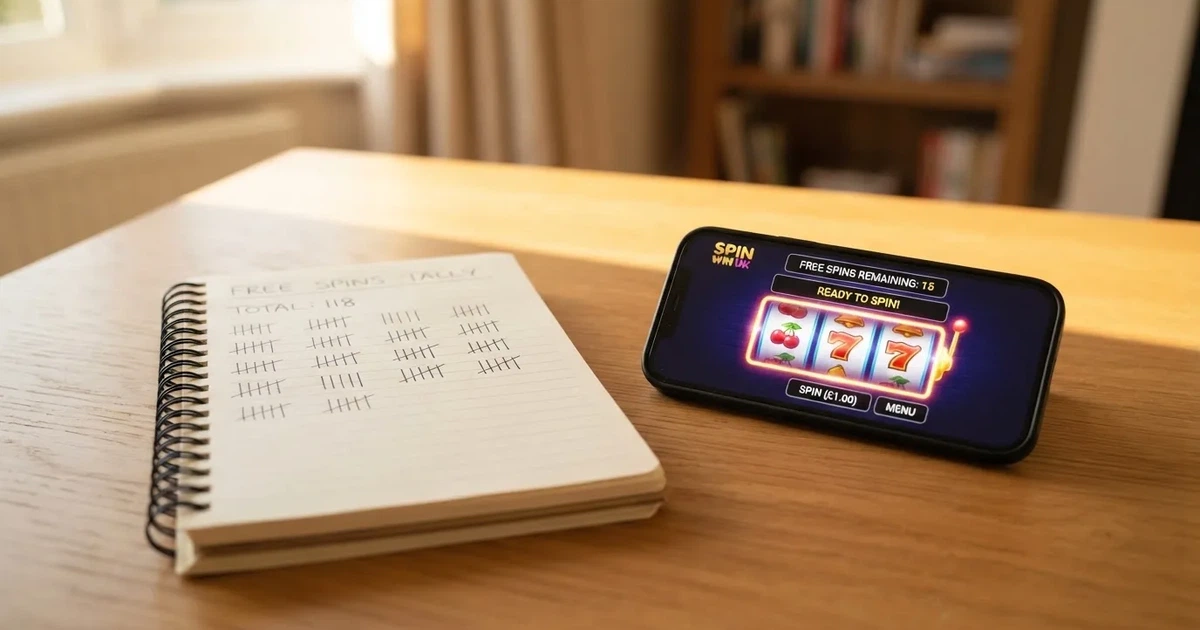
Two hundred free spins with no deposit is the kind of headline a player scans, clicks, and only afterwards wonders what is sitting behind the number. The offer exists, on real sites, in a regulated form — the Gambling Commission issues remote casino operating licences and the brands in this comparison all hold one — but the promotion still carries the same machinery as any other casino bonus: wagering requirements, a maximum conversion, a time window, and a self-exclusion regime that overrides any “free” framing. This guide is built around the choices that come before claiming any of it. Which operators are licensed, what the licence covers, what the 200 spins actually convert into, what they cost in time and money, and where the offer runs out before a player ever sees a withdrawal.
The ranking that follows is built on licence status first and promotion terms second. Every operator named on this page holds a Gambling Commission remote casino operating licence and appears on the register against the listed account. Where a brand is a white-label — a domain traded under another company’s licence — that is stated, because it changes who is actually accountable for the offer.
Table of Contents
- Landscape of licensed operators
- What 200 free spins no deposit actually means in the UK
- How the Gambling Commission framework shapes every offer
- Responsible gambling tools that apply to a no-deposit offer
- Comparison of bonus term limits
- How to read a 200 free spins offer in the small print
- Picking a brand from the ten-licensee comparison
- How to verify any UK casino’s licence before signing up
- What the 10x wagering cap looks like as a time-cost band
- A short note on offshore brands and what changes off-licence
- How the offer interacts with safer gambling tools in practice
- Where this page stands at the end of the comparison
- Frequently asked questions about 200 free spins no deposit in the UK
Landscape of licensed operators
A 200 free spins no deposit promotion does not appear in isolation. It is one entry in a catalogue of welcome bonuses that licensed UK casinos run, and the operators who run them all sit on the same public register. Below is the comparison set for this page: ten Gambling Commission licensees, ordered as the register and the market present them, with the licence account, licence number and domain status each one carries. No operator is recommended over another. The point of the table is to make the licence picture visible at a glance — which brand is its own licence holder, which trades under someone else’s licence, and which brand is paired with the subject of this guide.

| Brand | Licence holder and GB remote casino licence | Domain status on the register | Subject support |
|---|---|---|---|
| Paddy Power | PPB Games Limited · 039411-R-319335-010 | Active | — |
| Betway | Betway Limited · 039372-R-319367-029 | Active | — |
| Virgin Games | Gamesys Operations Limited · 038905-R-319430-022 | White Label | — |
| Unibet | Platinum Gaming Limited · 045322-R-324275-019 | Active | — |
| 888casino | 888 UK Limited · 039028-R-319297-014 | Active | — |
| Midnite | Dribble Media Limited · 042647-R-321653-022 | Active | — |
| PokerStars | Stars Interactive Limited · 039108-R-319334-026 | Active | — |
| William Hill | WHG (International) Limited · 039225-R-319373-015 | Active | — |
| Ladbrokes | LC International Limited · 054743-R-330863-014 | Active | — |
| BetVictor | BV Gaming Limited · 039576-R-319370-028 | Active | — |
The pattern the table exposes is that almost every entry is its own licence holder. The single exception — Virgin Games — runs as a white-label under Gamesys Operations Limited, which means Gamesys carries the regulatory obligation for that domain even though the player signs up with the Virgin brand. Where two brands sit under the same licence, that is also worth noticing: Ladbrokes, Coral and Gala Bingo all sit under LC International Limited, so the licence number is shared and the player is dealing with one accountable company, not three.
The final column reads as a row of em dashes for a reason that matters more than it looks. The licensed operator set in the register is much wider than the ten brands reviewed here, and the public register and individual operator terms pages do not publish a single canonical “200 free spins, no deposit” promotion that is comparable across brands on the same terms at the same moment. Treating each row as either confirmed or denied would either invent a promotion or quietly contradict a brand’s own current page. The honest reading is that the subject is not something this page can verify per row, and the comparison is honest precisely because the column is empty.
Reading the licence numbers
A UK Gambling Commission remote casino licence number carries a fixed structure that is worth knowing once and recognising thereafter: it takes the form (account)-R-(number)-(suffix), where the leading six digits are the licence holder’s account number, the R marks a remote (online) licence rather than a land-based one, and the suffix identifies the individual licence within the account. So 038905-R-319430-022 belongs to account 38905, Gamesys Operations Limited, and the trailing 022 is one of several licences that account holds. Anyone checking a brand against the register can confirm the structure by typing the account number into the Commission’s search and matching the brand’s domain to it.

This matters because the licence number on the brand’s footer is not decoration. It is the only public handle a player has for filing a complaint, asking an alternative dispute resolution (ADR) body to look at a dispute, or confirming that a brand has not had its licence suspended since the page was written. The Commission’s register can be searched online and the full data set downloaded in CSV or Excel form, which is what every cross-check on this page was run against.
What the comparison does and does not settle
The table tells a reader who is licensed to offer 200 free spins to UK players. It does not tell the reader which of those ten will, on any given day, have a 200-spin no-deposit welcome offer live, what the wagering factor on that offer sits at, which game the spins land on, or how long they take to expire. Those are promotion-specific and change weekly, sometimes daily. Treat the table as a licence map, not a price list.
A reader who wants to act on a comparison like this should pick two or three licences that look right and check each brand’s own current promotions page on the day of claiming. The licence does the heavy lifting; the headline number around it is the detail.
What 200 free spins no deposit actually means in the UK
A no-deposit free spin offer is the simplest casino promotion in form and one of the more intricate in substance. The operator credits the player’s account with a fixed number of spins — in this case, around two hundred — on a named slot game, without requiring a deposit first. Any winnings from those spins land as bonus funds, and those bonus funds are then subject to the operator’s standard bonus terms: a wagering requirement that must be cleared before withdrawal, a maximum conversion cap, and a time window inside which both must be completed. The “no deposit” part is real. The “free” part is conditional.
In the UK market the form is regulated in two specific ways that change what an offer looks like in practice. First, no online casino may advertise or run a promotion without holding a Gambling Commission remote casino operating licence, and the player must be verified — name, address, date of birth — before the first spin or any play at all. Verification has been mandatory since 7 May 2019, so “no deposit” does not mean “no questions”. Second, since 19 December 2025 the wagering requirement on any casino bonus is capped at 10x the bonus amount. That cap is the single biggest change to no-deposit offers in this market and the reason the 200-spin number is now worth taking seriously as a thing a player can actually finish.
Without a licence, the same offer is something else. Section 33 of the Gambling Act 2005 makes it an offence to provide gambling to people in Great Britain without a Commission licence, and a 200-spin promotion coming from an offshore brand that accepts UK players is the offer shape that draws the Commission’s enforcement attention. A player using such a site has no ADR route, no GAMSTOP coverage, and no guarantee that the bonus terms printed on the page are the terms applied at the cashier. The licence is the protection; everything else is the marketing.
How the Gambling Commission framework shapes every offer
The legal frame around a 200 free spins no deposit offer is the Gambling Act 2005 and the Licensing Conditions and Codes of Practice (LCCP) that the Commission publishes under it. The Act covers Great Britain — England, Scotland and Wales — and the Gambling (Licensing and Advertising) Act 2014 extended it so that any operator, based anywhere in the world, taking customers in Great Britain needs a Commission licence. A Curaçao, Maltese or Gibraltar licence is not a substitute and never has been since 2014.
The regulator is the Gambling Commission itself, sponsored by the Department for Culture, Media and Sport. It maintains the public register of gambling businesses that this page has been built against, and that register is the only test that counts for whether a brand is licensed. Every licence number quoted in the comparison table was lifted from that register; every domain status was checked against it on the date given at the top of the page.
What the framework means for the offer:
- Minimum age. Eighteen, with verification of name, address and date of birth before any play. No anonymous play at a licensed site.
- Stake limits on online slots. From 9 April 2025 the maximum stake per game cycle for players aged 25 and over is £5; from 21 May 2025 the limit for 18–24 year olds is £2. A “game cycle” is the unit the Commission uses for one spin, and the limit applies per spin, not per session.
- No deposit ceiling imposed by the regulator. There is no state-set deposit or loss limit. The Commission requires operators to prompt a customer to set a financial limit before the first deposit, from 31 October 2025, but the figure is the customer’s, not the state’s.
- Auto-play banned. Since 31 October 2021 a slot spin may not be faster than 2.5 seconds, and losses disguised as wins are banned. Auto-play itself is not permitted at a UK-licensed site.
- Credit cards banned. From 14 April 2020 no credit card may be used to fund gambling, online or offline, in Great Britain — and the ban extends to credit cards routed through e-wallets. Debit cards and bank transfers were not affected.
- Wagering cap. From 19 December 2025 the wagering requirement on any casino bonus is capped at 10x the bonus amount, and mixed-product bonuses (bet on sport, receive casino spins) are banned.
Two things in that list are worth dwelling on. The 10x wagering cap is the single piece of regulation that most directly affects the value of a 200 free spins no deposit offer, because the wagering multiple is what determines whether the offer can actually be cleared. A 65x requirement on a small bonus, which was the industry norm for years, turns “free spins” into a long grind with a low probability of a withdrawal at the end. A 10x cap puts the offer back inside a realistic clearing window, which is why the date is on this page at all.
The second is the credit card ban. The Commission estimated that around 800,000 UK consumers used credit cards to gamble in 2018, and that 22% of online gamblers who funded play with credit cards were classed as problem gamblers — the data behind the policy decision. A reader looking at a no-deposit offer will not be reaching for a credit card anyway, but the rule is what defines the boundary between what the offer accepts (debit cards, bank transfers, e-wallets funded from a debit source) and what it does not.
Tax and what the player pays
UK players pay no tax on gambling winnings. The tax that funds the regulator’s oversight sits with the operator, not the player: Remote Gaming Duty, currently 21%, is being raised to 40% from 1 April 2026. That is the operator’s problem, and where the offer becomes slightly tighter as the rate goes up it will show up in reduced promotion value rather than a tax demand to the player. Anyone with a question about their own position should check with HMRC, not assume from a casino’s terms page.
Responsible gambling tools that apply to a no-deposit offer
A no-deposit offer is still gambling. The spin happens on a real-money slot, the wagering requirement is met by staking real money on outcomes, and the protection regime that applies to any other bet applies here too. The most consequential element is GAMSTOP, the national online self-exclusion scheme, which has been a mandatory condition of every online licence since 31 March 2020. A player who has registered with GAMSTOP for six months, one year or five years cannot reach the cashier, the bonus page or the spin button at any of the ten operators named above. The registration cannot be cancelled early, which is the point — it is a cooling-off period, not a pause.
Beyond GAMSTOP, every licensed UK casino must offer time-out, self-exclusion at the brand level, reality checks during play, and access to the National Gambling Helpline run by GamCare, with GambleAware as the broader education and treatment funnel. From 28 February 2025 operators also run light-touch financial vulnerability checks at £150 of net deposits in a rolling 30 days, using publicly available data only — the wider financial risk assessments the Commission has flagged are announced but not yet in force.
The reason this matters on a page about 200 free spins no deposit is that the offer is positioned to attract exactly the players who should be most aware of the tools. A no-deposit promotion is, by design, low-friction entry; a player who has self-excluded is one of the people the friction exists to stop, and the GAMSTOP block is the friction that does the work. The safer-gambling message in plain terms: if gambling has stopped being enjoyable at any point in the past, the free-spin offer is not the way back.
Anyone affected can reach the National Gambling Helpline on 0808 8020 133, and GamCare and GambleAware run chat and text channels alongside.
Comparison of bonus term limits
| Term matter | Detail |
|---|---|
| Wagering cap | 10x bonus amount |
| Slot stake limit (25+) | £5 per spin |
| Slot stake limit (18-24) | £2 per spin |
| Financial limit check | Required before first deposit |
A no-deposit offer ends at the cashier. The journey there runs through three steps the operator controls and the player cannot shortcut: wagering the bonus amount, observing any maximum-conversion cap, and withdrawing inside the time window.
Wagering. Each spin’s winnings land as bonus funds. The wagering requirement is the multiple of the bonus the player must stake before the bonus becomes withdrawable cash. Under the 10x cap that has applied since 19 December 2025, a bonus of £10 must be wagered through £100 before withdrawal; a bonus of £20 needs £200 cleared. Pre-cap, multiples of 30x to 65x were common, and that is the structural change the cap makes to the offer. The conversion is per-spin, not per-offer: a spin that pays £0.40 contributes 40p of stake towards the wagering requirement, and so on until the requirement is met.
Maximum conversion. Most no-deposit offers cap the amount that can be converted from bonus funds to withdrawable cash. The cap is on the bonus side, not the deposit side — there is no deposit to cap — and it is the rule that turns a lucky spin into a finite withdrawal. A cap of £50 on a 200-spin offer means the player keeps the first £50 of bonus funds cleared through wagering and the rest is forfeit.
Time window. Spins usually expire within 24 to 72 hours of being credited, and any wagering requirement has its own clock, commonly seven days from credit. Both windows are tight and both are set by the operator’s terms.
On the payment side, withdrawals from a UK-licensed casino run through the same channels as deposits: debit card, bank transfer and a set of e-wallets. Apple Pay is one of those e-wallets for many of the brands in the comparison, and it carries the same protections as anywhere else it is used — tokenisation of the card number into a device-specific Device Primary Account Number, and a dynamic security code per transaction. Apple Pay was launched on 20 October 2014, began supporting UK-issued cards on 14 July 2015, and works on iPhone with Face ID via a double-click of the side button. Bank transfers within the UK typically move through the Faster Payments Service, launched in 2008 and operated by Pay.UK, with most payments arriving instantly or within a couple of minutes and the occasional transfer taking up to two hours. The Faster Payments scheme itself sets a £1,000,000 per-transaction limit, although individual banks set lower customer-level caps. AstroPay is another e-wallet in use in this market; it was founded in 2009 and is headquartered in Uruguay, with its UK entity (Larstal Limited) authorised by the Financial Conduct Authority under the Electronic Money Regulations 2011, and its Isle of Man, Brazilian and Danish entities each regulated in their home jurisdiction.
The Gambling Commission does not set a withdrawal time, and licensed operators are not required to publish a fixed turnaround. In practice, e-wallet withdrawals are usually fastest — same day at many brands — followed by debit card (one to three working days) and bank transfer (one to three working days, occasionally same day via Faster Payments). A no-deposit offer that has been cleared through wagering is paid out through the same rails.
What the wagering cap changes in practice
A worked example with a 10x cap shows the band a player is now dealing with. On a 200-spin offer at £0.10 per spin, the gross bonus generated is in the region of £10 to £20 depending on hit rate. A 10x wagering requirement on £20 is £200 of stake that must be cleared; on £10 it is £100. At £0.10 per spin the clearing volume is 1,000 to 2,000 further spins, which at the regulated 2.5-second minimum spin interval is roughly 40 minutes to an hour and a half of continuous play — a band that fits inside a single session and that the player can realistically finish before any time window expires. Under the pre-2025 multiples of 30x to 65x, the same scenario required 3,000 to 13,000 spins and several hours of play spread across multiple sessions, with most players running out of time or stake budget before clearing. The 10x cap is the difference between an offer that can be finished and one that, statistically, most players never finish.
How to read a 200 free spins offer in the small print
The licensed-operator set runs standard forms of the same offer, and the differences between them sit in the small print. A reader comparing offers on the same week should look at four things and treat them as the terms that decide what the offer is worth.
Game restriction. Spins are usually locked to one named slot — often a high-profile title from a major provider, occasionally a less common game. The slot’s return-to-player (RTP) figure, where the operator publishes it, sets the mathematical base rate of the bonus, but the named-slot restriction is what stops a player from running the spins on a higher-RTP game.
Spin value. The stake per spin is fixed by the operator, commonly £0.10. A higher spin value means a higher gross bonus on the same hit rate, which means a higher absolute wagering requirement under the 10x cap, but it does not change the rate at which the requirement clears.
Maximum conversion. The cap on what bonus funds can convert to cash. This is the rule that decides the ceiling on the offer and is the single number most worth checking before claiming.
Time windows. The expiry on the spins (commonly 24–72 hours from credit) and the expiry on the wagering requirement (commonly seven days). The latter is the one that determines whether a player has time to finish, and the one that is most often missed.
What a reader is really choosing between licensed operators on is which combination of those four terms the brand is running that week. Two offers with the same headline — 200 free spins no deposit — can have very different real values: one with a £0.10 spin value, a £50 conversion cap and a 72-hour window is a meaningful trial; one with the same headline and a £0.05 spin value, a £10 cap and a 24-hour window is a marketing line that pays very little. The licence is the floor. The terms are what determine whether the offer is worth the player’s time.
A note on mixed-product bonuses
Mixed-product bonuses — bet on a sport event and receive casino spins as a side reward — were banned by the Gambling Commission alongside the 10x wagering cap on 19 December 2025. A reader who has seen that shape of offer advertised by a UK-licensed brand is looking at a promotion that should not be running, and is grounds for a question to the operator and, if not answered, a complaint to the Commission.
Picking a brand from the ten-licensee comparison
The comparison table is a licence map. Picking from it is a separate exercise, and the criterion a player should weight first depends on what is being optimised.
For a player who has never played at any of the brands. The cleanest choice is a brand whose licence holder is also the operating brand — Paddy Power, Betway, Unibet, 888casino, Midnite, PokerStars, William Hill, Ladbrokes or BetVictor all qualify. Virgin Games is the one white-label brand in the set, and “white-label” means the player is contracting with Gamesys Operations Limited for regulatory purposes, even though the brand on the page is Virgin. The terms and dispute routes are not affected — Gamesys is the licence holder either way — but the player should know which company is accountable for the offer.
For a player who already holds an account at one of the brands. Ten operators run ten welcome offers, and most run loyalty offers to existing customers as well. A player with an existing account should check the brand’s own promotions page before opening a second, since welcome offers are typically one-per-customer and a second account may breach the brand’s terms.
For a player choosing on game library. The licensed operator set is large enough that some brands are stronger on slots, some on live dealer, some on poker. The PokerStars licence under Stars Interactive Limited is the natural pick for a poker-first player, while 888casino and Betway run the wider slot libraries typical of generalist operators. Game choice is the second-order question; the licence is the first.
For a player on a tighter bankroll. The 10x cap is more important than the brand. Any of the ten will offer roughly comparable value at the same spin value and conversion cap, and the variance between brands is much smaller than the variance between one offer’s terms and another’s. Pick on the offer, not on the brand.
The honest verdict across all ten: there is no standout pick, and the page does not name one. The licensed set is uniform on the regulatory points that matter, and the differences between brands on promotion terms are weekly and brand-specific. The right move is to check the brand’s current page on the day of claiming and read the four small-print points above before clicking accept.
How to verify any UK casino’s licence before signing up
Three checks take under a minute and settle whether a brand is licensed.
- Find the licence number on the brand’s footer. Every UK-licensed casino publishes its Gambling Commission account number and licence number on the site footer, usually alongside a clickable Commission logo. The number format is the one described above —
(account)-R-(number)-(suffix). - Search the Commission’s public register. The register is at gamblingcommission.gov.uk and is searchable by licence number, account number or business name. The result will show the licence status (active, suspended, revoked), the licence type, the trading names, and the domains the licence covers.
- Confirm the domain. The register entry will list each domain the licence covers, with a status of Active, Inactive or White Label. Cross-check that the domain in the player’s URL bar matches one of those entries. A brand claiming a UKGC licence on a domain that does not appear against its licence number is not covered by that licence.
That last check is the one that catches the most cases. A licensed operator will have every domain it runs listed on the register against the licence that covers it. A brand claiming a Commission licence but operating on a domain that does not appear in the register is either trading outside its licence (a regulatory issue) or is not licensed at all (a criminal issue under section 33 of the Gambling Act 2005).
What the 10x wagering cap looks like as a time-cost band
The wagering cap is the central change to a UK no-deposit offer since 19 December 2025, and a reader should know what it does to the time cost of clearing. The arithmetic below is the calculation the regulator’s policy implies, expressed as a band rather than a single figure.
Assume a 200-spin no-deposit offer at a typical £0.10 spin value, with a hit-rate and slot RTP that produces a bonus of between £10 and £20. Under a 10x wagering cap the player must stake through between £100 and £200 of bonus to convert the bonus to cash. At £0.10 per spin that is between 1,000 and 2,000 further spins, and at the regulatorily mandated 2.5-second minimum spin interval it is between roughly 40 minutes and an hour and a half of continuous play.
That is the band. At the bottom end — a £10 bonus, 10x wagering, 1,000 spins at 2.5 seconds — the offer clears inside a single session with time to spare. At the top end — a £20 bonus, 10x wagering, 2,000 spins at 2.5 seconds — the offer clears inside one session if the player sits through it, with the conversion cap usually the deciding factor rather than the time window. The arithmetic holds assuming only the bonus amount is wagered; a player staking additional deposited funds clears the bonus faster but is then spending real money to convert a no-deposit promotion, which is rarely the intent.
The pre-cap offer shape — 30x to 65x wagering on the same bonus — required between 3,000 and 13,000 further spins, or between roughly two and nine hours of play at the same minimum interval, almost always spread across multiple sessions. The cap is what compresses that band down to a window a player can realistically finish.
What the band does not settle
The time-cost band tells a player how long the offer takes to clear. It does not tell the player what the offer is worth in cash. The expected cash return from a no-deposit offer is set by the named slot’s RTP, the spin value, the hit rate, the wagering requirement and the conversion cap, and varies between named games enough that no single figure covers them. A reader who wants the cash-side number for a specific promotion should look at the named slot’s published RTP and apply the conversion cap. The band on this page is the time cost; the cash value is a per-promotion calculation the player has to do at the offer.
A short note on offshore brands and what changes off-licence
A 200 free spins no deposit offer is also run by offshore brands that do not hold a Gambling Commission licence but accept UK players. Section 33 of the Gambling Act 2005 makes that an offence by the operator, and the Commission’s enforcement work — cease-and-desist notices, search-engine delisting referrals, payment and hosting referrals — is targeted at those brands. The Commission has no power to block sites at ISP level.
For the player, the difference is not the headline offer. It is everything around it. An unlicensed site is not part of GAMSTOP, so a self-excluded player can reach it; it is not subject to the ADR route, so a dispute has no formal resolution; it is not subject to the LCCP’s protection rules, so a player who is showing signs of harm has fewer friction points. The Commission’s framing, plainly stated, is that the player on an unlicensed site has no protection. That is the cost of taking the same offer from a brand whose licence does not appear on the register.
The right test is the one above: search the Commission’s register by the brand name. If the brand does not appear, or if the domain in the URL bar does not match a domain on the register entry, the offer sits outside the regulated market.
How the offer interacts with safer gambling tools in practice
The mechanics of a no-deposit promotion sit in tension with the safer-gambling regime in two specific ways, and a player should be aware of both before claiming.
The first is GAMSTOP. A player who has self-excluded for any of the standard periods — six months, one year, five years — cannot reach the offer at any of the ten licensed operators named on this page. The Commission’s enforcement of GAMSTOP enrolment at every online licence means the offer does not exist for that player, and attempting to register at a different brand is a breach of the self-exclusion commitment. The point of GAMSTOP is exactly this: it overrides the marketing.
The second is deposit and time prompts. A UK-licensed operator must prompt the player to set a financial limit before the first deposit — and for a no-deposit offer, the prompt still runs before any spin. The player can set a deposit limit of zero and still claim the offer, but the prompt has fired. Reality checks during play are similarly mandated and similarly independent of deposit status.
These are not caveats. They are the design of the licensed market, and the only structure that makes the offer honest to the player.
Where this page stands at the end of the comparison
The licensed set for a UK player is wide, regulated, and largely uniform on the points the regulator sets. The 200-spin no-deposit offer, post the 19 December 2025 wagering cap, sits inside a time window a player can finish in a single session. The bonus is real but capped, the wagering is cleared by the cap, the withdrawal runs through the same rails as any other cashier transaction, and the safer-gambling regime overrides everything if the player has asked it to.
What is left to the player is the choice the page set out to support: which licence holder to claim from, which small-print terms to read on the day, and which conversion cap makes the offer worth the time. The brand is the licence map; the offer is the live detail. Both are worth checking before clicking accept, and both are checkable in under five minutes through the register and the brand’s own current terms page.
Frequently asked questions about 200 free spins no deposit in the UK
What does 200 free spins with no deposit actually mean?
It means a licensed casino credits a player’s account with 200 spins on a named slot without requiring a deposit first. Any winnings land as bonus funds and must clear a wagering requirement, currently capped at 10x the bonus amount since 19 December 2025, before they convert to withdrawable cash. No deposit is needed to claim, but identity verification is required before any spin.
Are there wagering requirements on winnings from 200 free spins?
Yes. The winnings from the spins become bonus funds, and the bonus carries a wagering requirement that must be cleared before withdrawal. Since 19 December 2025 the Gambling Commission has capped that wagering requirement at 10x the bonus amount for any UK-licensed casino. The exact multiple the operator sets is published in the promotion terms.
Is there a maximum win cap on 200 no-deposit free spins?
Most operators attach a maximum-conversion cap to a no-deposit offer, which limits how much of the bonus can convert to withdrawable cash. The cap is set per promotion and is the rule that decides the ceiling on what the offer can pay out. Players should check the promotion terms for the specific cap before claiming.
Does GAMSTOP self-exclusion cover a 200 free spins offer?
Yes. GAMSTOP has been a mandatory condition of every UK online gambling licence since 31 March 2020. A player registered with GAMSTOP for six months, one year or five years cannot reach the cashier, the bonus page or the spin button at any licensed UK casino, including any of the ten brands named on this page. The registration cannot be cancelled early.
How long do 200 no-deposit free spins stay valid once credited?
The expiry is set by the operator’s terms and is typically 24 to 72 hours from credit, with the wagering requirement carrying its own separate expiry of around seven days. Both windows are tight and are the rules that decide whether a player can finish the offer. A player who cannot play within the spin window forfeits the spins and any bonus generated.
Must a casino be licensed by the Gambling Commission to offer 200 free spins with no deposit to UK players?
Yes. Under the Gambling Act 2005 and the Gambling (Licensing and Advertising) Act 2014, any operator offering gambling to customers in Great Britain must hold a Gambling Commission licence, wherever the operator is based. A Curaçao, Maltese or Gibraltar licence is not a substitute. Players can verify a brand by searching the Commission’s public register at gamblingcommission.gov.uk.